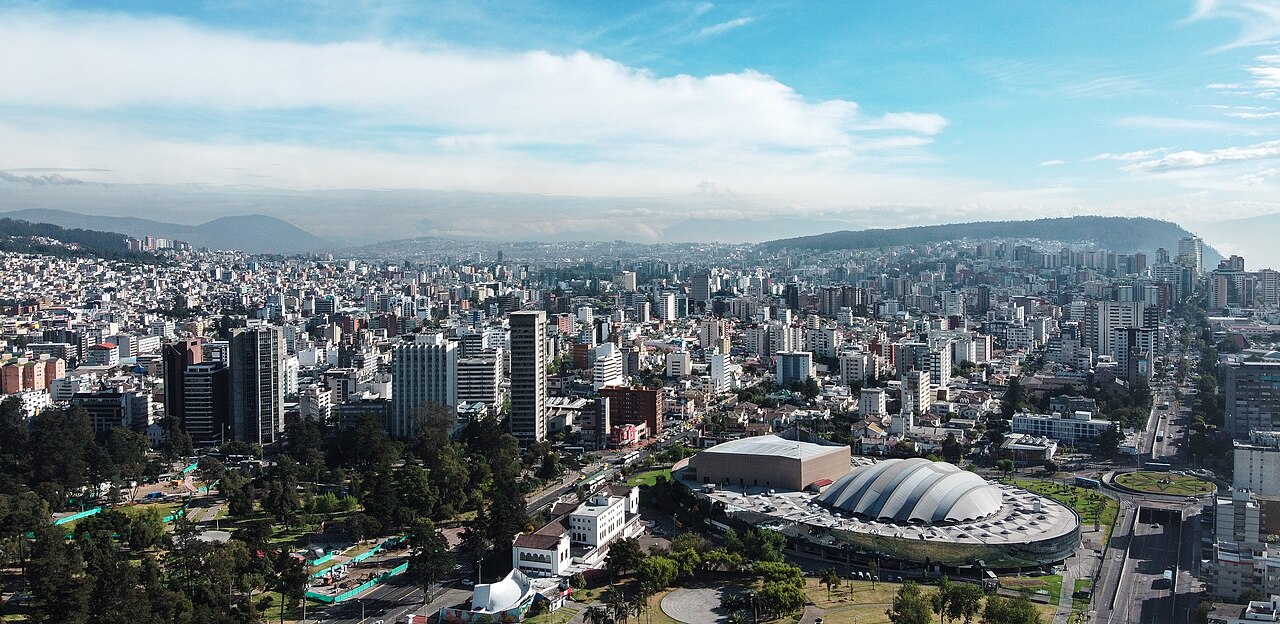
Quito
Capital of Ecuador
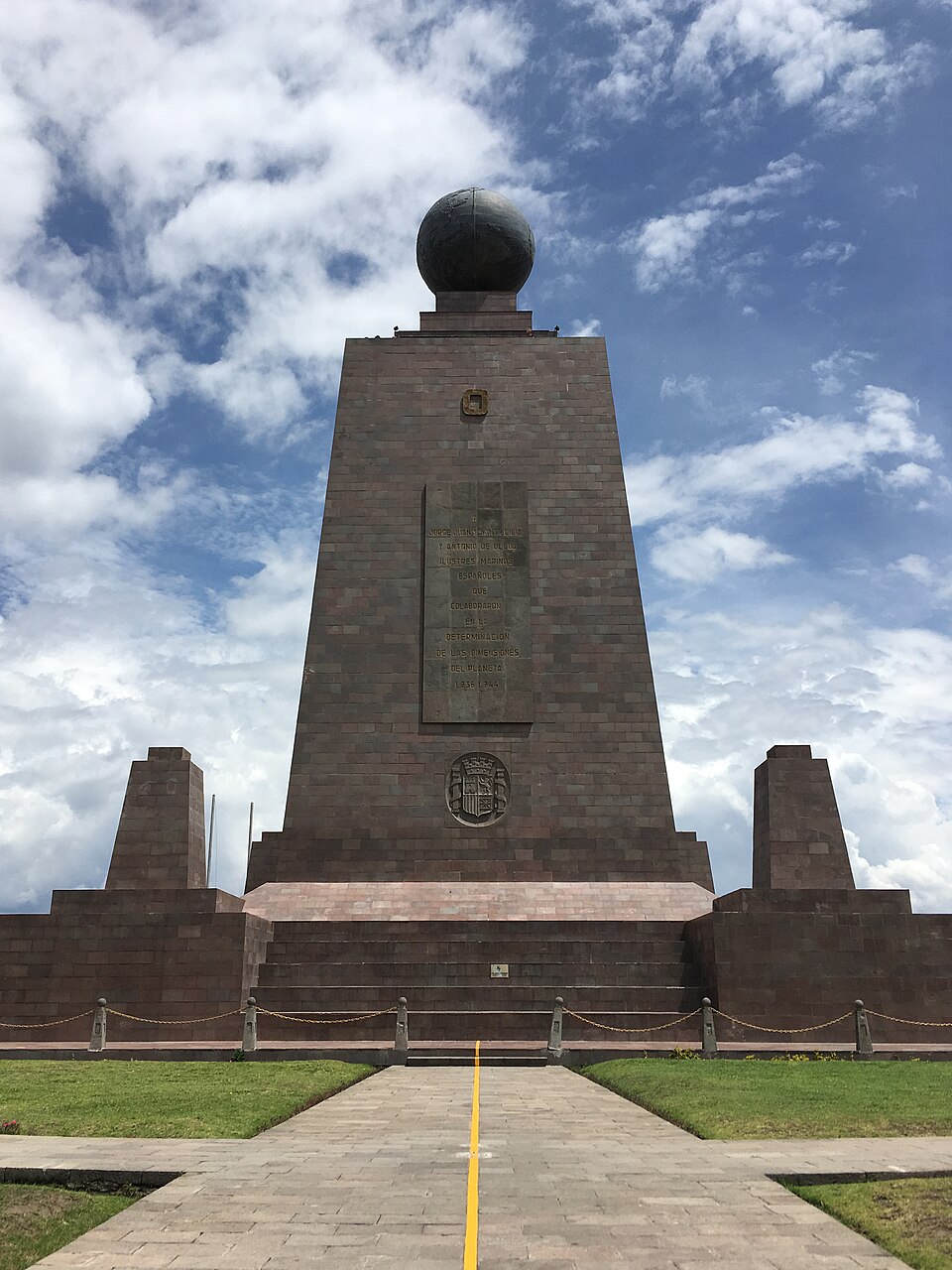
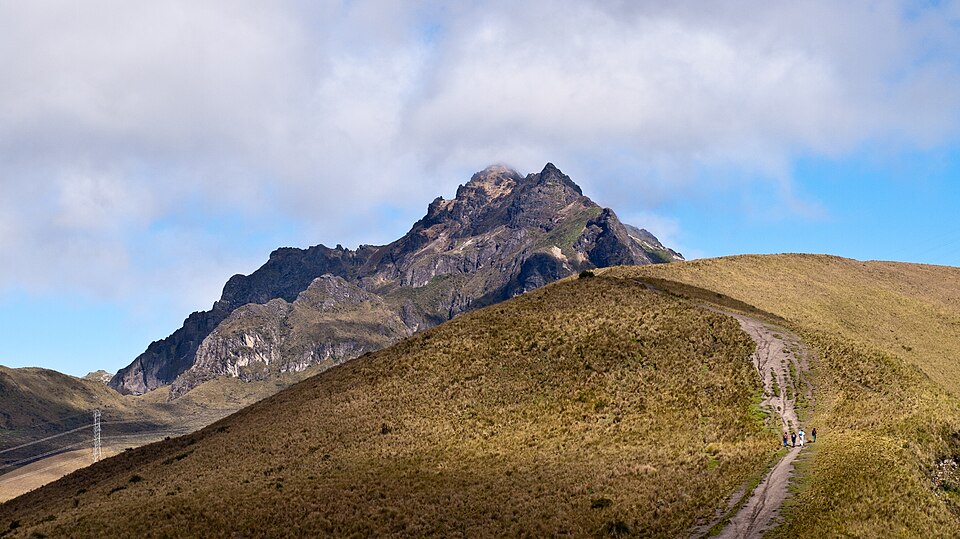
Within 30 km of the centre of Quito, the nature places people read about most are Ciudad Mitad del Mundo, Pichincha Volcano, El Panecillo and Pululagua, and marked walks close to the city include Marin - Rocio de Guamani.
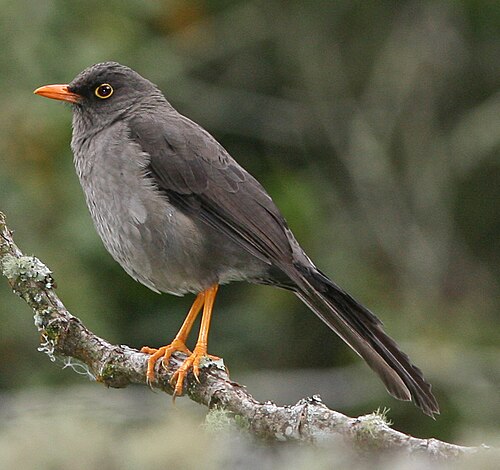
People have shared 2,303,454 wildlife records within 50 km of Quito in the last ten years. The wild animals recorded most often are the rufous-collared sparrow, the great thrush, the sparkling violetear, the blue-grey tanager and the golden tanager. Since the 1980s the area has become about 0.9 °C warmer.
Of the 93 cities on Atlas, Quito has the 18th most species named on its page and the 20th most wildlife records shared within 50 km. Among the animals people record most around Quito, the golden tanager appears on no other city page here.
- Country
- Ecuador
- Population
- 1.8 million
- Area
- 372 km²
- Elevation
- 2,850 m
- Currency
- United States dollar
- Time zone
- UTC−06
- Daylight
- About 12 hours all year
Figures from Wikidata; population 2022.
Quito on the map
- Ciudad Mitad del Mundo
- Pichincha Volcano
- El Panecillo
- Pululagua
- Bellavista Cloud Forest Reserve
- Parque La Carolina
- Pasochoa
- Pululahua Geobotanical Reserve
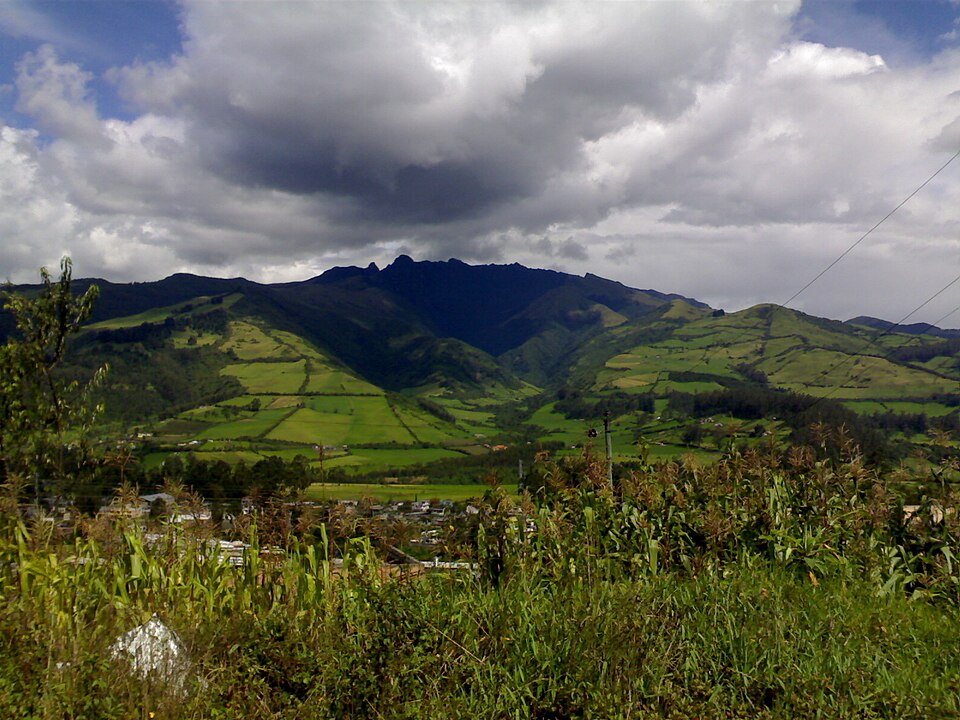
- volcano Atacazo
Nature close to Quito
The places people read most about, from the centre outwards.




- Bellavista Cloud Forest Reserve Nature reserve · 29 km
- Pululahua Geobotanical Reserve Nature reserve · 29 km
- volcano Atacazo Stratovolcano · 19 km
- Itchimbía Hill · 1 km
Marked walks
- Marin - Rocio de Guamani17 km · 7 km from the centre · marked by 7 DE MAYO
Routes from OpenStreetMap via Waymarked Trails. Not checked by 4Planet: follow local signs and conditions.
Wildlife around Quito
The wild animals people record most within 50 km, 2016–2025. Tick the ones you have seen to build your own list.



Seen in the last 30 days
What can you see near Quito now?
Month by month, from 2,303,454 records people shared within 50 km, 2016–2025.

Most seen in February
Plants and fungi at their peak in February


221,553 animal records in February.
Most seen in March
Plants and fungi at their peak in March

187,512 animal records in March.
At their peak in April
Most seen in April

134,698 animal records in April.
At their peak in May


Most seen in May
165,946 animal records in May.
Most seen in June
Plants and fungi at their peak in June

154,859 animal records in June.
At their peak in July

Most seen in July
Plants and fungi at their peak in July

174,327 animal records in July.
At their peak in September
Most seen in September
Plants and fungi at their peak in September


157,876 animal records in September.
At their peak in October

Most seen in October
Plants and fungi at their peak in October

234,479 animal records in October.
Most seen in November
Plants and fungi at their peak in November


243,478 animal records in November.


Quito is getting warmer
+0.9 °CAverage temperature around Quito in 2016–2025, compared with 1981–1990.
Daylight: about 12 hours in December and 12 in June.
Seen something near Quito?
Share a photo of it on iNaturalist. Other naturalists help name it, and confirmed records go to GBIF, where scientists use them. That is where the lists on this page come from.
Explore next
What puts Quito under pressure, what helps, and who works on it.
Quito on the living planet
More places near Quito
Sources and photo credits
- Wikidata · Quito (Q2900), facts and nature places
- Wikipedia page views · how well known each nature place is
- OpenStreetMap contributors via Waymarked Trails · marked walking routes (ODbL)
- GBIF · human observations within 50 km, 2016–2025 (2,303,454 animal records)
- NASA POWER · yearly temperature from satellite and model data (MERRA-2)
- MET Norway · weather now (shown live)
- Quito, Ecuador: Asamblea Nacional del Ecuador, CC BY-SA 2.0
- Ciudad Mitad del Mundo, Quito: Kaldari, CC0
- Pichincha Volcano, Quito: Timwryan, CC BY-SA 3.0
- El Panecillo, Quito: Cayambe, CC BY-SA 3.0
- Pululagua, Quito: Bbb-Commons, CC BY-SA 3.0
- Parque La Carolina, Quito: H3kt0r, CC BY-SA 4.0
- Pasochoa, Quito: Jorge Andrés Salazar, CC BY-SA 3.0
- Quito Botanical Gardens, Quito: C T Johansson, CC BY-SA 3.0
- Parque Bicentenario, Quito: Tedder, CC BY-SA 4.0
- Rufous-collared sparrow: EvaldoResende, CC BY-SA 4.0
- Great thrush: http://www.birdphotos.com, CC BY 3.0
- Sparkling violetear: Charles J. Sharp, CC BY-SA 4.0
- Blue-grey tanager: Charlie Jackson, CC BY 2.0
- Golden tanager: Fernando Flores from Caracas, Venezuela, CC BY-SA 2.0
- White-tailed deer: USDA photo by Scott Bauer, Public domain
- Silver garden spider: WillWig at English Wikipedia, Public domain
- Brown garden snail: Zachi Evenor, CC BY 2.0
- Rufous-tailed hummingbird: http://www.birdphotos.com, CC BY 3.0
- Incan earring: Becca Gillespie, CC BY-SA 3.0
- Alder: Pokeni, CC BY-SA 3.0
- Runner bean: Mickaël Schauli, CC BY-SA 4.0
- Blackwood: SAplants, CC BY-SA 4.0
- Eared dove: Bjørn Christian Tørrissen, CC BY-SA 3.0
- Lineated woodpecker: Dario Sanches from São Paulo, Brasil, CC BY-SA 2.0
- Band-winged nightjar: Alejandro Bayer Tamayo from Armenia, Colombia, CC BY-SA 2.0
- Fringed ground orchid: Nicolas Ramirez, CC BY-SA 4.0
- Crested quetzal: Charles J. Sharp, CC BY-SA 4.0
- Chikku chikku: Geichhorn2000, CC BY-SA 3.0
- Quito-orange: Picture taken by Fibonacci., CC BY-SA 3.0
- Flatweed: AnRo0002, CC0
- American everlasting: Harry Rose from South West Rocks, Australia, CC BY 2.0
- Deer's antlers: Geichhorn2000, CC BY-SA 3.0
- Rufous-breasted chat-tyrant: Dominic Sherony, CC BY-SA 2.0
- West Indian tufted airplant: Cliff from I now live in Arlington, VA (Outside Washington DC), USA, CC BY 2.0
- Andean bamboo: Dick Culbert from Gibsons, B.C., Canada, CC BY 2.0
- Spanish moss: Geoff Gallice from Gainesville, FL, USA, CC BY 2.0
- Black vulture: Wdiane, CC BY-SA 4.0
- Acadian flycatcher: Bettina Arrigoni, CC BY 2.0
- Thick firmoss: Geichhorn2000, CC BY-SA 3.0
- Leopard-flowered orchid: Dick Culbert from Gibsons, B.C., Canada, CC BY 2.0
- Beehive ginger: Craig Franklin, CC BY-SA 3.0 au


Wildlife records show where people have seen and shared plants and animals, not everything that lives here; some places and months are recorded more than others. Sensitive species are never shown with a month or as seen recently. Routes come from OpenStreetMap and are not checked by 4Planet: follow local signs and conditions. Climate figures are NASA estimates for the area around Quito, not a single weather station.
Checked 2026-11-21.