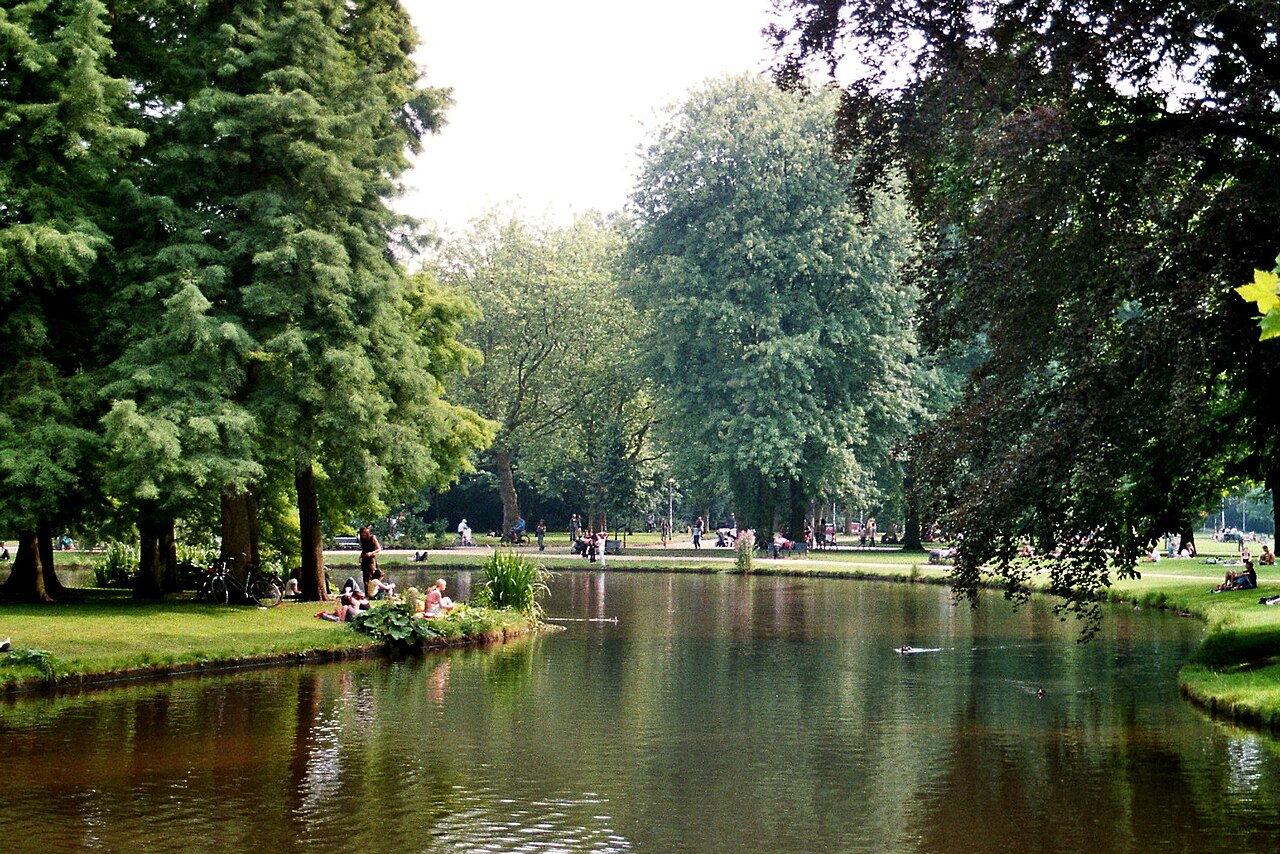
Amsterdam
Capital and most populous city of the Netherlands
Within 15 km of the centre of Amsterdam, the nature places people read about most are Amstel, Vondelpark, IJ and Prinsengracht, and marked walks close to the city include Frankendaelroute, Amsteloeverpad and Diemerbrugroute.
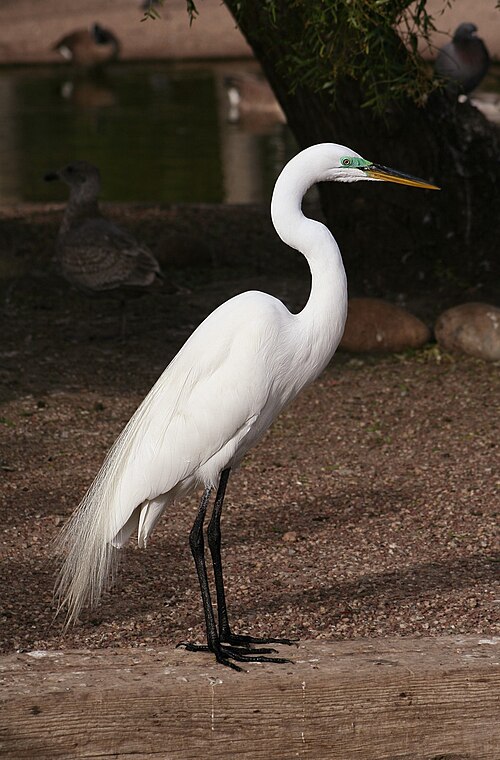
People have shared 18,390,102 wildlife records within 50 km of Amsterdam in the last ten years. The wild animals recorded most often are the common coot, the common blackbird, the mallard, the great tit and the great egret. Since the 1980s the area has become about 1.6 °C warmer.
Of the 93 cities on Atlas, Amsterdam has the most marked walks and the 3rd most wildlife records shared within 50 km. Among the animals people record most around Amsterdam, the common coot and the great egret appear on no other city page here.
- Country
- Netherlands
- Population
- 921,468
- Area
- 219 km²
- Elevation
- -2 m
- Currency
- Euro
- Time zone
- UTC+01
- Daylight
- 8 to 17 hours
Figures from Wikidata; population 2023.
Amsterdam on the map
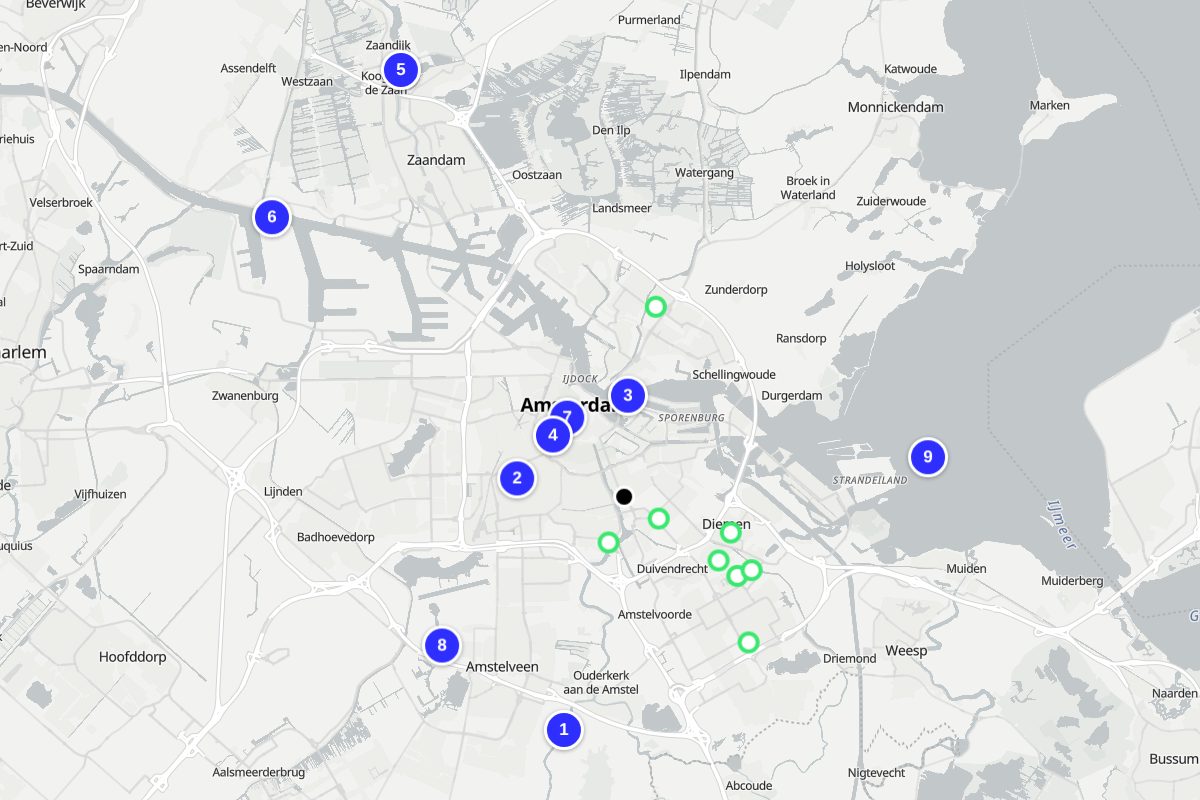
Numbers match the places below. Map: © OpenStreetMap contributors, OpenFreeMap.
- Amstel
- Vondelpark
- IJ
- Prinsengracht
- Zaan
- North Sea Canal
- Singel
- Amsterdamse Bos
- IJmeer
Nature close to Amsterdam
The places people read most about, from the centre outwards.


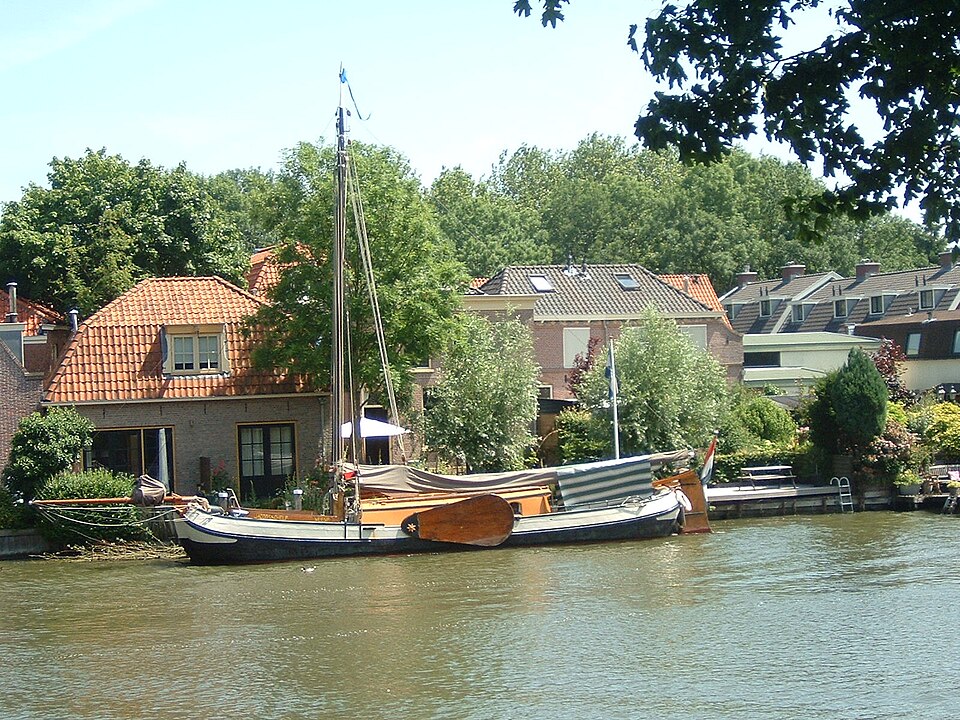
- North Sea Canal Canal · 14 km
- IJmeer Lake · 9 km
- Warmoesstraat Levee · 3 km
- Singelgracht Canal · 4 km
- Schiphol-Rijk Park · 13 km
Marked walks
- Frankendaelroute7.5 km round trip · 1 km from the centre
- Amsteloeverpad6.1 km round trip · 1 km from the centre
- Diemerbrugroute4.1 km round trip · 3 km from the centre
- Diemen-Zuidroute3.6 km round trip · 3 km from the centre
- Campusroute5.3 km round trip · 4 km from the centre
- Bijlmerweideroute10 km round trip · 5 km from the centre
- Grubbezeeroute11.8 km round trip · 6 km from the centre
- Buikslootroute11.4 km round trip · 6 km from the centre
Long-distance trails through the area: GR 12 Amsterdam - Bruxelles - Paris (1,006 km), Vroege Vogelspad (764 km), Zuiderzeepad - Alle varianten (514 km).
Routes from OpenStreetMap via Waymarked Trails. Not checked by 4Planet: follow local signs and conditions.
Wildlife around Amsterdam
The wild animals people record most within 50 km, 2016–2025. Tick the ones you have seen to build your own list.


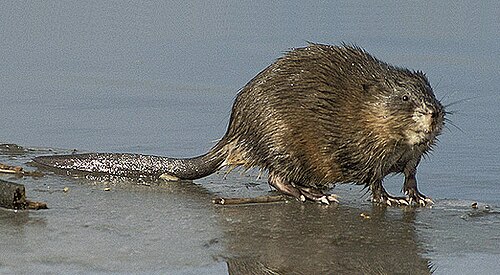

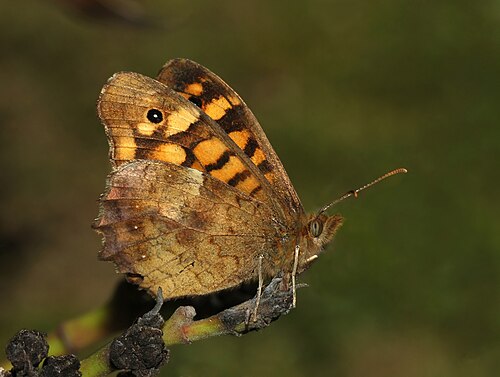
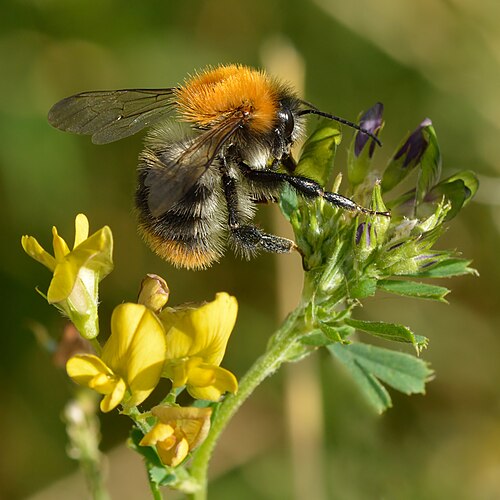


Seen in the last 30 days
What can you see near Amsterdam now?
Month by month, from 18,390,102 records people shared within 50 km, 2016–2025.
At their peak in January
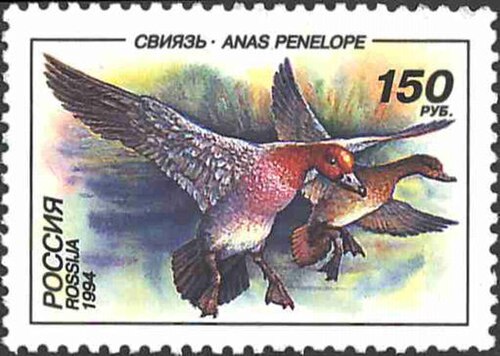


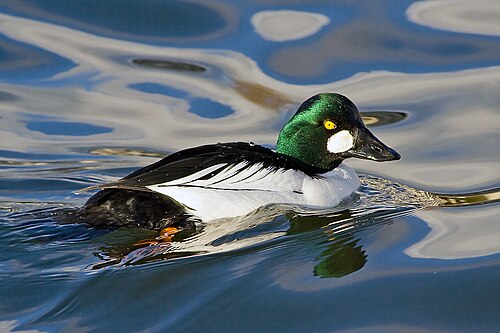
Most seen in January
Plants and fungi at their peak in January


1,247,465 animal records in January.
At their peak in February

Most seen in February
Plants and fungi at their peak in February


1,096,562 animal records in February.
At their peak in March
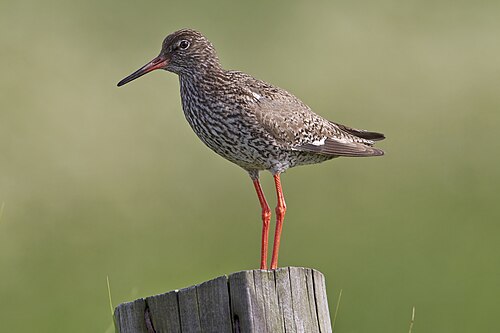


Most seen in March
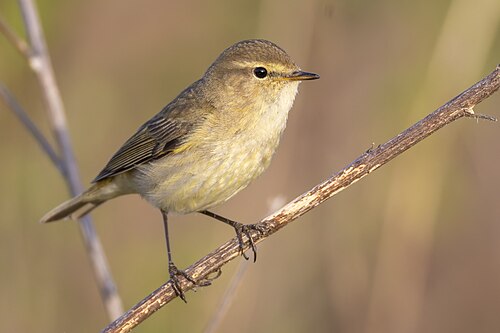
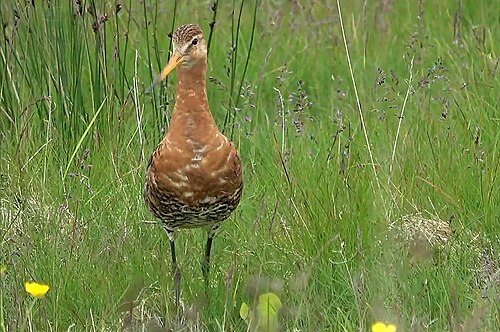
Plants and fungi at their peak in March
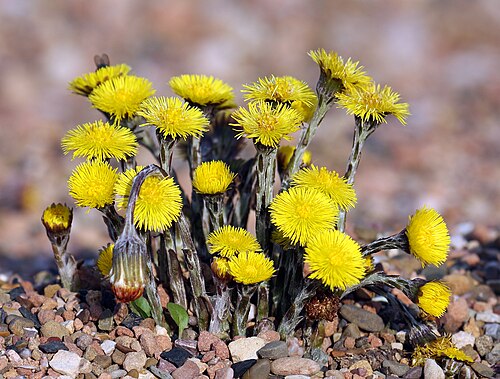


1,637,505 animal records in March.
At their peak in April


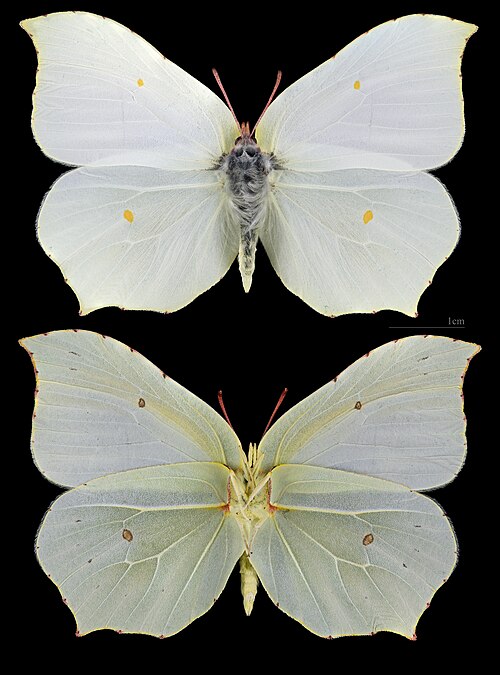

Most seen in April

Plants and fungi at their peak in April


2,159,553 animal records in April.
At their peak in May


Most seen in May
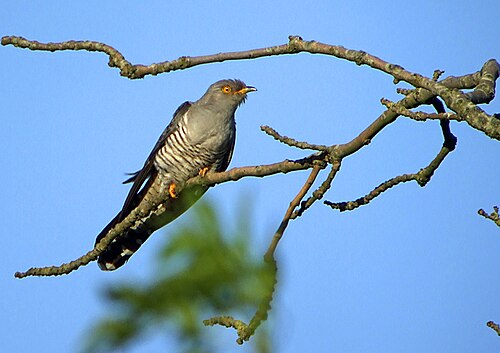
Plants and fungi at their peak in May
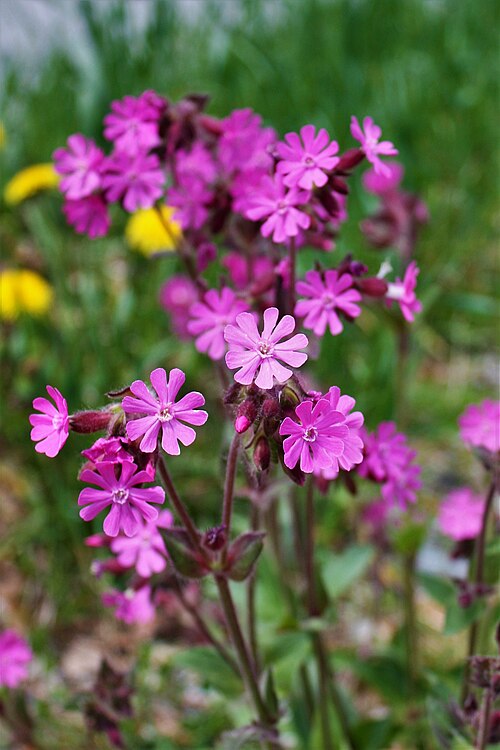


2,316,159 animal records in May.
At their peak in June


Most seen in June
Plants and fungi at their peak in June


1,957,244 animal records in June.
At their peak in July

Most seen in July
Plants and fungi at their peak in July



1,858,657 animal records in July.
At their peak in August


Most seen in August


Plants and fungi at their peak in August

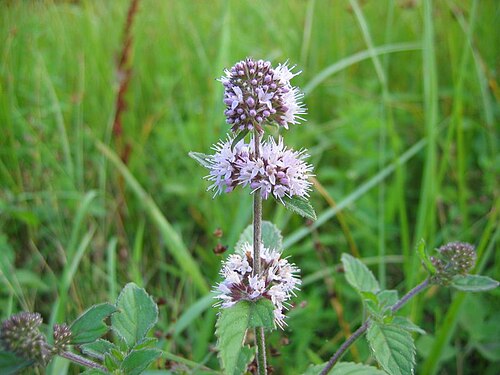
1,751,778 animal records in August.
At their peak in September

Most seen in September

Plants and fungi at their peak in September
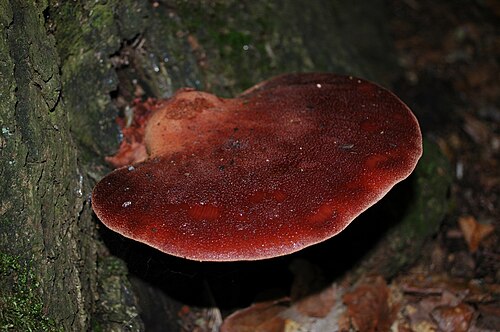


1,421,192 animal records in September.
At their peak in October


Most seen in October
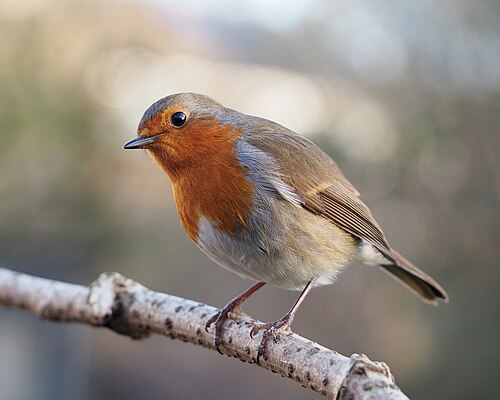
Plants and fungi at their peak in October
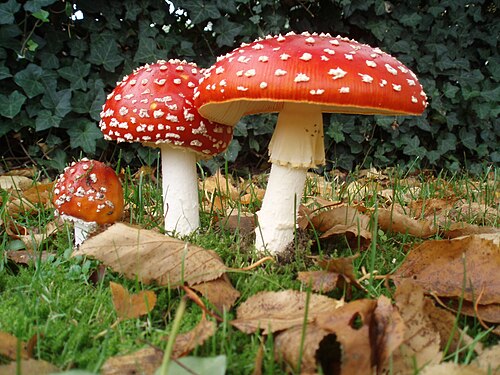
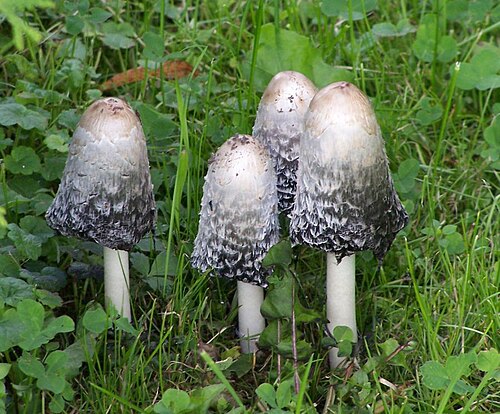


1,131,514 animal records in October.
At their peak in November

Most seen in November
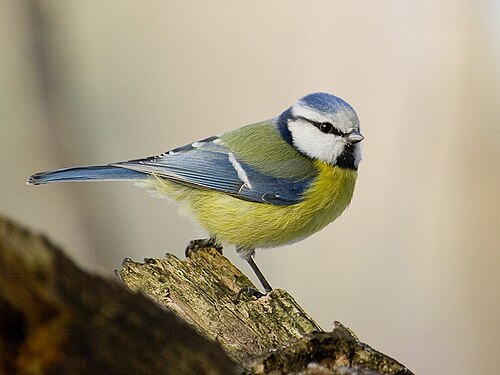
Plants and fungi at their peak in November
909,871 animal records in November.

Amsterdam is getting warmer
+1.6 °CAverage temperature around Amsterdam in 2016–2025, compared with 1981–1990.
Daylight: about 8 hours in December and 17 in June.
Seen something near Amsterdam?
Share a photo of it on iNaturalist. Other naturalists help name it, and confirmed records go to GBIF, where scientists use them. That is where the lists on this page come from.
Amsterdam on the living planet
More places near Amsterdam
Sources and photo credits
- Wikidata · Amsterdam (Q727), facts and nature places
- Wikipedia page views · how well known each nature place is
- OpenStreetMap contributors via Waymarked Trails · marked walking routes (ODbL)
- GBIF · human observations within 50 km, 2016–2025 (18,390,102 animal records)
- NASA POWER · yearly temperature from satellite and model data (MERRA-2)
- MET Norway · weather now (shown live)
- Natural Earth · populated place 1159151519, public domain
- Vondelpark, Amsterdam: Dguendel, CC BY 4.0
- Amstel, Amsterdam: Debot at Dutch Wikipedia, CC BY-SA 3.0
- Vondelpark, Amsterdam: Dguendel, CC BY 4.0
- IJ, Amsterdam: Unknown authorUnknown author, Public domain
- Prinsengracht, Amsterdam: Kaz Alting, CC BY-SA 3.0
- Zaan, Amsterdam: Nilkes at Dutch Wikipedia (Original text: Niels Kim, Niels Kim.nl), CC BY-SA 3.0
- Singel, Amsterdam: Massimo Catarinella, CC BY-SA 3.0
- Amsterdamse Bos, Amsterdam: Shirley de Jong, CC BY-SA 3.0
- Vecht, Amsterdam: F.Lang, CC BY-SA 3.0
- Common coot: Noodle snacks, CC BY-SA 3.0
- Common blackbird: Hobbyfotowiki, CC0
- Mallard: Rolf Dietrich Brecher from Germany, CC BY 2.0
- Great tit: Frank Vassen from Brussels, Belgium, CC BY 2.0
- Great egret: Calibas, CC BY-SA 3.0
- Muskrat: David Menke, Public domain
- Red admiral: Toni Wöhrl, CC BY-SA 4.0
- Speckled wood: Alvesgaspar, CC BY-SA 3.0
- Common carder bee: Ivar Leidus, CC BY-SA 4.0
- European hare: caroline legg, CC BY 2.0
- Blue-tailed damselfly: Charles J. Sharp, CC BY-SA 3.0
- Drone fly: Alvesgaspar, CC BY-SA 3.0
- Eurasian wigeon: Почта России, Public domain
- Common merganser: Frank Schulenburg, CC BY-SA 3.0
- Smew: MPF, CC BY-SA 3.0
- Common goldeneye: Calibas, CC BY-SA 3.0
- Common orange lichen: Holger Krisp, CC BY 3.0
- Witches' butter: J. Carmichael, Public domain
- Lecidella lichen: Jymm, CC BY-SA 4.0
- European mole: Didier Descouens, CC BY-SA 4.0
- Snowdrop: Tim Green, CC BY 2.0
- Lesser celandine: AnRo0002, CC0
- Winter aconite: Afanasovich, CC BY-SA 4.0
- Common chiffchaff: Alexis Lours, CC BY 4.0
- Black-tailed godwit: W. Bulach, CC BY-SA 4.0
- Common redshank: Andreas Trepte, CC BY-SA 2.5
- Eurasian oystercatcher: Andreas Trepte, CC BY-SA 2.5
- Northern pintail: Frank Schulenburg, CC BY-SA 4.0
- Woodlark: Ján Svetlík, CC BY-SA 2.0
- Coltsfoot: Andreas Trepte, CC BY-SA 2.5
- Red dead-nettle: Daniel J. Layton, CC BY-SA 4.0
- Spring fumewort: Bernd Haynold, CC BY 2.5
- Sedge warbler: Billy Lindblom from Hallsberg, Sweden, CC BY 2.0
- Bluethroat: Ragnhild&Neil Crawford from Sweden, CC BY-SA 2.0
- Willow warbler: Andreas Trepte, CC BY-SA 2.5
- Brimstone: Didier Descouens, CC BY-SA 4.0
- Cetti's warbler: Dûrzan cîrano, CC BY-SA 3.0
- Ground ivy: AnRo0002, CC0
- Garlic mustard: O. Pichard, CC BY-SA 3.0
- Ramsons: Agnes Monkelbaan, CC BY-SA 4.0
- Common cuckoo: GabrielBuissart, CC BY-SA 3.0
- Common swift: Alexis Lours, CC BY 4.0
- Common whitethroat: Steve Garvie from Dunfermline, Fife, Scotland, CC BY-SA 2.0
- Garden warbler: Biillyboy, CC BY 2.0
- Common nightingale: Արարատ Թրվանց, CC BY-SA 4.0
- Red campion: J. Patrick Fischer, CC BY-SA 3.0
- Yellow flag: Jean-Jacques MILAN, CC BY-SA 3.0
- Germander speedwell: Didier Descouens, CC BY-SA 4.0
- Black-tailed skimmer: Charles J. Sharp, CC BY-SA 4.0
- Meadow brown: James K. Lindsey, CC BY-SA 3.0
- Marsh orchid: W. Bulach, CC BY-SA 4.0
- Blueweed: Giuseppe Frizzi, Public domain
- Common valerian: Ivar Leidus, CC BY-SA 4.0
- Bee orchid: Didier Descouens, CC BY-SA 4.0
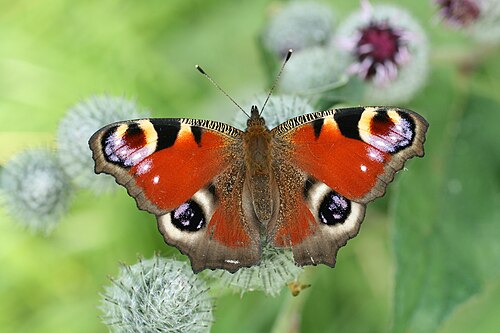
- Peacock: Korall, CC BY-SA 3.0
- Comma: Charles J. Sharp, CC BY-SA 4.0
- Common ragwort: Julie Anne Workman, CC BY-SA 3.0
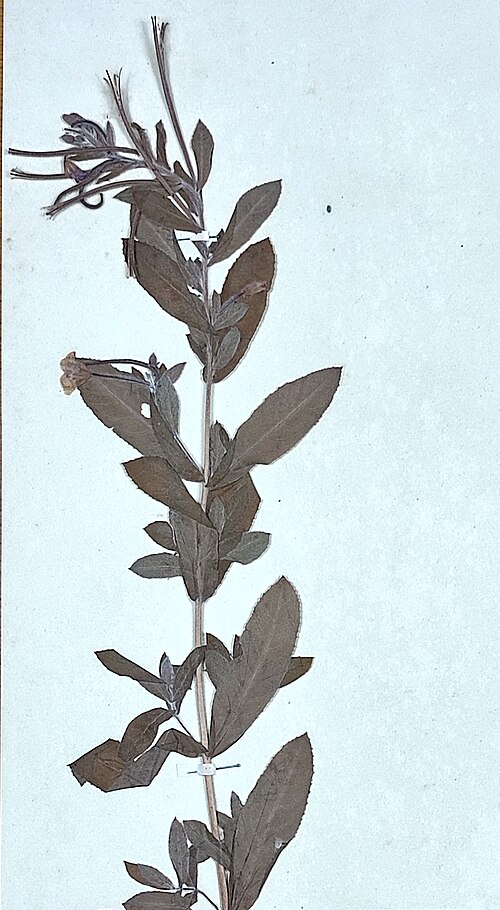
- Great willowherb: Giuseppe Frizzi, Public domain
- Purple loosestrife: Ivar Leidus, CC BY-SA 3.0
- Hogweed: Christian Fischer, CC BY-SA 3.0
- Eurasian reed warbler: Ron Knight, CC BY 2.0
- Grey heron: Bengt Nyman from Vaxholm, Sweden, CC BY 2.0
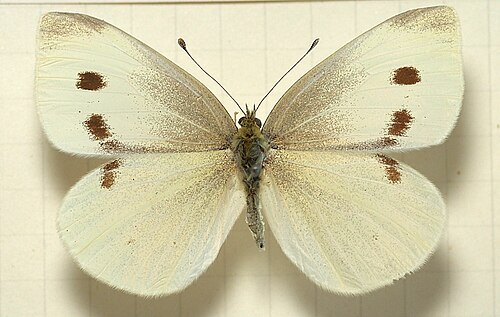
- Small white: Sarefo, CC BY-SA 3.0
- Green-veined white: Didier Descouens, CC BY-SA 4.0
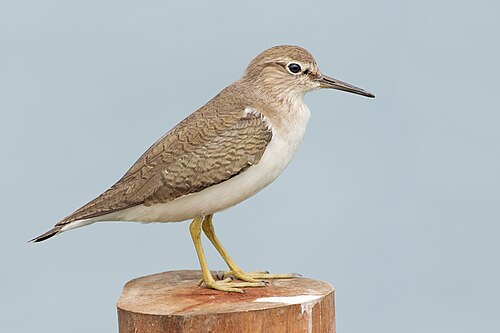
- Common sandpiper: JJ Harrison (https://www.jjharrison.com.au/), CC BY 3.0
- Small tortoiseshell: Didier Descouens, CC BY-SA 4.0
- Hemp agrimony: Burkhard Mücke, CC BY-SA 4.0
- Water mint: Kristian Peters -- Fabelfroh 09:40, 12 March 2007 (UTC), CC BY-SA 3.0
- Eurasian blackcap: Ron Knight from Seaford, East Sussex, United Kingdom, CC BY 2.0
- Northern wheatear: Andreas Trepte, CC BY-SA 2.5
- Beefsteak fungus: Jiří Berkovec, CC BY-SA 3.0
- Giant polypore: voir ci-dessous / see below, CC BY 3.0
- Butter and eggs: Ivar Leidus, CC BY-SA 3.0
- European robin: Francis C. Franklin, CC BY-SA 3.0
- Goldcrest: Missy Osborn from New Forest, England, CC BY-SA 2.0
- Redwing: Andreas Trepte, CC BY-SA 2.5
- Common firecrest: Frank Vassen, CC BY 2.0
- Bearded reeding: Kaeptn chemnitz, CC BY 3.0
- Fly agaric: Onderwijsgek, CC BY-SA 3.0 nl
- Lawyer's wig: A. Uciechowska, CC BY-SA 3.0
- Amethyst deceiver: Luridiformis at en.wikipedia, CC BY 3.0
- Bay bolete: Jean-Pol GRANDMONT, CC BY 3.0
- Eurasian blue tit: Sławek Staszczuk, CC BY-SA 3.0
- Greater white-fronted goose: MPF, CC BY-SA 3.0
- Common reed: Darkone (talk · contribs), CC BY-SA 2.0


Wildlife records show where people have seen and shared plants and animals, not everything that lives here; some places and months are recorded more than others. Sensitive species are never shown with a month or as seen recently. Routes come from OpenStreetMap and are not checked by 4Planet: follow local signs and conditions. Climate figures are NASA estimates for the area around Amsterdam, not a single weather station.
Checked 2026-11-20.