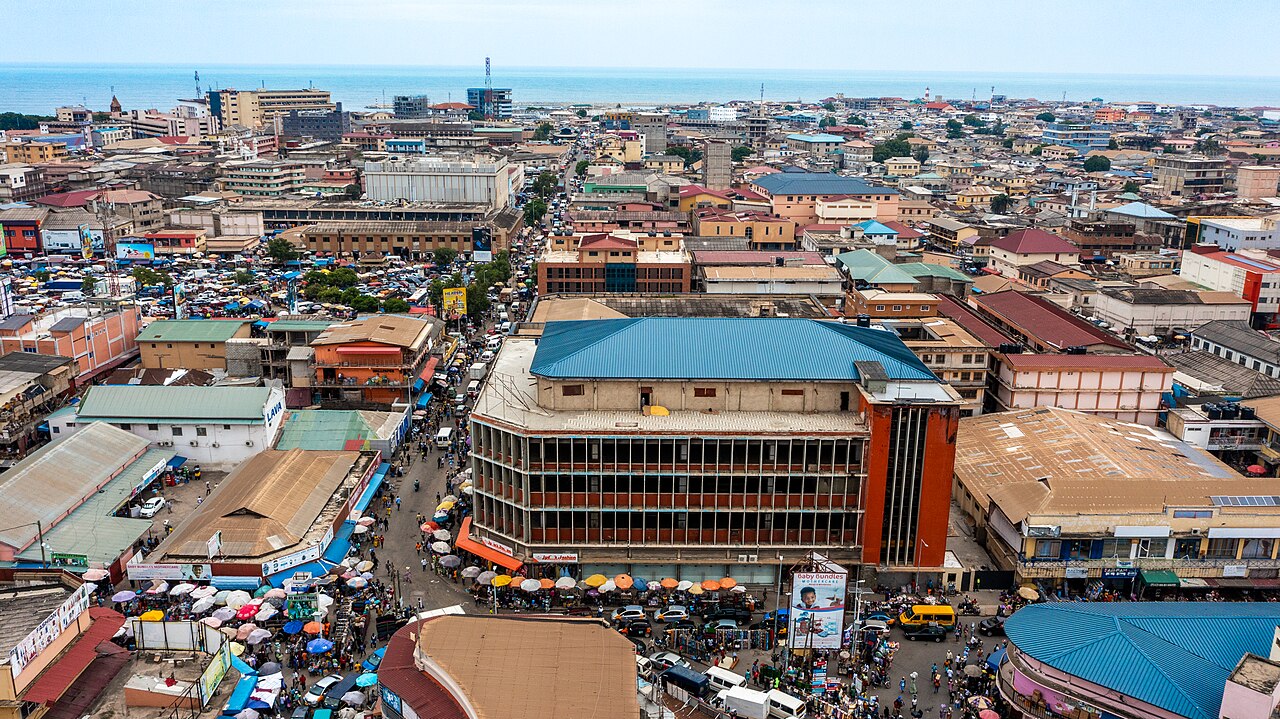
Accra
Capital city of Ghana
Within 30 km of the centre of Accra, the nature places people read about most are Labadi Beach, Densu River, Korle Lagoon and Achimota Forest.
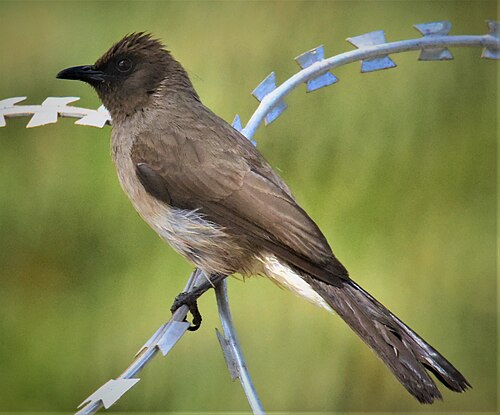
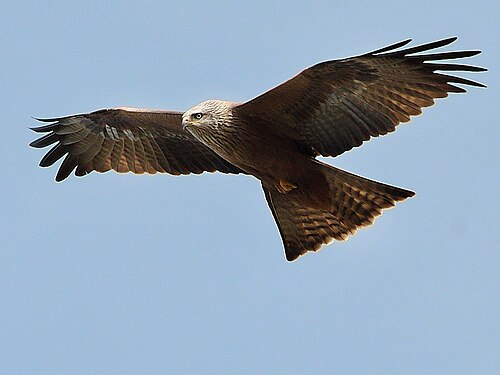
People have shared 56,592 wildlife records within 50 km of Accra in the last ten years. The wild animals recorded most often are the laughing dove, the pied crow, the common bulbul, the western plantain-eater and the black kite. Since the 1980s the area has become about 0.6 °C warmer.
Of the 93 cities on Atlas, Accra has the most species named on its page. Among the animals people record most around Accra, the western plantain-eater and the olive baboon appear on no other city page here.
- Country
- Ghana
- Population
- 1.8 million
- Area
- 173,000,000 km²
- Elevation
- 61 m
- Currency
- Ghana cedi
- Time zone
- UTC+00
- Daylight
- About 12 hours all year
Figures from Wikidata; population 2021.
Accra on the map
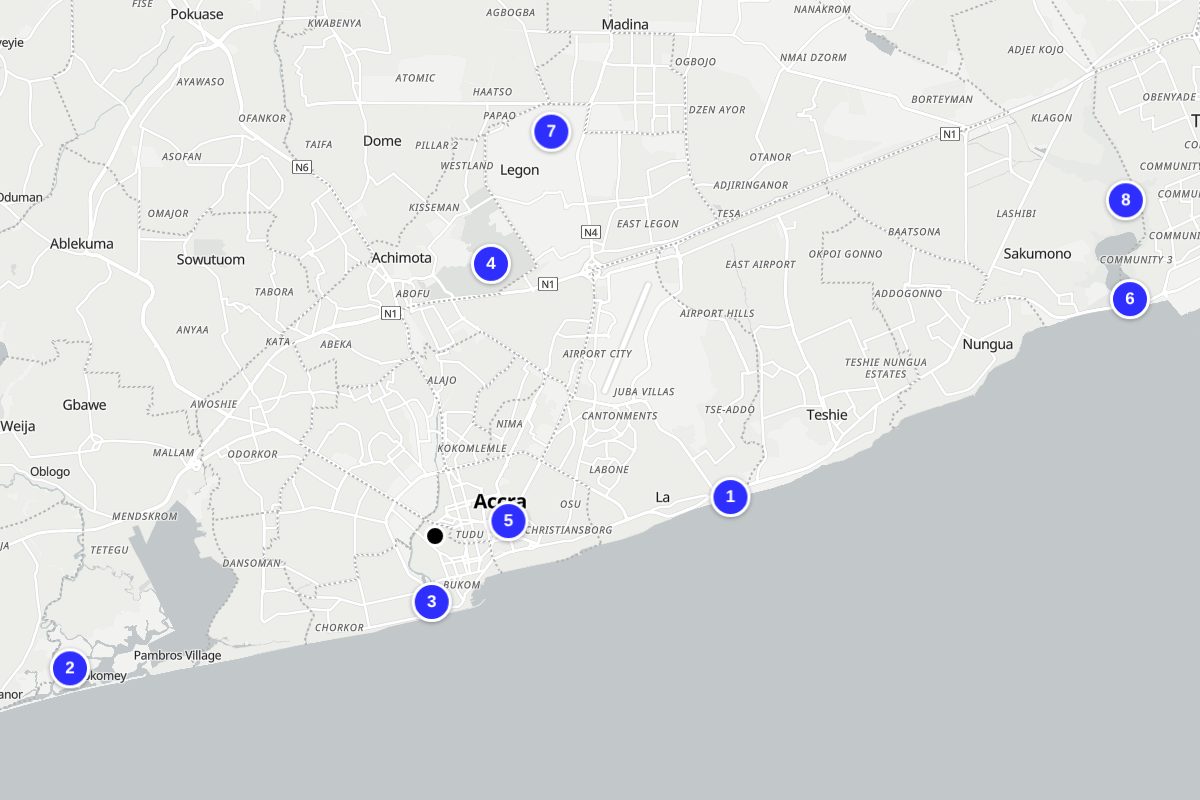
Numbers match the places below. Map: © OpenStreetMap contributors, OpenFreeMap.
- Labadi Beach
- Densu River
- Korle Lagoon
- Achimota Forest
- Efua Sutherland Children's Park
- Sakumo Ramsar Site
- Legon Botanical Gardens
- Sakumono Lagoon
Nature close to Accra
The places people read most about, from the centre outwards.


- Labadi Beach Beach · 9 km
- Sakumo Ramsar Site Lagoon · 22 km
Routes from OpenStreetMap via Waymarked Trails. Not checked by 4Planet: follow local signs and conditions.
Wildlife around Accra
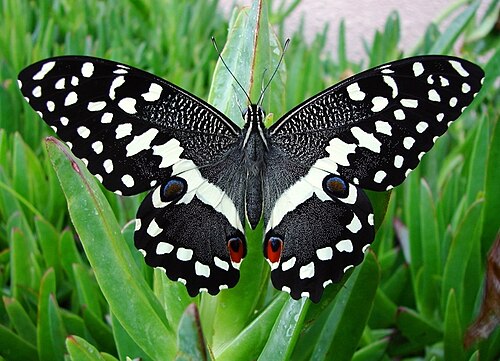
The wild animals people record most within 50 km, 2016–2025. Tick the ones you have seen to build your own list.






Seen in the last 30 days
What can you see near Accra now?
Month by month, from 56,592 records people shared within 50 km, 2016–2025.


At their peak in February

Most seen in February
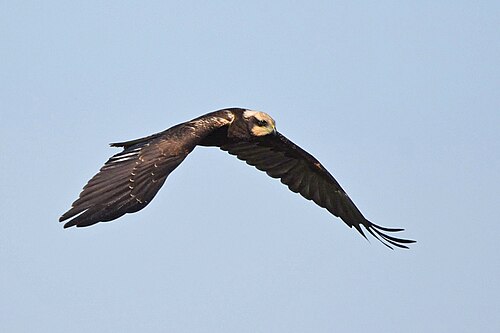
7,488 animal records in February.
At their peak in March


Most seen in March
7,431 animal records in March.
At their peak in April

Most seen in April
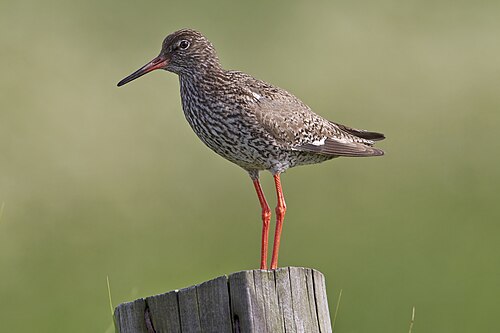
3,302 animal records in April.
At their peak in May


Most seen in May
3,314 animal records in May.

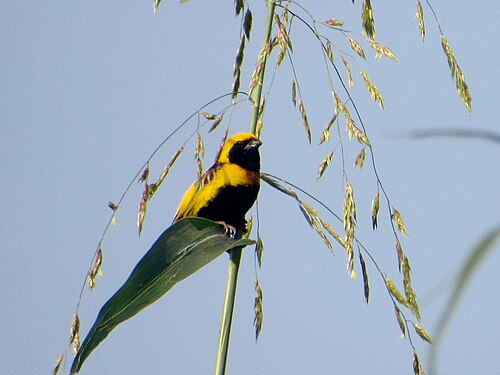


At their peak in August


Most seen in August
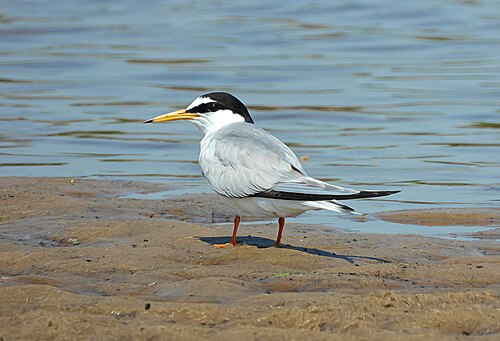
3,357 animal records in August.
At their peak in September


Most seen in September
2,517 animal records in September.


At their peak in November
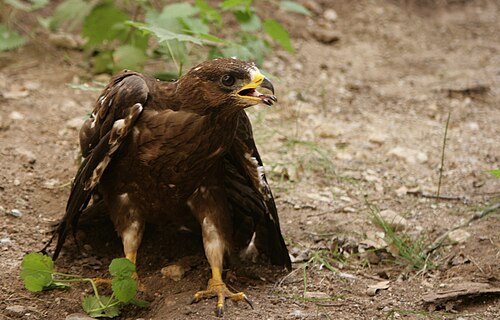
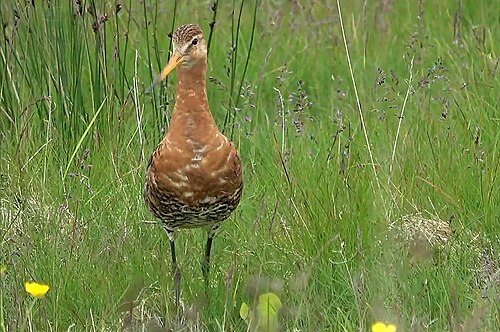

Most seen in November
10,017 animal records in November.
At their peak in December


Most seen in December
3,952 animal records in December.
Accra is getting warmer
+0.6 °CAverage temperature around Accra in 2016–2025, compared with 1981–1990.
Daylight: about 12 hours in December and 12 in June.
Seen something near Accra?
Share a photo of it on iNaturalist. Other naturalists help name it, and confirmed records go to GBIF, where scientists use them. That is where the lists on this page come from.
Explore next
What puts Accra under pressure, what helps, and who works on it.
Accra on the living planet
More places near Accra
Sources and photo credits
- Wikidata · Accra (Q3761), facts and nature places
- Wikipedia page views · how well known each nature place is
- OpenStreetMap contributors via Waymarked Trails · marked walking routes (ODbL)
- GBIF · human observations within 50 km, 2016–2025 (56,592 animal records)
- NASA POWER · yearly temperature from satellite and model data (MERRA-2)
- MET Norway · weather now (shown live)
- Natural Earth · populated place 1159151403, public domain
- Accra, Ghana: Goldenwabbit, CC BY-SA 4.0
- Densu River, Accra: Abubakar Umar, CC BY-SA 4.0
- Korle Lagoon, Accra: finnish eye, CC BY-SA 2.0
- Achimota Forest, Accra: Kwaku Berko, CC BY-SA 4.0
- Efua Sutherland Children's Park, Accra: Guido Sohne, CC BY-SA 2.0
- Legon Botanical Gardens, Accra: ArabaDankwa, CC BY-SA 4.0
- Sakumono Lagoon, Accra: Natborks, CC BY-SA 3.0
- Laughing dove: Giles Laurent, CC BY-SA 4.0
- Pied crow: Frank Vassen from Brussels, Belgium, CC BY 2.0
- Common bulbul: Ulas koksal1, CC BY-SA 4.0
- Western plantain-eater: www.opencage photographer, CC BY-SA 2.5
- Black kite: Thomas Kraft (ThKraft), CC BY-SA 2.5
- Olive baboon: ryan harvey from Portland, OR, CC BY-SA 2.0
- Citrus swallowtail: Col André Kritzinger, CC BY-SA 3.0
- Mimic: ManaskaMukhopadhyay, CC BY-SA 4.0
- Tantalus monkey: Diego Delso, CC BY-SA 4.0
- Straw-coloured fruit bat: Fritz Geller-Grimm, CC BY-SA 2.5
- Lesser spot-nosed monkey: Tom JAMONNEAU, CC BY-SA 4.0
- Common agama: Charles J. Sharp, CC BY-SA 4.0
- Western marsh harrier: Pierre-Marie Epiney, CC BY-SA 2.0
- African paradise flycatcher: Charles J. Sharp, CC BY-SA 4.0
- West African crested tern: rangersara, CC0
- Rosy bee-eater: Francesco Veronesi, CC BY-SA 2.0
- Common redshank: Andreas Trepte, CC BY-SA 2.5
- Helmeted guineafowl: New Jersey Birds, CC BY-SA 2.0
- Scarlet-chested sunbird: Derek Keats from Johannesburg, South Africa, CC BY 2.0
- Whinchat: Artur Mikołajewski, CC BY 2.5
- European bee-eater: Петро Катеринич, CC BY 4.0
- Western swamphen: Andreas Trepte, CC BY-SA 4.0
- Red-shouldered cuckooshrike: Francesco Veronesi from Italy, CC BY-SA 2.0
- Red-billed firefinch: Tom Tarrant, CC BY-SA 3.0
- Northern red bishop: Steve Garvie from Dunfermline, Fife, Scotland, CC BY-SA 2.0
- Little tern: PetroKaterynych, CC BY 4.0
- Yellow-crowned bishop: luckyatabo, CC BY 4.0
- Cattle egret: iNaturalist.org (Patrick Le Mao), CC0
- Black-crowned night heron: Rhododendrites, CC BY-SA 4.0
- Mottled spinetail: John Gerrard Keulemans, Public domain
- Pin-tailed whydah: New Jersey Birds, CC BY-SA 2.0
- Diederik cuckoo: Flickr user Alastair Rae . Photo uploaded to commons by user ltshears, CC BY-SA 2.0
- Sanderling: Jacob Spinks from Northamptonshire, England, CC BY 2.0
- Greater blue-eared starling: flowcomm, CC BY 2.0
- Violet-backed starling: Charles J. Sharp, CC BY-SA 4.0
- Yellow-mantled widowbird: Nigel Voaden from UK, CC BY-SA 2.0
- European honey buzzard: Sillerkiil, CC BY-SA 4.0
- Black-tailed godwit: W. Bulach, CC BY-SA 4.0
- Tambourine dove: Alan Manson, CC BY-SA 3.0
- Yellow-billed kite: Diego Delso, CC BY-SA 4.0
- White-crested helmetshrike: Farid AMADOU BAHLEMAN, CC BY-SA 4.0
- Little grebe: Zeynel Cebeci, CC BY-SA 4.0


Wildlife records show where people have seen and shared plants and animals, not everything that lives here; some places and months are recorded more than others. Sensitive species are never shown with a month or as seen recently. Routes come from OpenStreetMap and are not checked by 4Planet: follow local signs and conditions. Climate figures are NASA estimates for the area around Accra, not a single weather station.
Checked 2026-11-20.