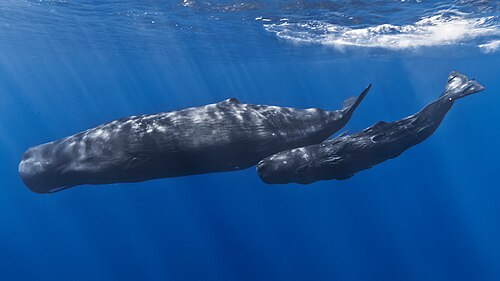
 Sperm whalePhyseter macrocephalus
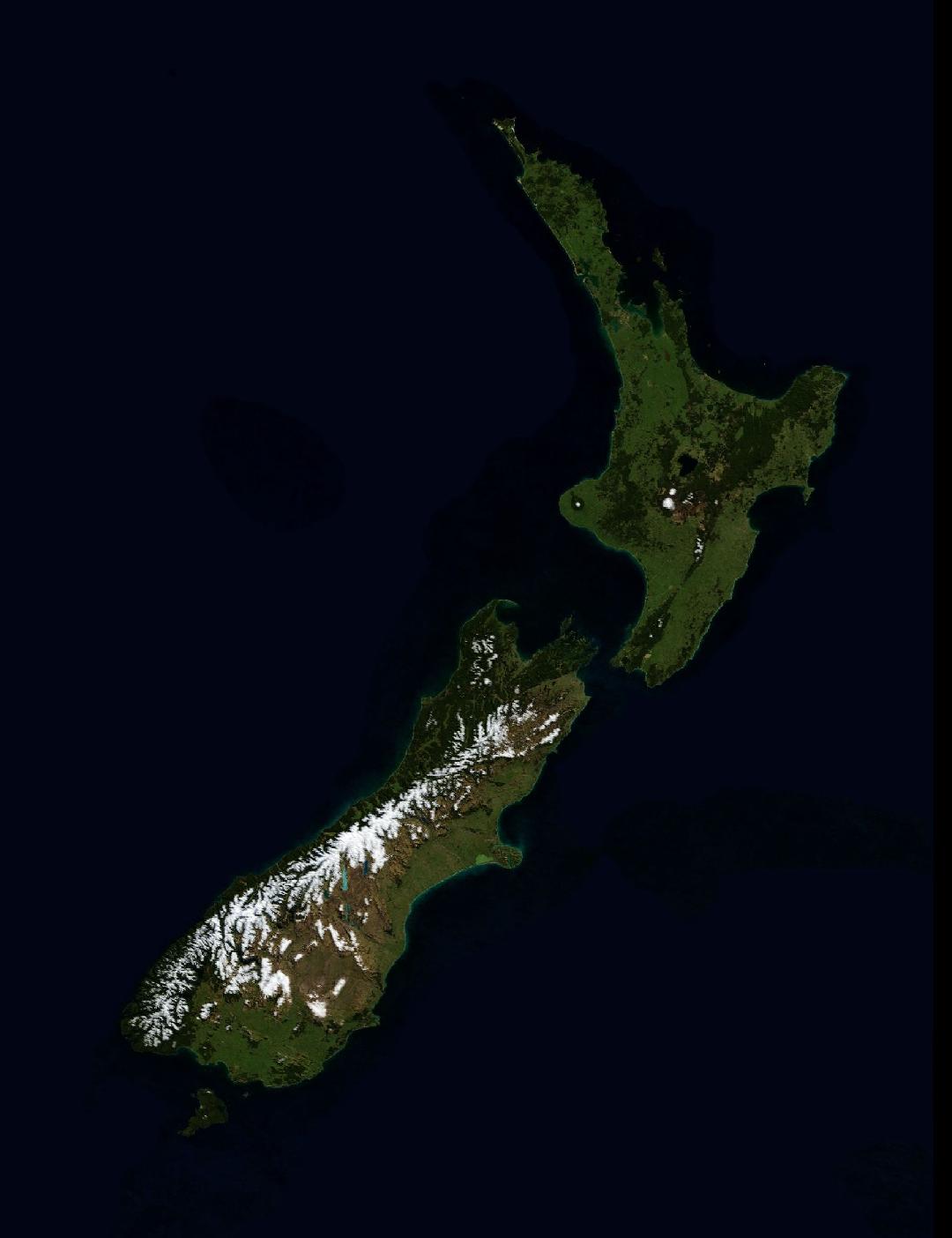
New Zealand
An island country in the south west Pacific.
Image: NASA Blue Marble. Borders: Natural Earth.
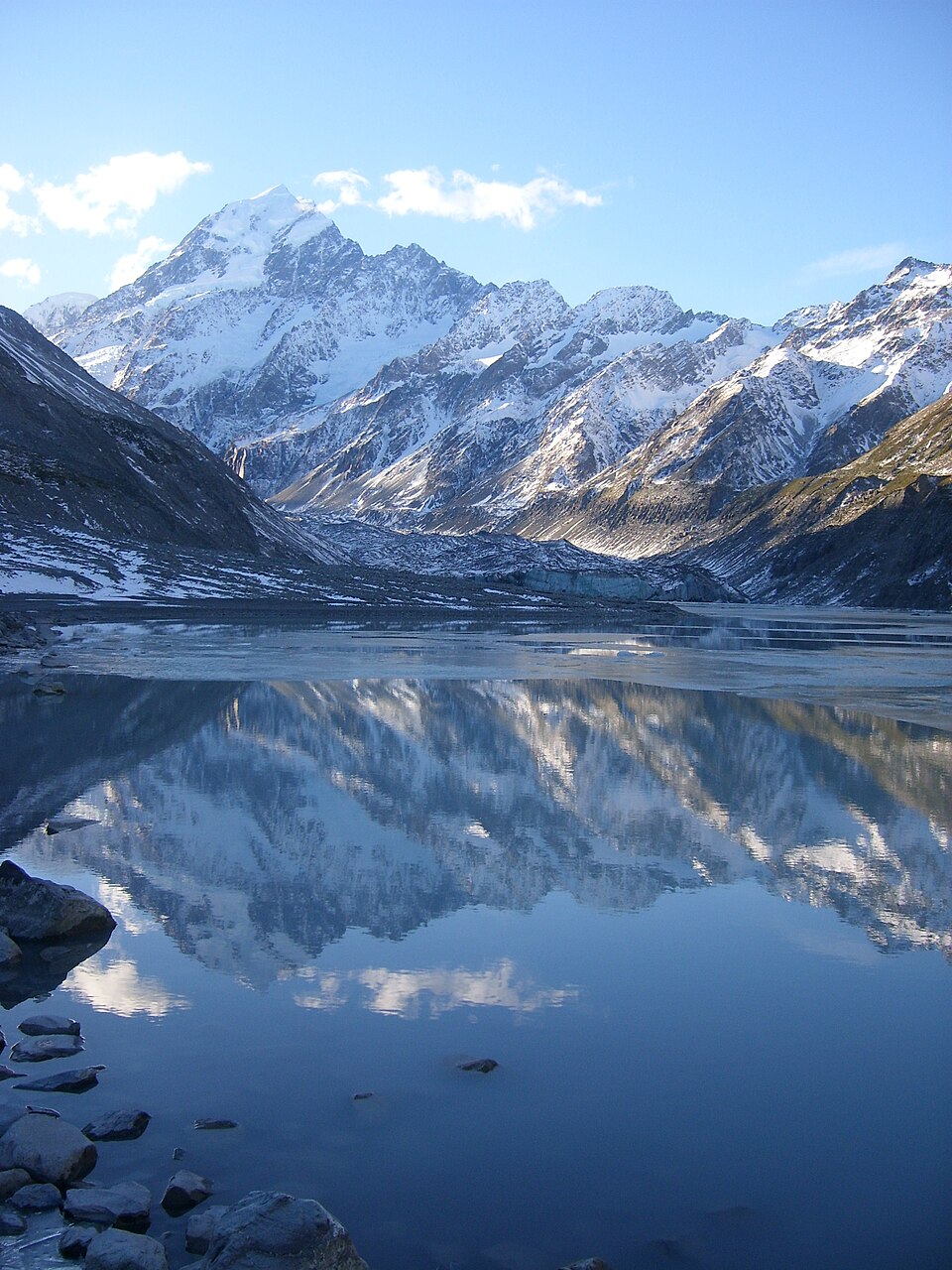
New Zealand is made up of two main islands and many smaller ones. The North Island has volcanoes and geothermal areas, while the Southern Alps run the length of the South Island, with glaciers and the fjords of Fiordland.
It separated from other land long ago, so most of its birds evolved without mammals, including the kiwi and the kākāpō, a flightless parrot. Whales and dolphins live in its seas, such as the sperm whales off Kaikōura.
It is one of only 3 country pages here that feature the great white shark.
New Zealand
- Capital
- Wellington
- Population
- 5.3 million
- Area
- 268,021 km²
- Continent
- Insular Oceania, Oceania, Australian continent
- Highest point
- Aoraki / Mount Cook, 3,724 m
- Languages
- Māori, New Zealand Sign Language, English
- Currency
- New Zealand dollar
- Time zone
- 4 time zones
Figures from Wikidata; population 2024.
New Zealand in pictures


Which animals live in New Zealand?
Among the animals recorded in New Zealand are the sperm whale, the common bottlenose dolphin, the great white shark, the giant oceanic manta ray and the orca. These are wildlife records shared through GBIF, not a full list of the animals that live here.
Sperm whalePhyseter macrocephalus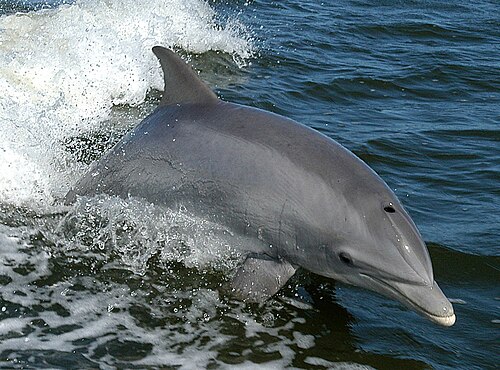 Common bottlenose dolphinTursiops truncatus
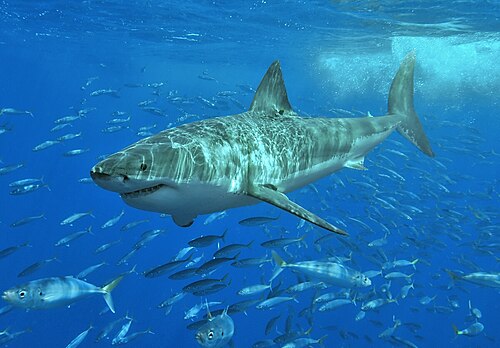 Great white sharkCarcharodon carcharias
 Giant oceanic manta rayMobula birostris
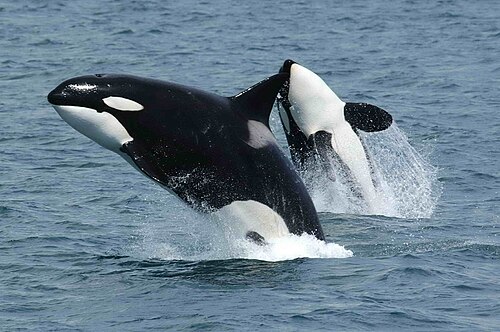 OrcaOrcinus orca
Where can you see them?
- Tongariro National ParkEstablished 1887 · 796 km² · UNESCO
- Fiordland National ParkEstablished 1952 · 12,500 km²
- Aoraki / Mount Cook National ParkEstablished 1953 · 707 km²
- Abel Tasman National ParkEstablished 1942 · 22,530 km²
- Westland Tai Poutini National ParkEstablished 1960 · 1,275 km²
- Egmont National ParkEstablished 1900 · 342 km²
What is putting pressure on nature here?
Introduced rats, stoats and possums kill native birds, and much of the forest was cleared for farming. Farming pollutes rivers, and warming seas affect marine life.
Learn more about New Zealand
New Zealand on the living planet
Keep exploring from New Zealand
Cities in New Zealand
Species pages with records from New Zealand
Common blackbirdHouse sparrowCommon starlingEurasian chaffinchMallardEurasian skylarkCommon mynaRock doveCommon redpollGreat cormorantGreylag gooseGreat egret
Countries nearby
Sources and photo credits
- Wikidata · New Zealand (Q664), facts and national parks
- Convention on Biological Diversity · New Zealand country profile
- GBIF · human observations in New Zealand, used to choose the species
- Natural Earth · country borders, public domain
- NASA GIBS · Blue Marble imagery, public domain
- Aoraki / Mount Cook National Park, New Zealand: C.M. Lynch (talk · contribs), CC BY-SA 3.0
- Abel Tasman National Park, New Zealand: Pseudopanax at English Wikipedia, Public domain
- Westland Tai Poutini National Park, New Zealand: Department of Conservation, CC BY 2.0
- Rakiura National Park, New Zealand: Ingolfson at English Wikipedia (Original text: Uploader.), Public domain
- Nelson Lakes National Park, New Zealand: Michal Klajban, CC BY-SA 4.0
- Sperm whale: Gabriel Barathieu, CC BY-SA 2.0
- Common bottlenose dolphin: NASA, Public domain
- Great white shark: Pterantula (Terry Goss) at en.wikipedia, CC BY 2.5
- Giant oceanic manta ray: jon hanson from london, UK, CC BY-SA 2.0
- Orca: Robert Pittman, Public domain


Borders and the capital show where New Zealand is. Wildlife records show where people have seen animals, not where they all live today.
Checked 2026-11-20.