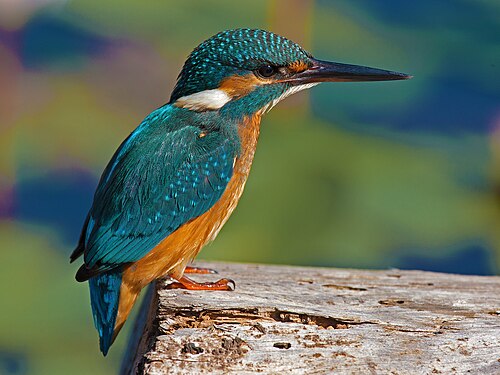
 Common kingfisherAlcedo atthis
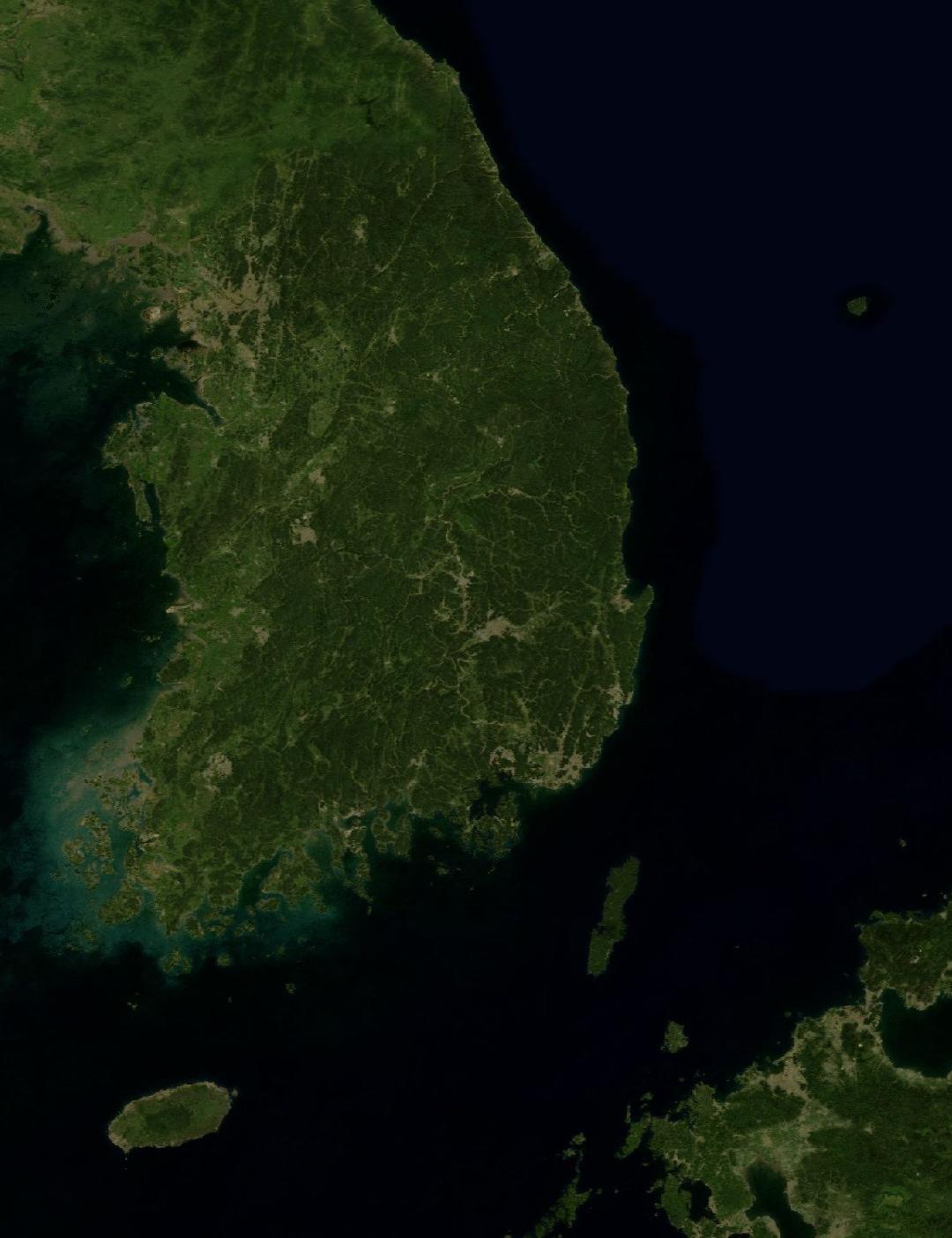
South Korea
A country in East Asia, on the southern half of the Korean Peninsula.
Image: NASA Blue Marble. Borders: Natural Earth.
South Korea is a land of forested mountains, which cover around two thirds of the country, and coasts with thousands of islands. Its west coast has some of the largest tidal flats in the world, and Jeju Island in the south is a volcanic island.
The tidal flats are a vital stopover for shorebirds flying between Australia and the Arctic, and red-crowned and white-naped cranes winter near the border with the north. Its forests were largely replanted after being cleared in the twentieth century.
South Korea
- Capital
- Seoul
- Population
- 51.5 million
- Area
- 100,295 km²
- Continent
- Asia
- Highest point
- Hallasan, 1,947 m
- Languages
- Korean, Korean Sign Language
- Currency
- Won
- Time zone
- 3 time zones
Figures from Wikidata; population 2017.
South Korea in pictures


Which animals live in South Korea?
Among the animals recorded in South Korea are the common kingfisher, the western honey bee, the peregrine falcon and the green sea turtle. These are wildlife records shared through GBIF, not a full list of the animals that live here.
Common kingfisherAlcedo atthis Western honey beeApis mellifera
 Peregrine falconFalco peregrinus
 Green sea turtleChelonia mydas
Where can you see them?
- Seoraksan National ParkEstablished 1970 · 39,822 km²
- Hallasan National ParkEstablished 1970 · 9,093 km²
- Bukhansan National ParkEstablished 1983 · 77 km²
- Jirisan National ParkEstablished 1967 · 47,175 km²
- Gayasan National ParkEstablished 1972 · 1,676 km²
- Dadohaehaesang National ParkEstablished 1981 · 23,212 km²
What is putting pressure on nature here?
Tidal flats have been reclaimed for farmland and industry, and rivers have been dammed and channelled. Forest fires are becoming larger, and air pollution and warming seas affect wildlife on land and at sea.
Who is working on it
Revitalizing Korea's Forests From Fire
Restoration of fire-damaged forest in Uljin, prioritising native biodiversity, resilience after fire and community livelihoods.
Read about the project in ImpactProfiled from public sources. Not a 4Planet partnership.
Learn more about South Korea
South Korea on the living planet
Keep exploring from South Korea
Cities in South Korea
Species pages with records from South Korea
Eurasian tree sparrowGrey heronGreat egretMallardGreat cormorantWhite wagtailLong-tailed titRock doveGreat spotted woodpeckerBarn swallowEurasian tealEurasian jay
Countries nearby
Sources and photo credits
- Wikidata · South Korea (Q884), facts and national parks
- Convention on Biological Diversity · South Korea country profile
- GBIF · human observations in South Korea, used to choose the species
- 4Planet Impact · Revitalizing Korea's Forests From Fire
- Natural Earth · country borders, public domain
- NASA GIBS · Blue Marble imagery, public domain
- Seoraksan National Park, South Korea: kallerna, CC BY-SA 4.0
- Jirisan National Park, South Korea: by eimoberg, CC BY 2.0
- Dadohaehaesang National Park, South Korea: justinjfj, CC BY 2.0
- Gyeongju National Park, South Korea: riNux from Taipei, Taiwan, CC BY-SA 2.0
- Deogyusan National Park, South Korea: Yoo Chung, CC BY-SA 2.5
- Common kingfisher: Artemy Voikhansky, CC BY-SA 4.0
- Western honey bee: Vasily Reinkymov, CC0
- Peregrine falcon: Georges Lignier (georges.lignier@wanadoo.fr), CC BY-SA 3.0
- Green sea turtle: Charles J. Sharp, CC BY-SA 4.0


Borders and the capital show where South Korea is. Wildlife records show where people have seen animals, not where they all live today.
Checked 2026-11-19.