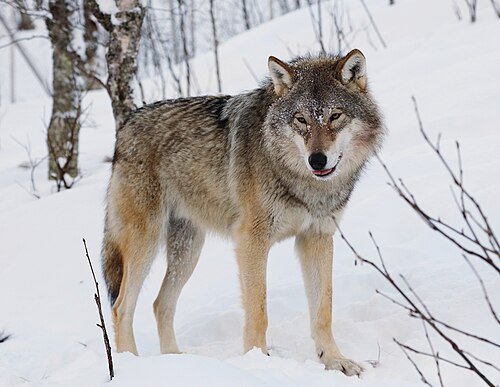
 Gray wolfCanis lupus
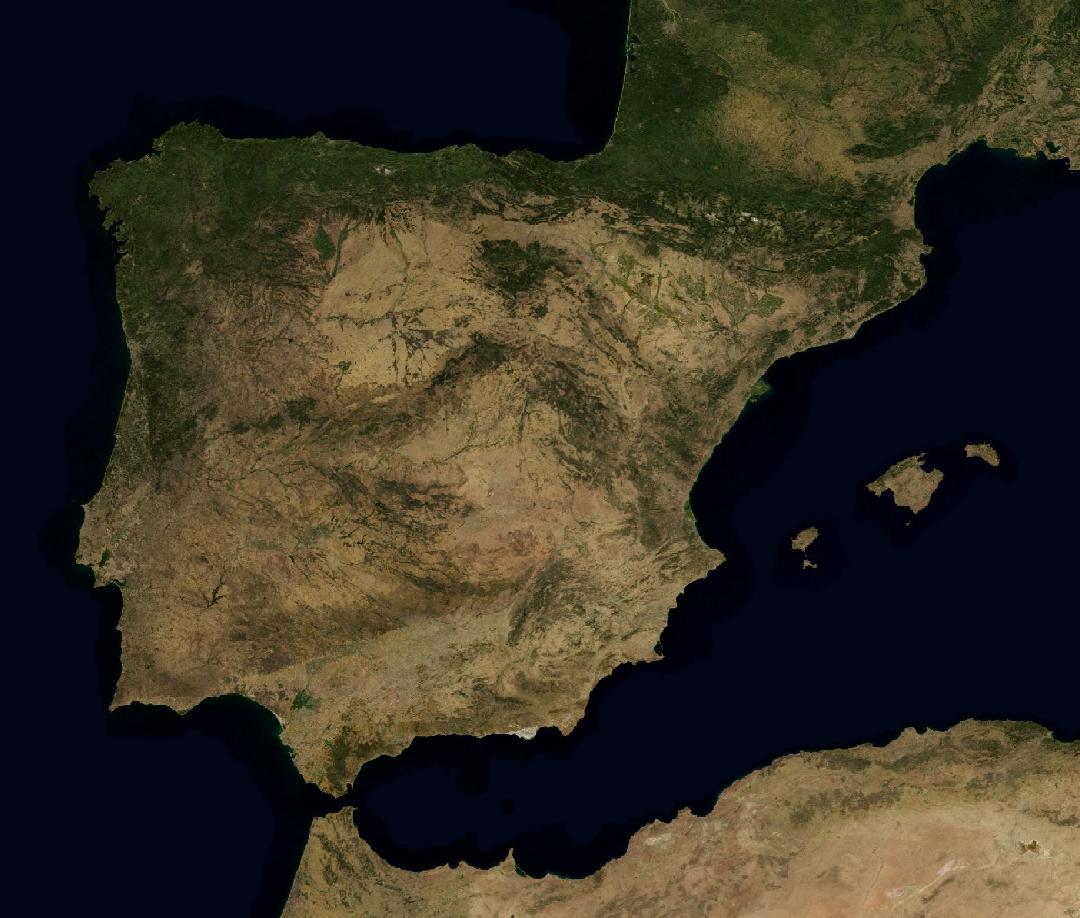
Spain
A country in south west Europe, on the Iberian Peninsula.
Image: NASA Blue Marble. Borders: Natural Earth.
Spain covers most of the Iberian Peninsula, with high plateaus at its centre, the Pyrenees to the north and long coasts on the Atlantic and the Mediterranean. Its landscapes range from wet green forests to semi-desert.
It is the last stronghold of the Iberian lynx, which has recovered from fewer than 100 animals to more than 2,000. Doñana is one of the most important wetlands in Europe, and Spain holds most of Europe's vultures.
122 of the 174 species with a page on Species have been recorded here, the 2nd most of any country.
Spain
- Capital
- Madrid
- Population
- 48.6 million
- Area
- 505,990 km²
- Continent
- Europe, Africa, Asia
- Highest point
- Teide, 3,715 m
- Languages
- Spanish, Galician, Basque, Catalan
- Currency
- Euro
- Time zone
- 4 time zones
Figures from Wikidata; population 2024.
Spain in pictures


Which animals live in Spain?
Among the animals recorded in Spain are the gray wolf, the common octopus, the common kingfisher, the peregrine falcon and the red fox. These are wildlife records shared through GBIF, not a full list of the animals that live here.
Gray wolfCanis lupus Common octopusOctopus vulgaris
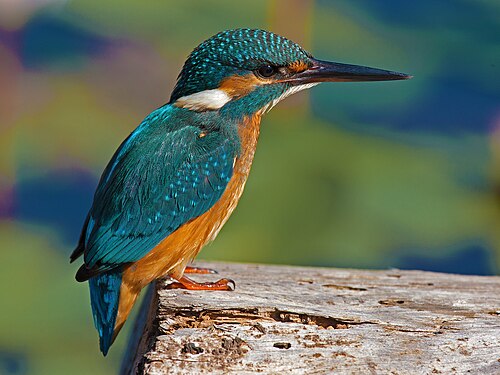 Common kingfisherAlcedo atthis
 Peregrine falconFalco peregrinus
 Red foxVulpes vulpes
Where can you see them?
- Teide National ParkEstablished 1954 · 18,825 km² · UNESCO
- Garajonay National ParkEstablished 1981 · 3,705 km² · UNESCO
- Doñana National ParkEstablished 1969 · 54,252 km² · UNESCO
- Ordesa y Monte Perdido National ParkEstablished 1918 · 15,691 km²
- Picos de Europa National ParkEstablished 1918 · 67,127 km²
- Timanfaya National ParkEstablished 1974 · 5,177 km²
What is putting pressure on nature here?
Water for farming and tourism drains aquifers and wetlands such as Doñana, and coasts are heavily built up. Droughts and forest fires are becoming more severe as the climate warms.
Who is working on it
Ecosystems Restoration in Mar Menor
A Spanish government programme to restore the Mar Menor lagoon by tackling pollution at its source, restoring habitats and involving the public.
Read about the project in ImpactProfiled from public sources. Not a 4Planet partnership.
Learn more about Spain
Spain on the living planet
Keep exploring from Spain
Cities in Spain
Species pages with records from Spain
Common blackbirdHouse sparrowCommon wood pigeonEurasian magpieEuropean robinWhite wagtailMallardGreat titEurasian chaffinchBarn swallowRock doveGrey heron
Countries nearby
Sources and photo credits
- Wikidata · Spain (Q29), facts and national parks
- Convention on Biological Diversity · Spain country profile
- GBIF · human observations in Spain, used to choose the species
- 4Planet Impact · Ecosystems Restoration in Mar Menor
- Natural Earth · country borders, public domain
- NASA GIBS · Blue Marble imagery, public domain
- Teide National Park, Spain: Thomas Wolf, www.foto-tw.de, CC BY-SA 3.0 de
- Garajonay National Park, Spain: Diego Delso, CC BY-SA 3.0
- Doñana National Park, Spain: Gabriela Coronado Hernández, CC BY-SA 4.0
- Ordesa y Monte Perdido National Park, Spain: Heparina1985, CC BY-SA 4.0
- Picos de Europa National Park, Spain: Sara Bento Photography, CC BY-SA 4.0
- Gray wolf: User:Mas3cf, CC BY-SA 4.0
- Common octopus: Comingio Merculiano (1845-1915) in Jatta Giuseppe (1860-1903), Public domain
- Common kingfisher: Artemy Voikhansky, CC BY-SA 4.0
- Peregrine falcon: Georges Lignier (georges.lignier@wanadoo.fr), CC BY-SA 3.0
- Red fox: ClaudiaTen, CC BY-SA 4.0


Borders and the capital show where Spain is. Wildlife records show where people have seen animals, not where they all live today.
Checked 2026-11-19.