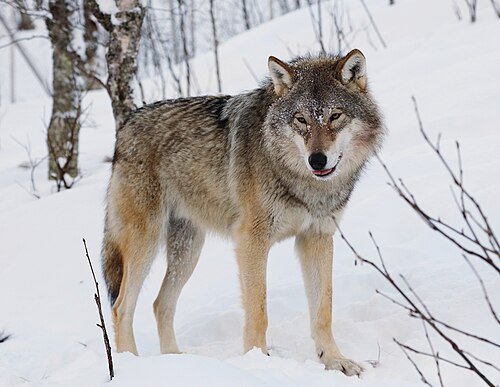
 Gray wolfCanis lupus
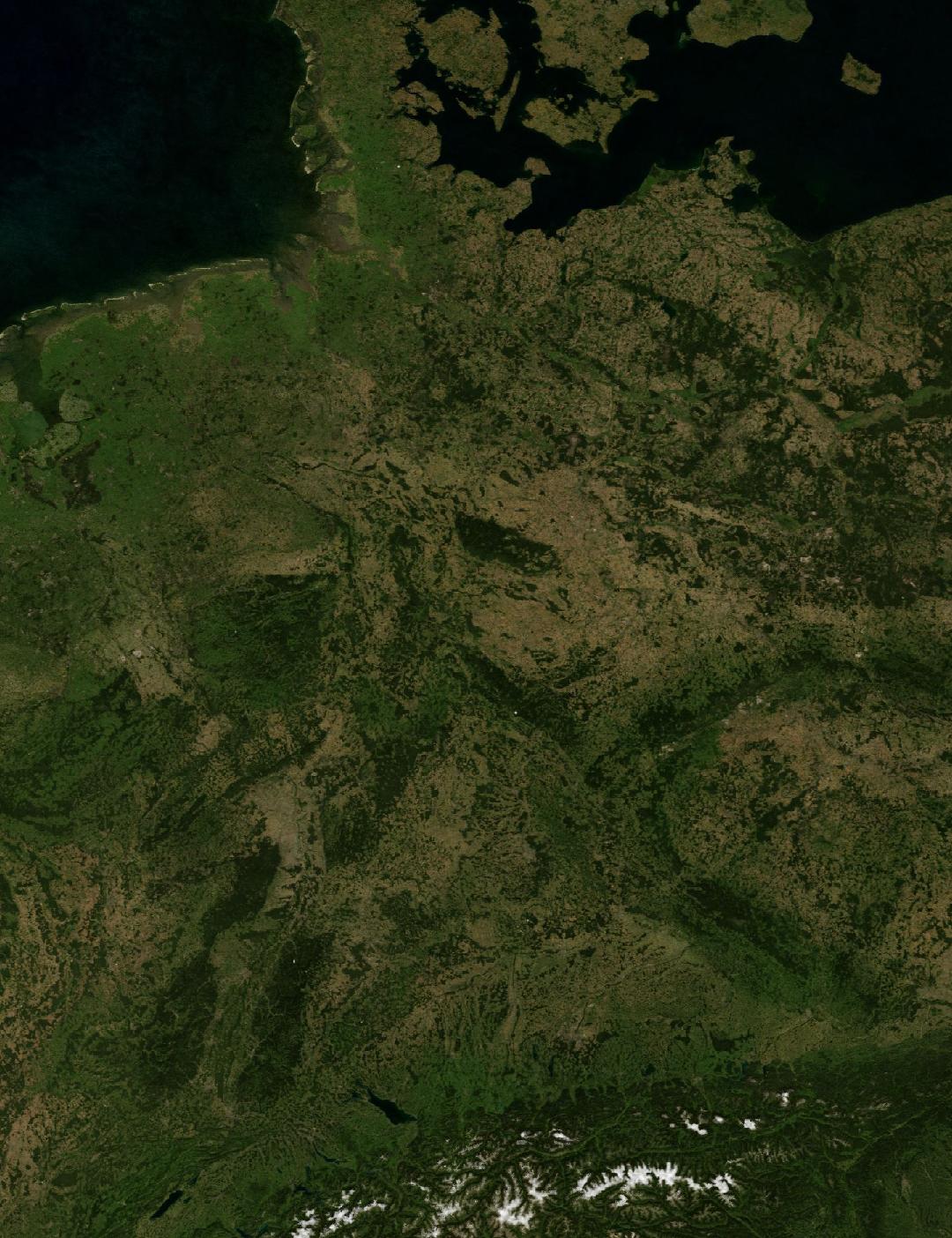
Germany
A country in central Europe, from the North Sea to the Alps.
Image: NASA Blue Marble. Borders: Natural Earth.
Germany reaches from the tidal flats of the North Sea and the Baltic coast across rolling hills and river valleys to the Alps in the south. Forests still cover about a third of the country, and the Rhine, Elbe and Danube cross it.
The Wadden Sea along its North Sea coast is one of the largest tidal wetlands on Earth and a stopover for millions of migrating birds. Wolves have returned on their own since 2000, and lynx and beavers are back in parts of the country.
118 of the 174 species with a page on Species have been recorded here, the 6th most of any country.
Germany
- Capitals
- Berlin, Berlin, Berlin
- Population
- 83.5 million
- Area
- 357,588 km²
- Continent
- Europe
- Highest point
- Zugspitze, 2,962 m
- Language
- German
- Currency
- Euro
- Time zone
- 2 time zones
Figures from Wikidata; population 2025.
Germany in pictures


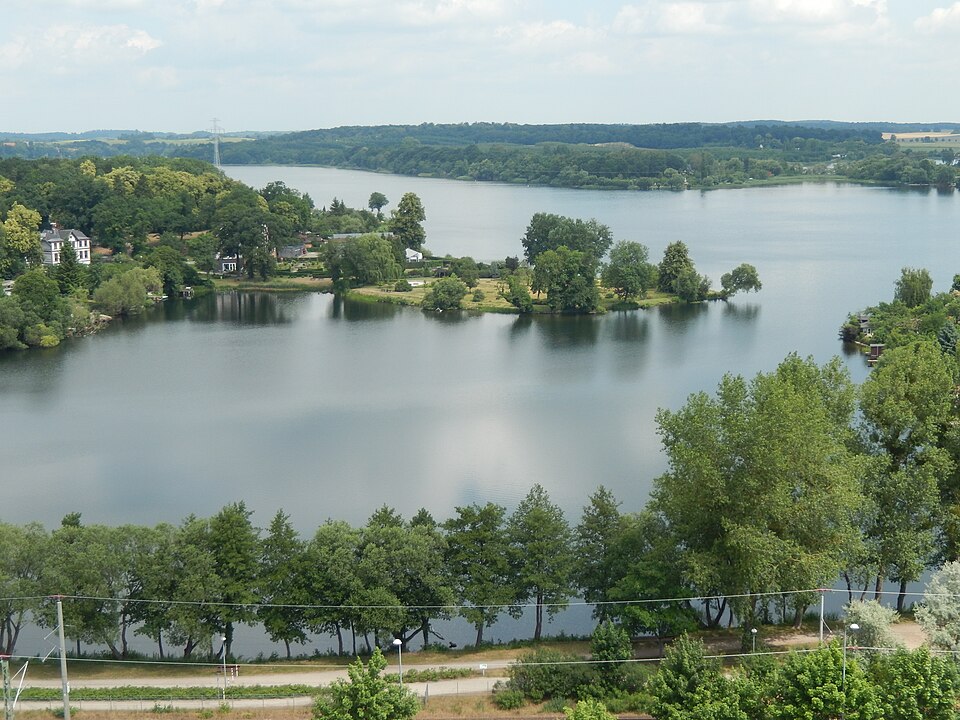
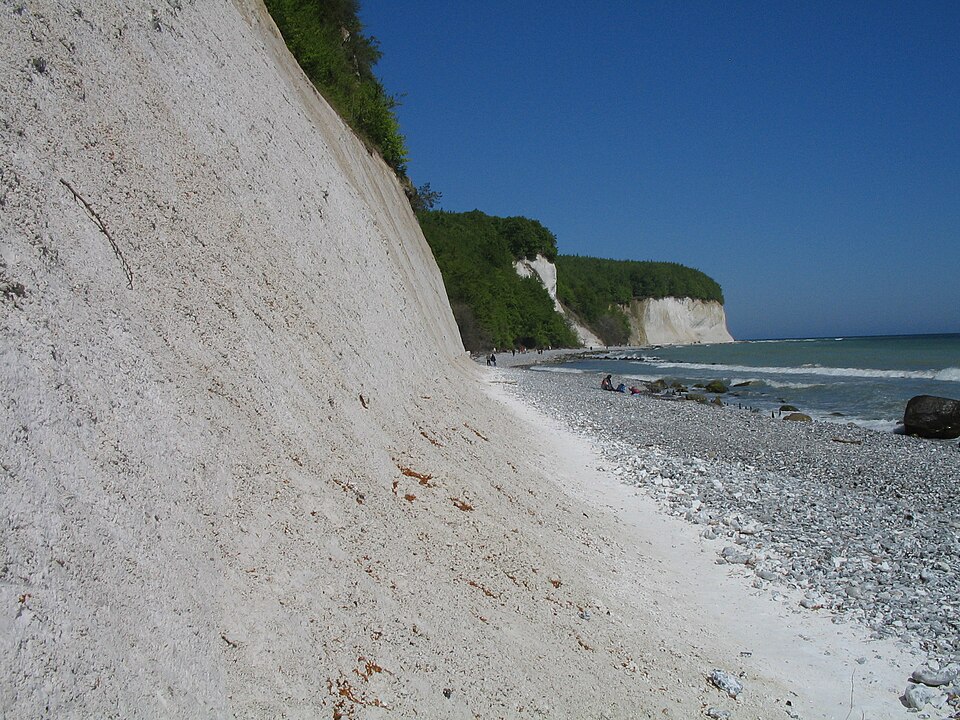

Which animals live in Germany?
Among the animals recorded in Germany are the gray wolf, the western honey bee, the common kingfisher, the red fox and the blue mussel. These are wildlife records shared through GBIF, not a full list of the animals that live here.
Gray wolfCanis lupus Western honey beeApis mellifera
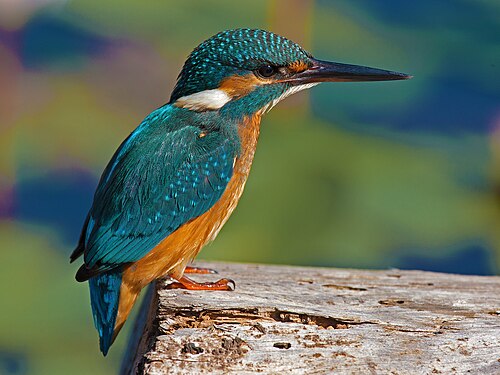 Common kingfisherAlcedo atthis
 Red foxVulpes vulpes
 Blue musselMytilus edulis
Where can you see them?
- Berchtesgaden National ParkEstablished 1978 · 20,804 km²
- Eifel National ParkEstablished 2004 · 10,770 km²
- Müritz National ParkEstablished 1994 · 32,200 km²
- Jasmund National ParkEstablished 1990 · 3,070 km²
- Hainich National ParkEstablished 1997 · 7,513 km²
- Bavarian Forest National ParkEstablished 1970 · 24,217 km²
What is putting pressure on nature here?
Intensive farming has led to steep declines in insects and farmland birds, and many rivers have been straightened and dammed. Drought and bark beetles have killed large areas of spruce forest in recent years.
Learn more about Germany
Explore next
What puts Germany under pressure, what helps, and who works on it.
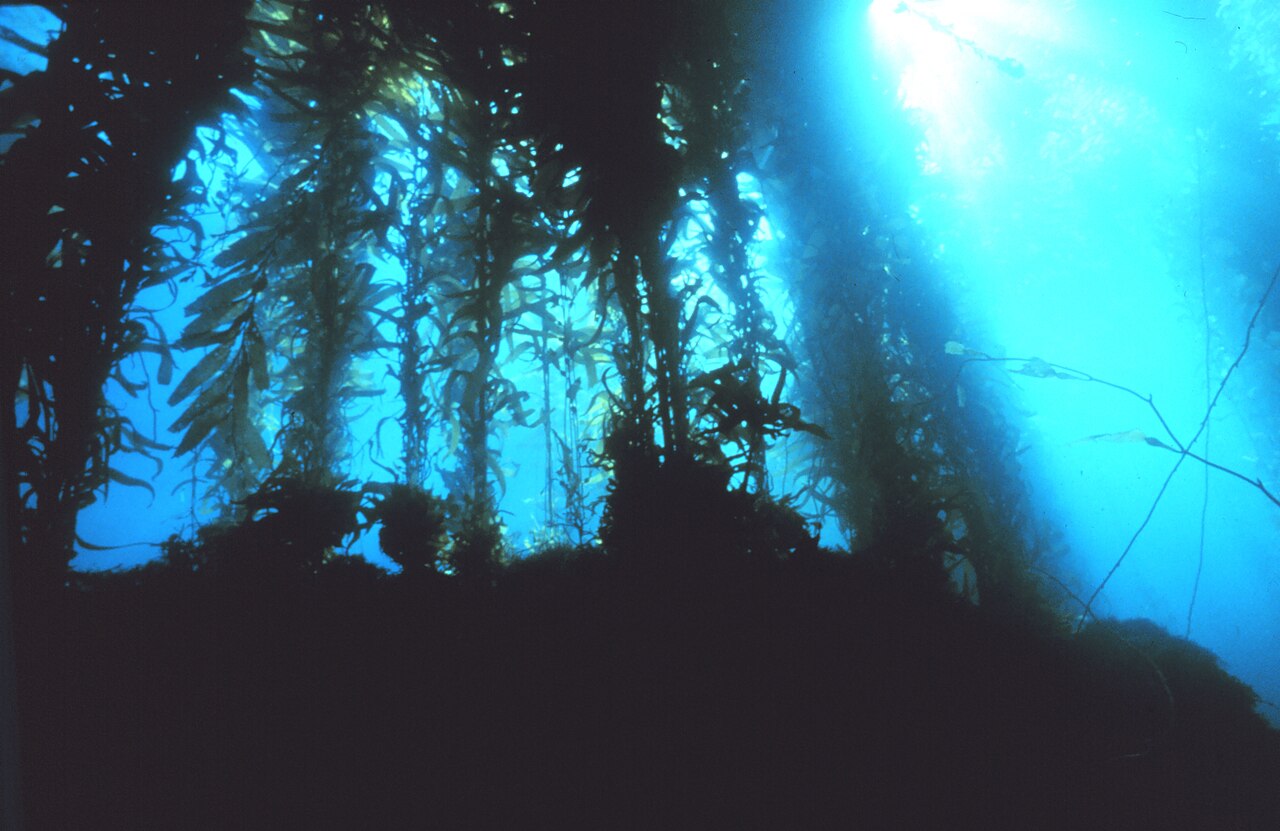
Germany on the living planet
Keep exploring from Germany
Cities in Germany
Species pages with records from Germany
Common blackbirdGreat titCommon wood pigeonEurasian blue titMallardEurasian chaffinchEuropean robinGreat spotted woodpeckerGrey heronCommon buzzardEurasian magpieCommon starling
Countries nearby
Sources and photo credits
- Wikidata · Germany (Q183), facts and national parks
- Convention on Biological Diversity · Germany country profile
- GBIF · human observations in Germany, used to choose the species
- Natural Earth · country borders, public domain
- NASA GIBS · Blue Marble imagery, public domain
- Berchtesgaden National Park, Germany: Günter Seggebäing, Coesfeld, CC BY-SA 3.0
- Eifel National Park, Germany: Michielverbeek, CC BY-SA 4.0
- Müritz National Park, Germany: Bybbisch94, Christian Gebhardt, CC BY-SA 4.0
- Jasmund National Park, Germany: René Bäck, CC BY 3.0
- Hainich National Park, Germany: Dietmar Rabich, CC BY-SA 4.0
- Gray wolf: User:Mas3cf, CC BY-SA 4.0
- Western honey bee: Vasily Reinkymov, CC0
- Common kingfisher: Artemy Voikhansky, CC BY-SA 4.0
- Red fox: ClaudiaTen, CC BY-SA 4.0
- Blue mussel: Benutzer:Darkone, 26. Oktober 2003, CC BY-SA 2.0


Borders and the capital show where Germany is. Wildlife records show where people have seen animals, not where they all live today.
Checked 2026-11-19.