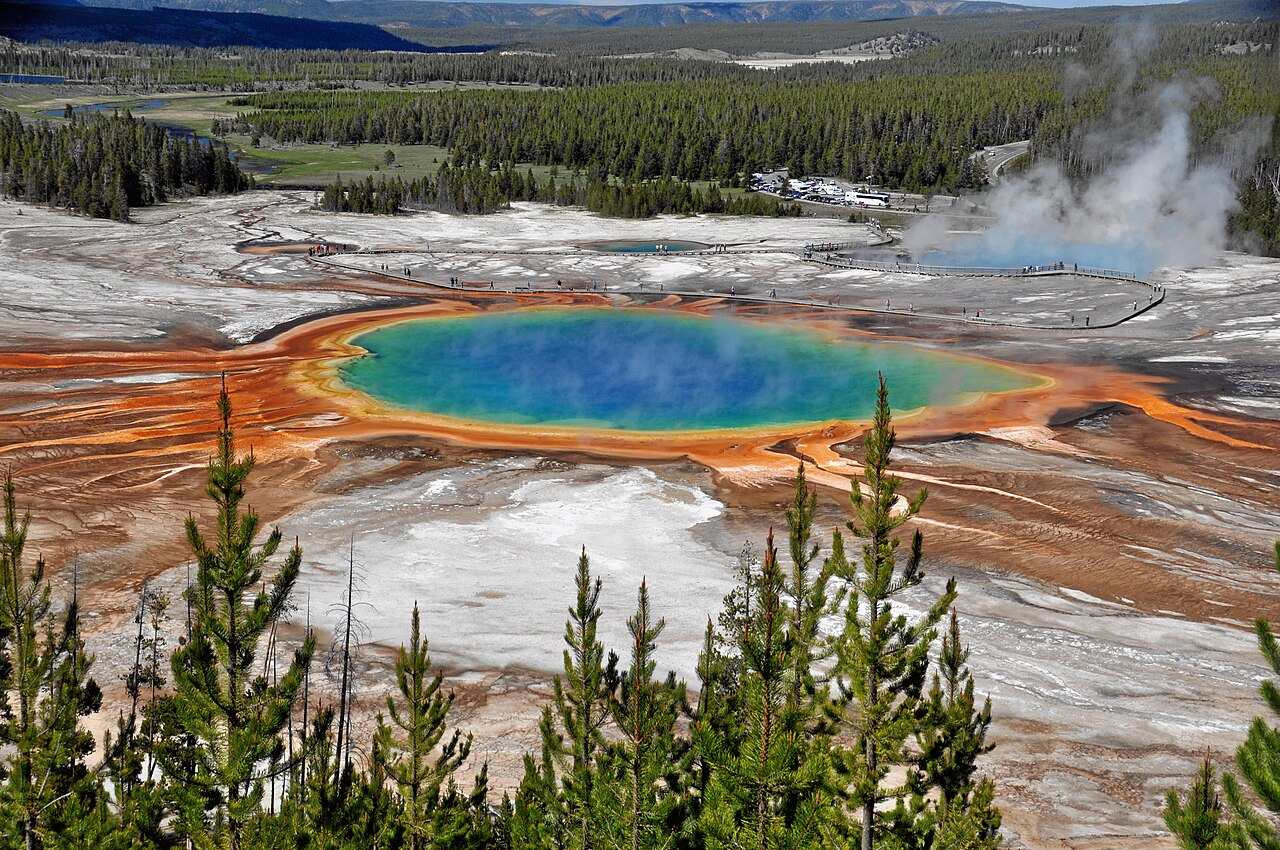
Yellowstone
Wyoming, Montana and Idaho, United States
Yellowstone became the world's first national park in 1872. It sits on a volcanic hotspot full of geysers and hot springs, and holds one of the largest herds of wild bison in North America. Wolves were brought back in 1995, after some seventy years without them.
People have shared 262,277 records of animals and plants from the Lamar Valley, the Hayden Valley and the Old Faithful area with GBIF in ten years. This page shows the 28 species recorded most often there, and 34 links between them that studies have recorded: who eats whom.
- Kind
- Ecosystem
- Where
- Wyoming, Montana and Idaho, United States
- Species shown
- 28, the most recorded
- Food web
- 34 recorded links between them
- Records
- 262,277 in 2016–2025
- Sample areas
- the Lamar Valley, the Hayden Valley, the Old Faithful area
Who eats whom in Yellowstone
Food flows upwards: plants and small animals at the bottom, hunters at the top. Tap a species to see its links, then take it out of the web to see who would lose food.
Tap a species.
All 34 recorded links
- American black bear eats Canada goose
- American black bear eats Red deer
- American black bear eats Golden-mantled ground squirrel
- American black bear eats Bighorn sheep
- Coyote eats Red squirrel
- Coyote eats Red deer
- Coyote eats Common raven
- Coyote eats Golden-mantled ground squirrel
- Coyote eats American black bear
- Coyote eats Mallard
- Coyote eats Canada goose
- Coyote eats Bighorn sheep
- Coyote eats Pronghorn
- Coyote eats Yellow-bellied marmot
- Coyote eats Uinta ground squirrel
- Red squirrel eats American robin
- Red squirrel eats Lodgepole pine
- Common raven eats American robin
- Common raven eats Brewer's blackbird
- Common raven eats Canada goose
- Common raven eats Red squirrel
- Common raven eats Rainbow trout
- Common raven eats Coyote
- Common raven eats Common merganser
- Common raven eats Mallard
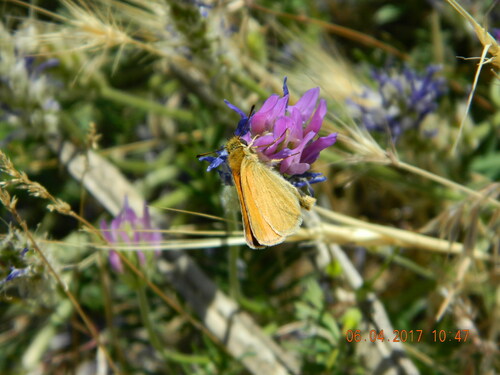
- Common raven eats Mormon cricket
- Common raven eats Yellow-bellied marmot
- Common raven eats Bighorn sheep
- Canada goose eats Mallard
- Mallard eats Canada goose
- Common merganser eats Rainbow trout
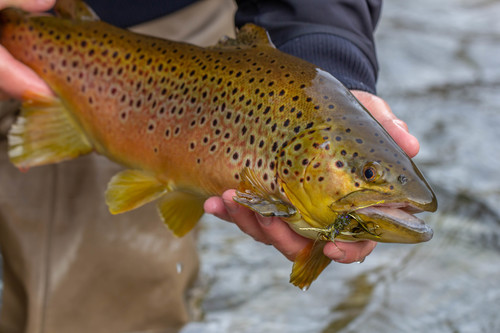
- Common merganser eats Brown trout
- Brown trout eats Rainbow trout
- Rainbow trout eats Brown trout
Links that studies have recorded between the species on this page (GloBI). Real food webs hold far more species and links, and animals switch food when one runs short.
Who lives in Yellowstone
The species people record most often in the Lamar Valley, the Hayden Valley, the Old Faithful area, 2016–2025.
Mammals


Birds



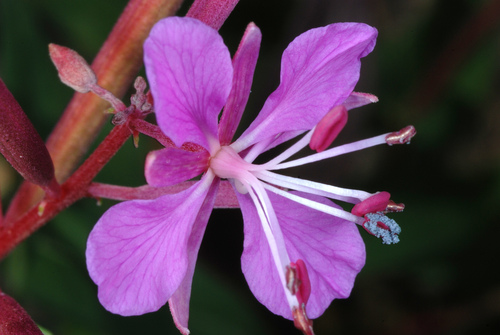
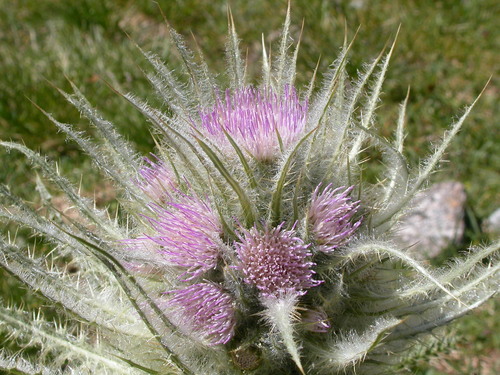
Plants

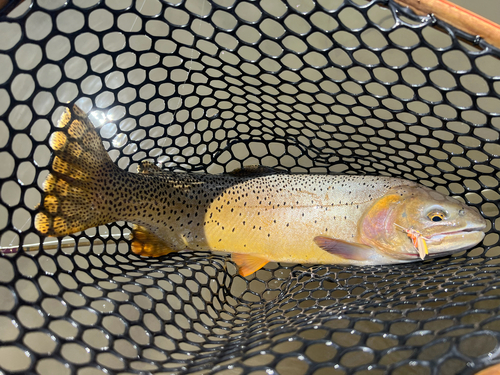
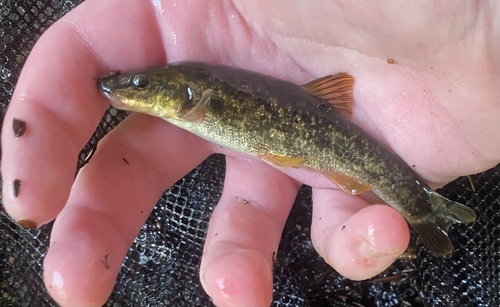
Fish

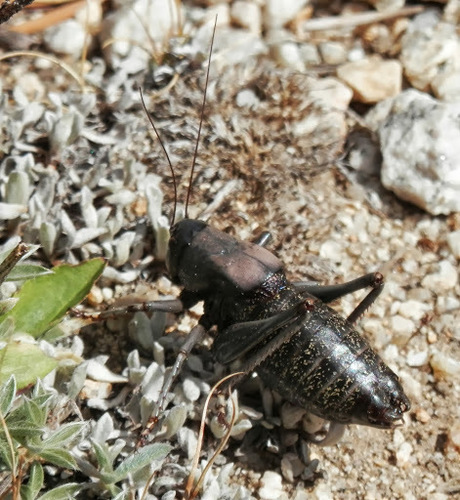
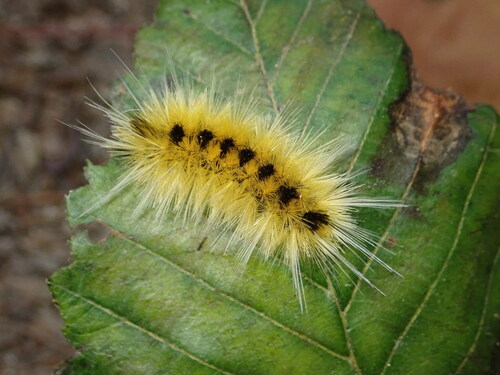
Insects
What threatens Yellowstone, and what helps
Warmer, drier summers bring larger wildfires and less snow, changing where elk and bison find food. Invasive lake trout have pushed back the native cutthroat trout that bears and birds depend on.
Protecting the whole ecosystem, the return of wolves, removing lake trout from Yellowstone Lake and long-term research on bison and elk help keep the park's food web intact.
Explore and share
Explore next
What puts Yellowstone under pressure, what helps, and who works on it.
Questions people ask
What animals live in Yellowstone?
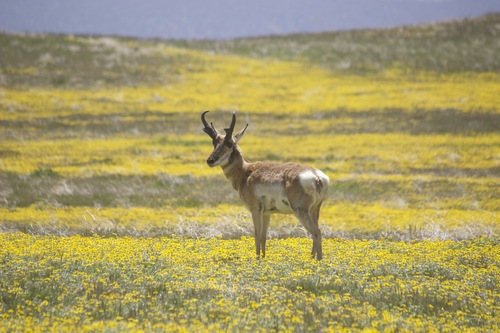
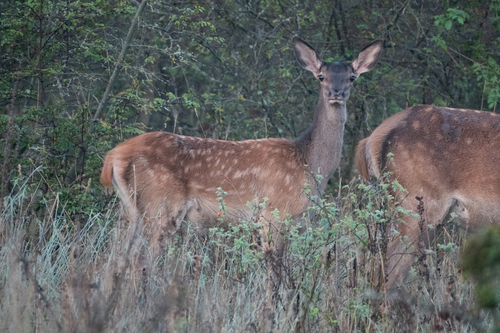
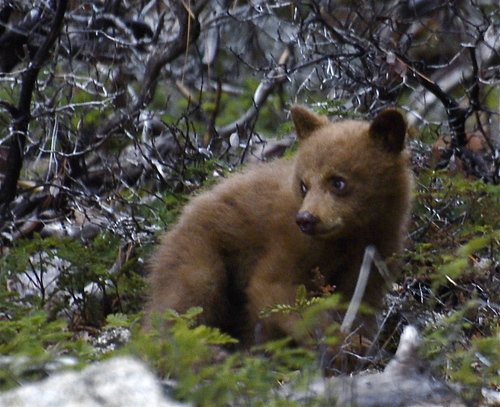
Among the animals people record most often in Yellowstone: pronghorn, red deer, american black bear, coyote, uinta ground squirrel, bighorn sheep, yellow-bellied marmot and red squirrel. Based on GBIF records from the Lamar Valley, the Hayden Valley and the Old Faithful area, 2016–2025.
What is the food chain in Yellowstone?
Some of the feeding links studies have recorded among its species: the rainbow trout eats the brown trout, the coyote eats the red squirrel, the coyote eats the red deer and the coyote eats the mallard. Source: GloBI.
What threatens Yellowstone?
Warmer, drier summers bring larger wildfires and less snow, changing where elk and bison find food. Invasive lake trout have pushed back the native cutthroat trout that bears and birds depend on.
How can Yellowstone be protected?
Protecting the whole ecosystem, the return of wolves, removing lake trout from Yellowstone Lake and long-term research on bison and elk help keep the park's food web intact.
Sources and photo credits
- GBIF · human observations in the Lamar Valley, the Hayden Valley, the Old Faithful area, 2016–2025
- GloBI · recorded feeding links between species
- National Park Service · Yellowstone
- UNESCO · Yellowstone National Park
- Grand Prismatic Spring in Yellowstone National Park: James St. John from Newark, Ohio, CC BY 2.0
- Pronghorn: Diego Blanco, CC0
- Red deer: Demian Hiß, CC BY 4.0
- American black bear: Jay Pruett, CC BY 4.0
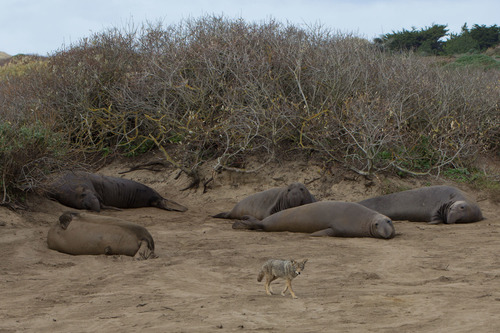
- Coyote: avocat, CC BY 4.0
- Uinta ground squirrel: Isaac Krone, CC BY 4.0
- Bighorn sheep: Irene, CC0
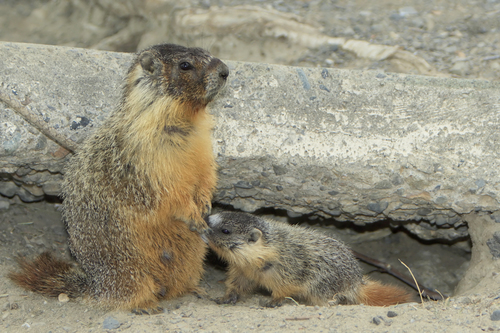
- Yellow-bellied marmot: Alan Vernon, CC BY 4.0
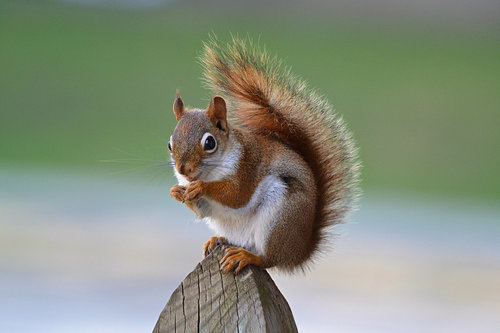
- Red squirrel: DaPuglet, CC BY-SA 4.0
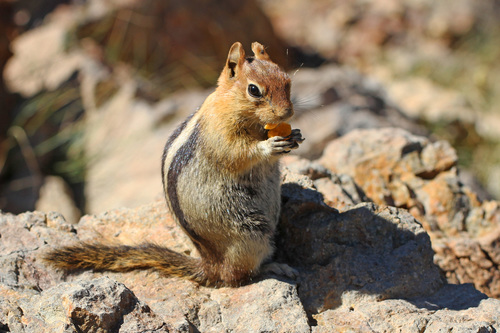
- Golden-mantled ground squirrel: Judy Gallagher, CC BY-SA 4.0
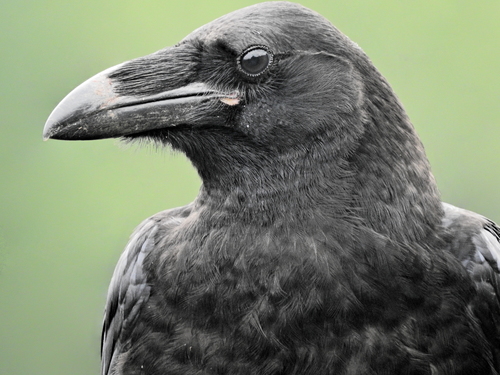
- Common raven: xulescu_g, CC BY-SA 4.0
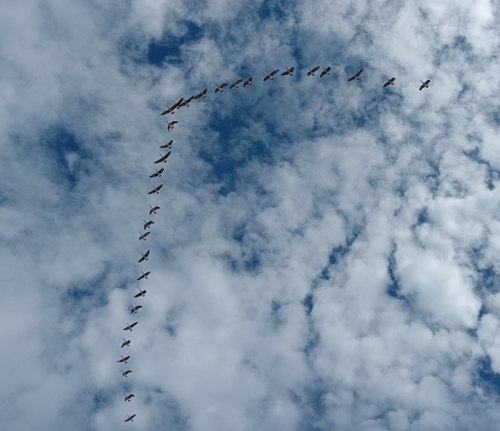
- Canada goose: John Barkla, CC BY 4.0
- American robin: Judy Gallagher, CC BY 4.0
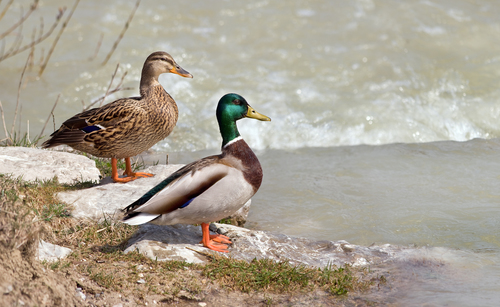
- Mallard: anonymous, CC BY-SA 4.0
- Common merganser: Nigel Voaden, CC BY 4.0
- Brewer's blackbird: Lip Kee, CC BY-SA 4.0
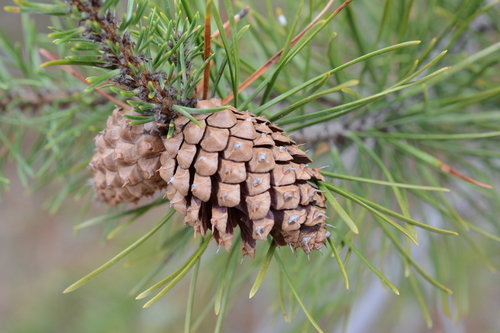
- Lodgepole pine: Alison Northup, CC BY 4.0
- Lanceleaf stonecrop: Steve Matson, CC BY 4.0
- Fireweed: Douglas Goldman, CC BY-SA 4.0
- Meadow thistle: Matt Lavin, CC BY-SA 4.0
- Black-spotted cutthroat trout: Scott Loarie, CC0
- Longnose dace: Gojilynx, CC BY 4.0
- Brown trout: kirk gardner, CC BY 4.0
- Rainbow trout: Bruce Deagle, CC BY 4.0
- Essex skipper: Galyna Mykytynets, CC BY 4.0
- Flame skimmer: Katja Schulz, CC BY 4.0
- Whitespotted sawyer: no rights reserved, uploaded by Johannes, CC0
- Mormon cricket: 101595408250610106310, CC BY 4.0
- Spotted tussock moth: Cricket Raspet, CC BY 4.0

Species lists come from records people have shared in a few sample areas, not a full inventory of Yellowstone, and well-watched groups such as birds are recorded far more than insects or fungi. The food web shows only links that studies have recorded between the species on this page.
Checked 2026-11-20.