Kelp forests
Cool, clear coastal seas
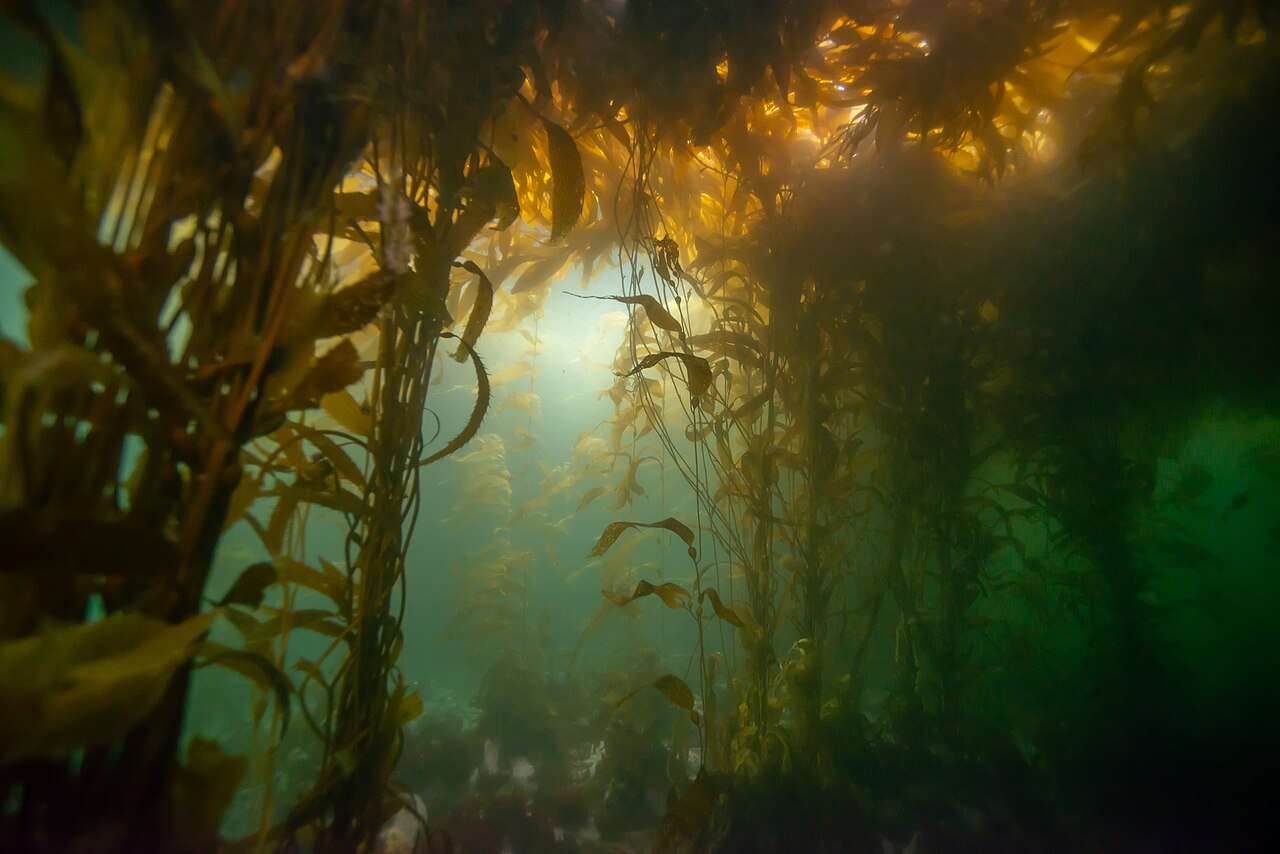
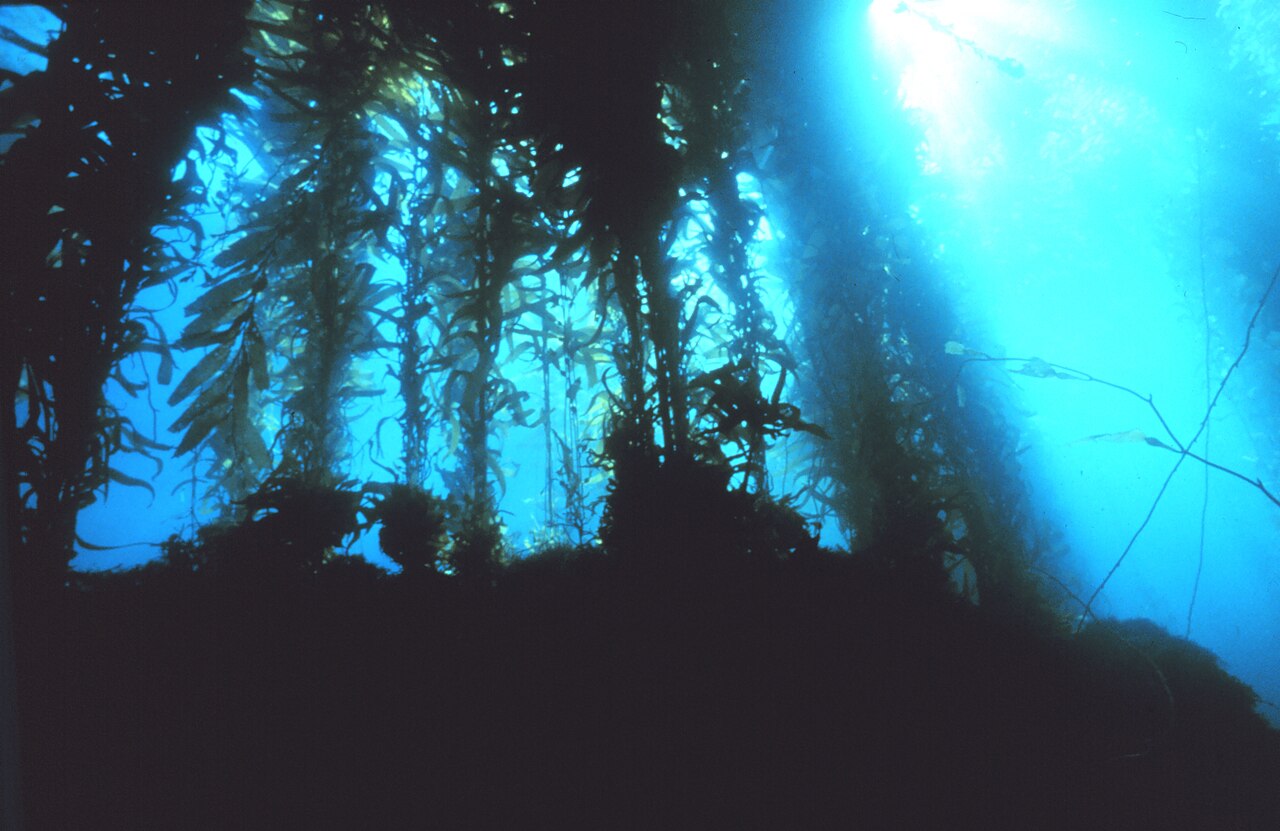
Kelp forests grow in cool coastal seas, where giant brown algae rise from the rocky sea floor towards the light. Some kelp grows half a metre a day, and the forests shelter fish, sea urchins, crabs, seals and sea otters.
People have shared 4,988,508 records of animals from Monterey Bay, California and the Channel Islands, California with GBIF in ten years. This page shows the 27 species recorded most often there, and 29 links between them that studies have recorded: who eats whom.
- Kind
- Habitat
- Where
- Cool, clear coastal seas
- Species shown
- 27, the most recorded
- Food web
- 29 recorded links between them
- Records
- 4,988,508 in 2016–2025
- Sample areas
- Monterey Bay, California, the Channel Islands, California
Who eats whom in kelp forests
Food flows upwards: plants and small animals at the bottom, hunters at the top. Tap a species to see its links, then take it out of the web to see who would lose food.
Tap a species.
All 29 recorded links
- Kelp bass eats Black perch
- Kelp bass eats Blacksmith
- Kelp bass eats Northern kelp crab
- Kelp bass eats California spiny lobster
- Kelp bass eats Painted greenling
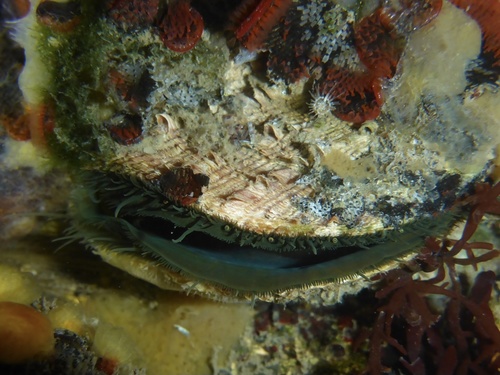
- Painted greenling eats Giant rock-scallop
- Painted greenling eats Northern kelp crab
- Garibaldi eats Northern kelp crab
- Black perch eats Northern kelp crab
- Black perch eats Purple sea urchin
- Black perch eats California spiny lobster
- Black perch eats Red sea urchin
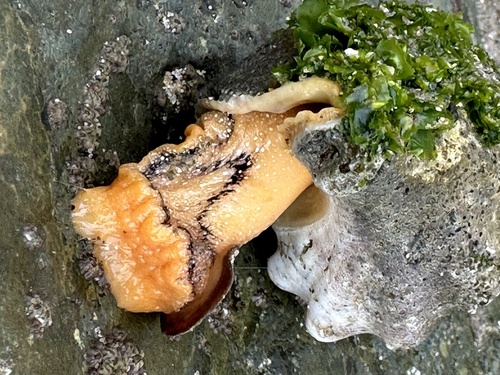
- Kellet's whelk eats Giant keyhole limpet
- Kellet's whelk eats Purple sea urchin
- Bat star eats California sea lion
- Giant sea star eats Kellet's whelk
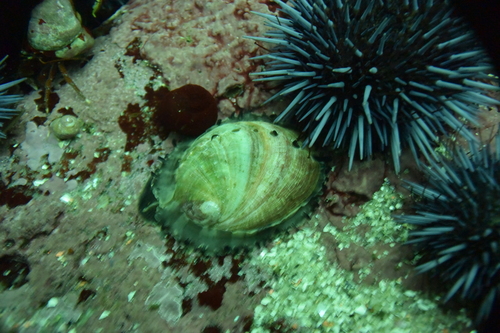
- Giant sea star eats Red abalone
- California spiny lobster eats Purple sea urchin
- California spiny lobster eats Giant keyhole limpet
- California spiny lobster eats Giant rock-scallop
- California spiny lobster eats Kellet's whelk
- California spiny lobster eats Northern kelp crab
- California spiny lobster eats Red abalone
- California spiny lobster eats Red sea urchin
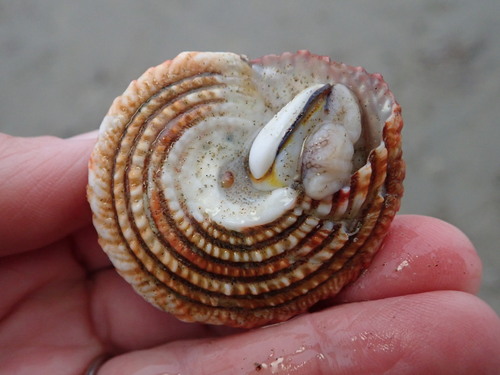
- California spiny lobster eats Chestnut cowrie
- California sea lion eats Blacksmith
- California sea lion eats Garibaldi
- California sea lion eats Painted greenling
- Harbor seal eats Black perch
Links that studies have recorded between the species on this page (GloBI). Real food webs hold far more species and links, and animals switch food when one runs short.
Who lives in kelp forests
The species people record most often in Monterey Bay, California, the Channel Islands, California, 2016–2025.
Fish



Molluscs

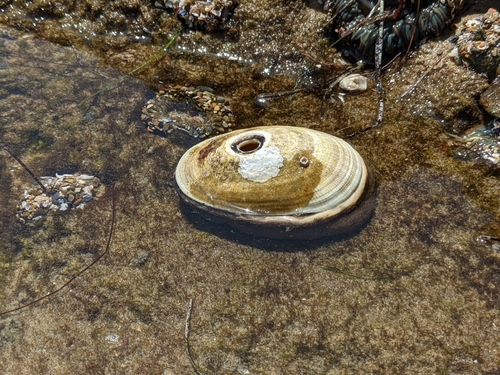
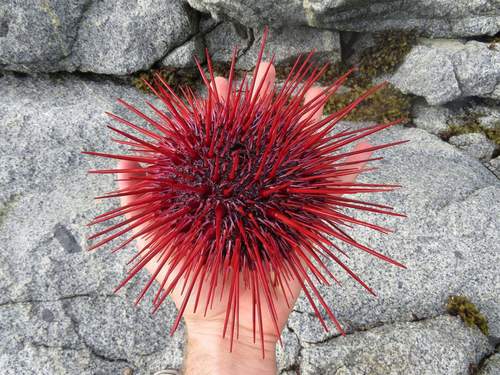
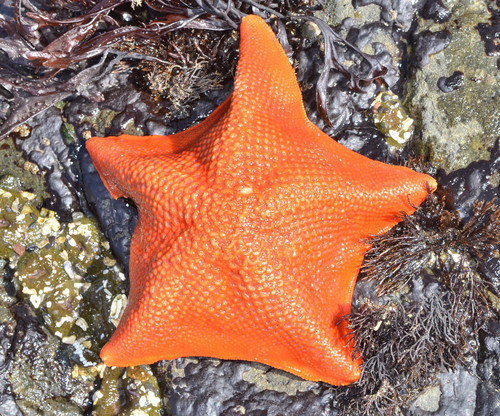
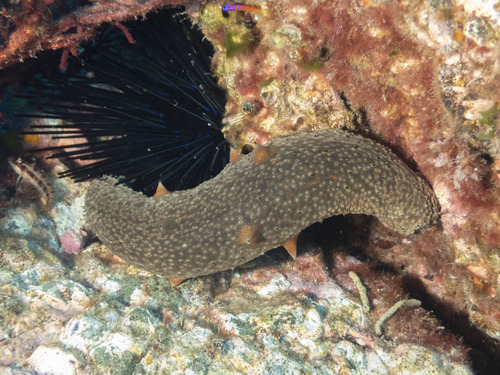
Sea stars and urchins



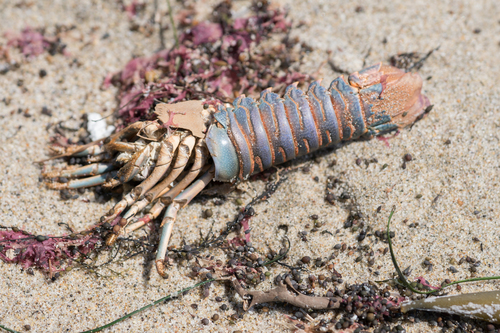
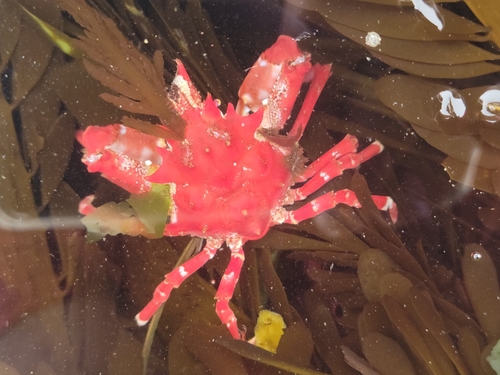
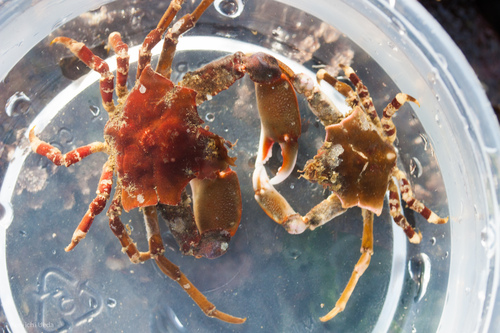
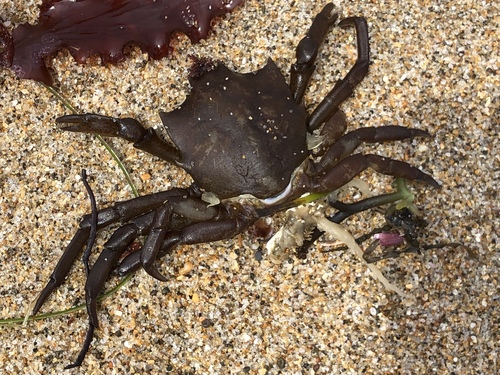
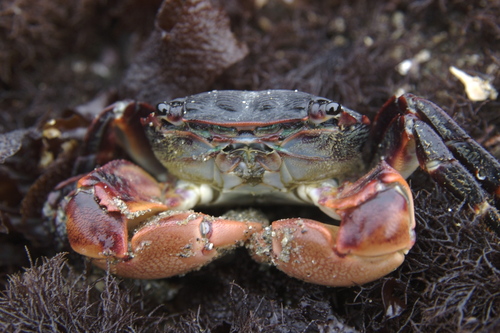
Crustaceans
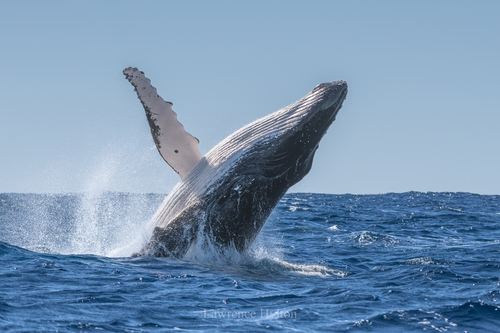
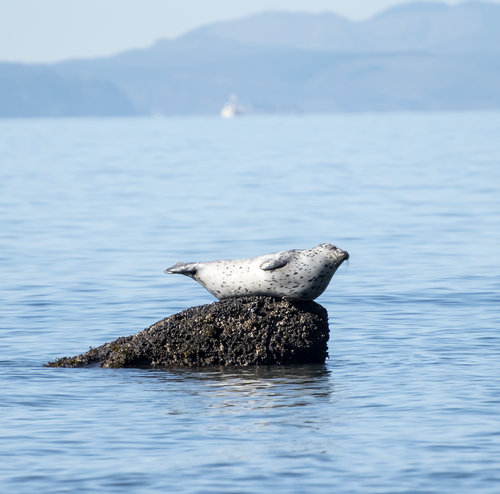
Mammals


What threatens kelp forests, and what helps
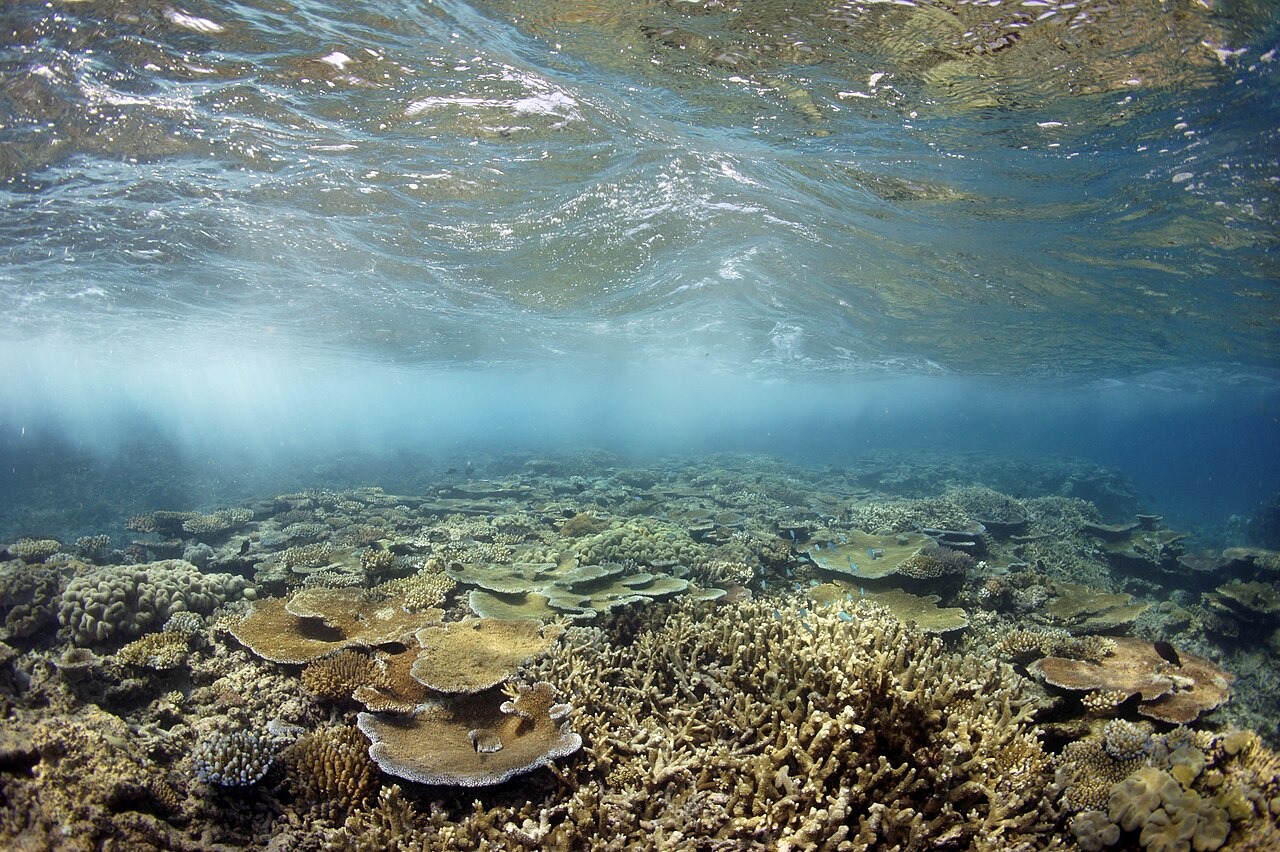
Marine heatwaves, and too many sea urchins where their predators, such as sea otters and large sea stars, have disappeared: the urchins can graze whole forests away.
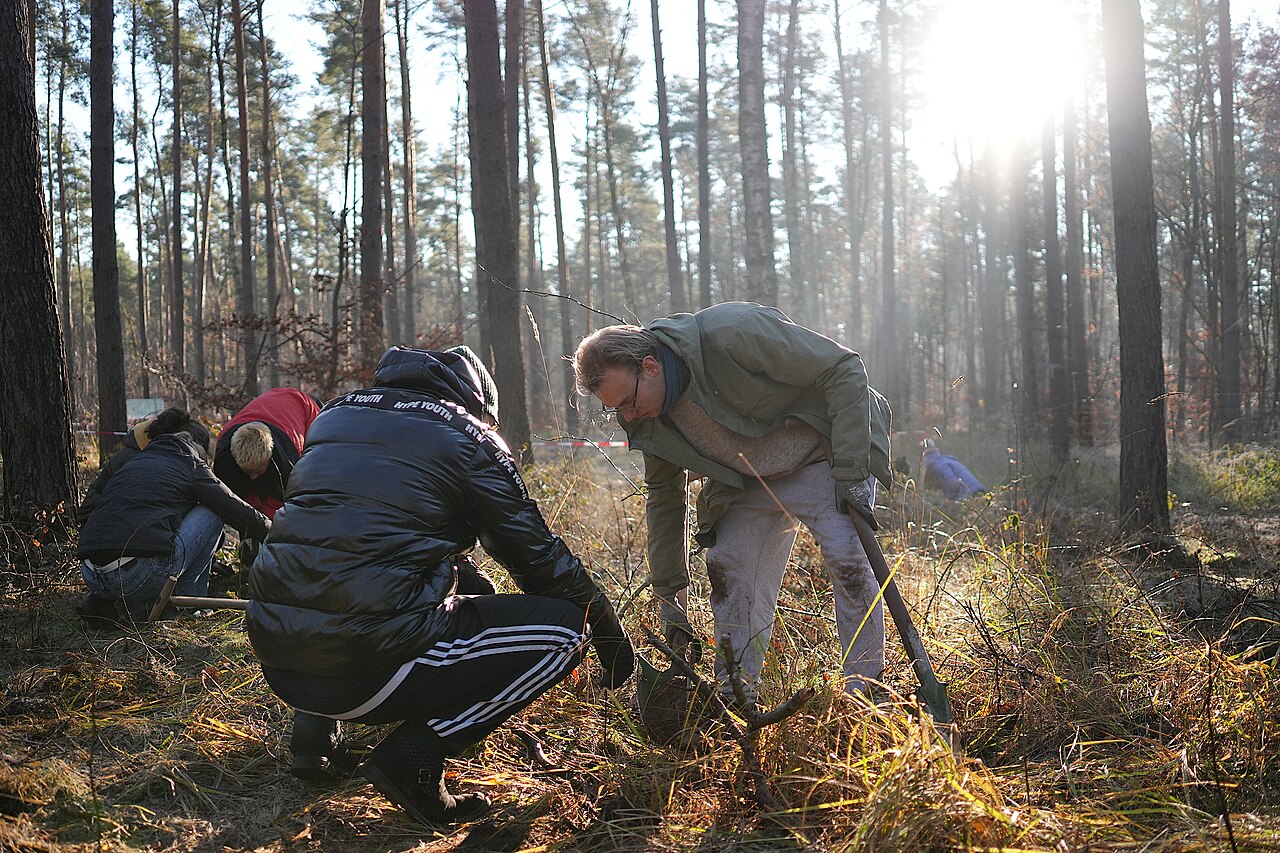
Protecting and restoring urchin predators, marine protected areas, and in some places removing urchins so kelp can grow back.
Explore and share
Explore next
What puts kelp forests under pressure, what helps, and who works on it.
Questions people ask
What animals live in kelp forests?
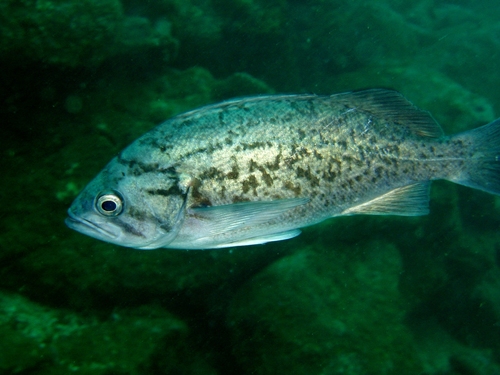
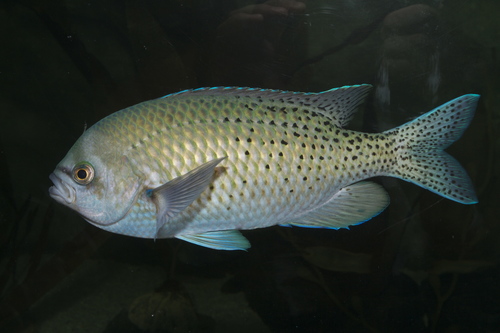
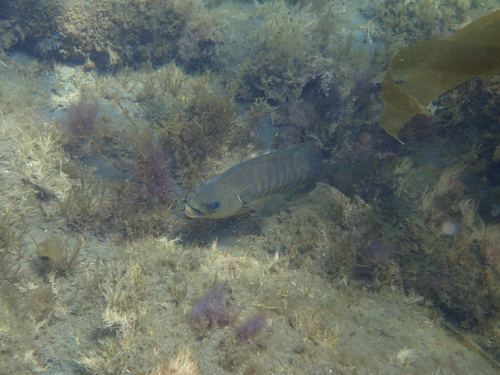
Among the animals people record most often in kelp forests: blue rockfish, kelp bass, blacksmith, painted greenling, garibaldi, black perch, giant rock-scallop and kellet's whelk. Based on GBIF records from Monterey Bay, California and the Channel Islands, California, 2016–2025.
What is the food chain in kelp forests?
Some of the feeding links studies have recorded among its species: the painted greenling eats the giant rock-scallop, the kelp bass eats the black perch, the kelp bass eats the blacksmith and the kelp bass eats the northern kelp crab. Source: GloBI.
What threatens kelp forests?
Marine heatwaves, and too many sea urchins where their predators, such as sea otters and large sea stars, have disappeared: the urchins can graze whole forests away.
How can kelp forests be protected?
Protecting and restoring urchin predators, marine protected areas, and in some places removing urchins so kelp can grow back.
Sources and photo credits
- GBIF · human observations in Monterey Bay, California, the Channel Islands, California, 2016–2025
- GloBI · recorded feeding links between species
- Monterey Bay Aquarium · kelp forests
- Giant kelp forest seen from below, light filtering through the fronds: BravoGonzalo, CC BY-SA 4.0
- Blue rockfish: NOAA Photo Library, CC BY 4.0
- Kelp bass: Brian Gratwicke, CC BY 4.0
- Blacksmith: Brian Gratwicke, CC BY 4.0
- Painted greenling: Ken-ichi Ueda, CC BY 4.0
- Garibaldi: Eric Kilby, CC BY-SA 4.0
- Black perch: eklemp, CC BY 4.0
- Giant rock-scallop: Cricket Raspet, CC BY 4.0
- Kellet's whelk: Roberto Daniel Avila, CC BY 4.0
- Red abalone: J.R.Frey, CC BY 4.0
- Chestnut cowrie: Roberto Daniel Avila, CC BY 4.0
- Red turban: Cricket Raspet, CC BY 4.0
- Giant keyhole limpet: oc_insects, CC BY 4.0
- Purple sea urchin: Jerry Kirkhart, CC BY 4.0
- Red sea urchin: no rights reserved, uploaded by Braden J. Judson, CC0
- Bat star: Don Loarie, CC BY 4.0
- Giant sea star: Cricket Raspet, CC BY 4.0
- Warty sea cucumber: Nathan, CC BY 4.0
- Pacific blood star: Jerry Kirkhart, CC BY 4.0
- California spiny lobster: no rights reserved, uploaded by Jesse Rorabaugh, CC0
- Cryptic kelp crab: no rights reserved, uploaded by Alex Heyman, CC0
- Foliate kelp crab: Ken-ichi Ueda, CC BY 4.0
- Northern kelp crab: Al Kordesch, CC0
- Striped shore crab: Jerry Kirkhart, CC BY 4.0
- Humpback whale: Lawrence Hylton, CC BY 4.0
- California sea lion: Liam Steele, CC BY 4.0
- Harbor seal: David Badke, CC BY-SA 4.0
- Risso's dolphin: Daniel Benák, CC BY 4.0

Species lists come from records people have shared in a few sample areas, not a full inventory of kelp forests, and well-watched groups such as birds are recorded far more than insects or fungi. The food web shows only links that studies have recorded between the species on this page.
Checked 2026-11-20.