Kaziranga
Assam, north-east India, on the Brahmaputra floodplain
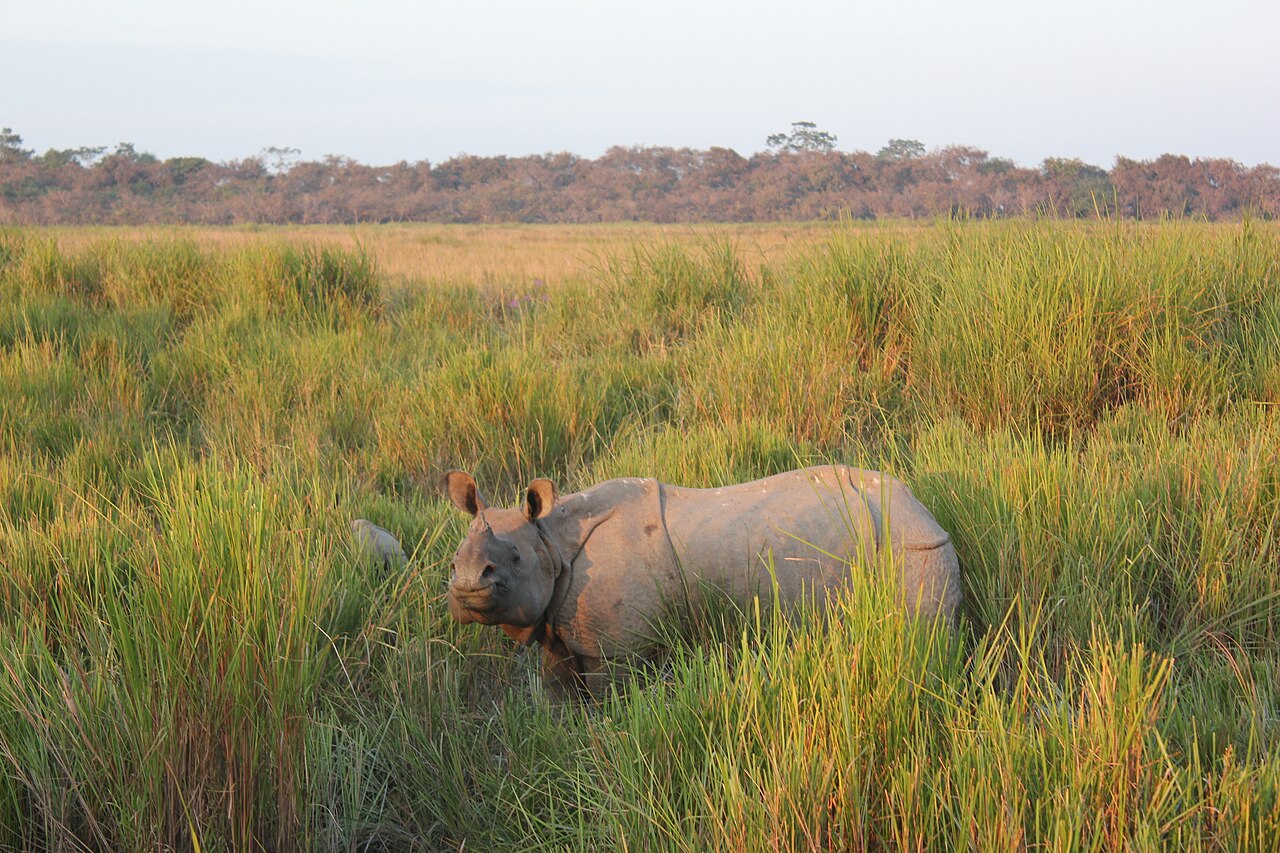
Kaziranga National Park in Assam covers 42,996 hectares of the Brahmaputra floodplain: tall wet grassland, shallow pools fringed with reeds and patches of woodland, all shaped by the river's yearly floods. The Indian one-horned rhino, saved from the brink of extinction at the start of the 20th century, has its largest population here, estimated at over 2,000 animals, alongside tigers, Asian elephants, wild water buffalo and eastern swamp deer.
People have shared 289,541 records of animals and plants from Kaziranga National Park with GBIF in ten years. This page shows the 38 species recorded most often there, and 10 links between them that studies have recorded: who eats whom.
- Kind
- Ecosystem
- Where
- Assam, north-east India, on the Brahmaputra floodplain
- Species shown
- 38, the most recorded
- Food web
- 10 recorded links between them
- Records
- 289,541 in 2016–2025
- Sample areas
- Kaziranga National Park
Who eats whom in Kaziranga National Park
Food flows upwards: plants and small animals at the bottom, hunters at the top. Tap a species to see its links, then take it out of the web to see who would lose food.
Tap a species.
All 10 recorded links
- Asian elephant eats Mango
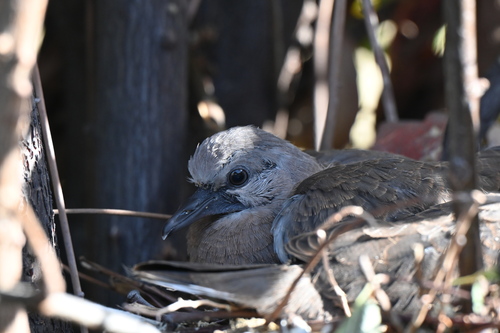
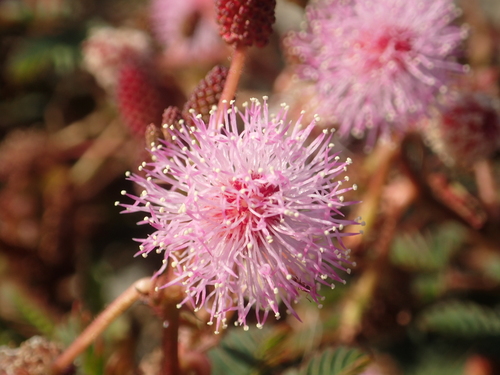
- Spotted dove eats Shameplant
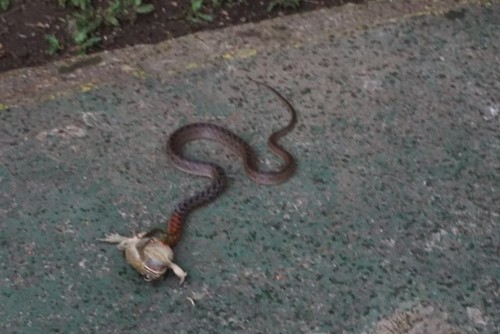
- White-throated kingfisher eats Asiatic water snake
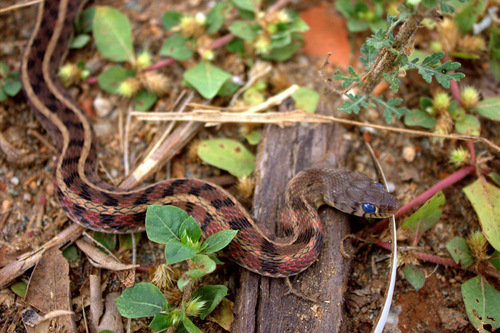
- White-throated kingfisher eats Buff striped keelback
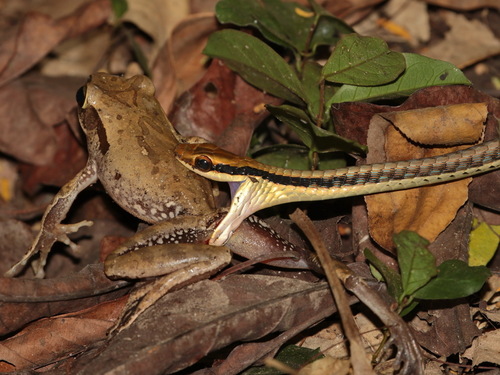
- Indonesian bronze-back eats Boie's wart frog
- Asiatic water snake eats Indian bullfrog
- Asiatic water snake eats Skipper frog
- Asiatic water snake eats Boie's wart frog
- Buff striped keelback eats Indian bullfrog
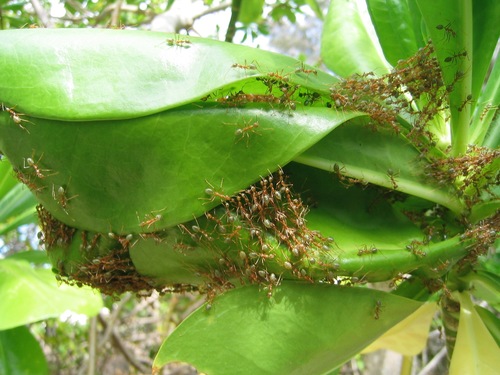
- Asian weaver ant eats Spotted dove
Links that studies have recorded between the species on this page (GloBI). Real food webs hold far more species and links, and animals switch food when one runs short.
Who lives in Kaziranga National Park
The species people record most often in Kaziranga National Park, 2016–2025.
Mammals


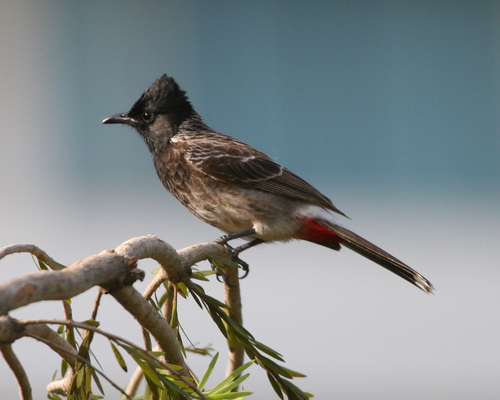
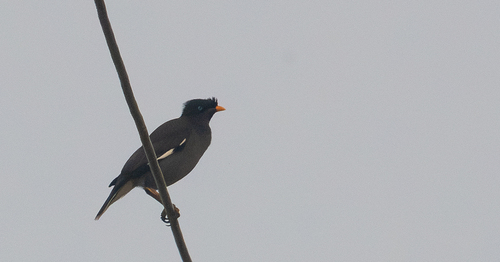
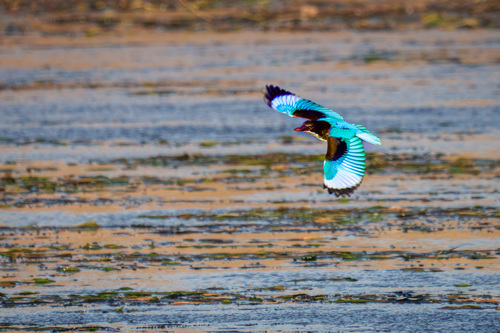
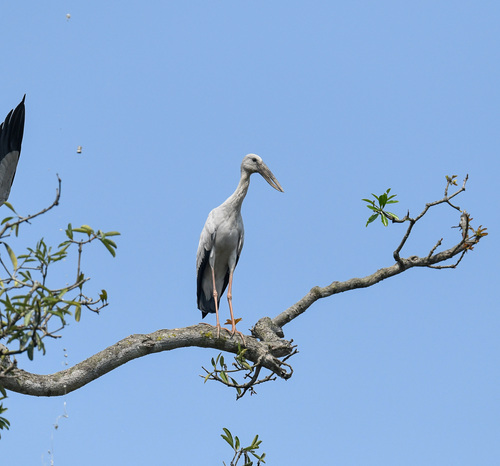
Birds

Reptiles

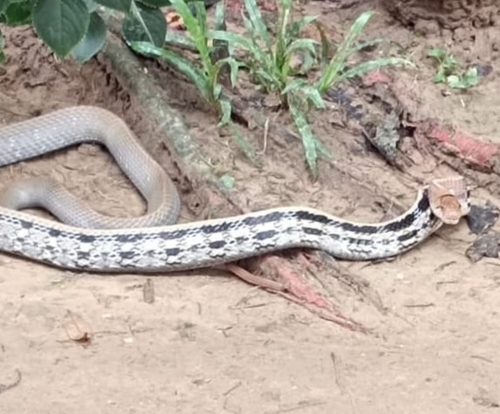
Amphibians
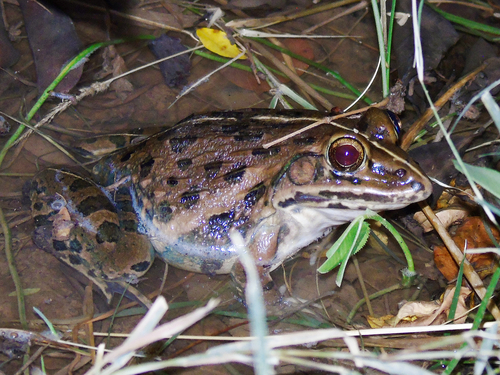
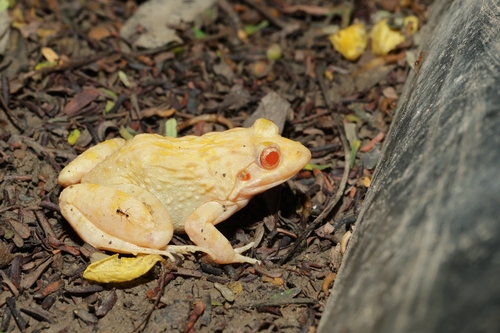
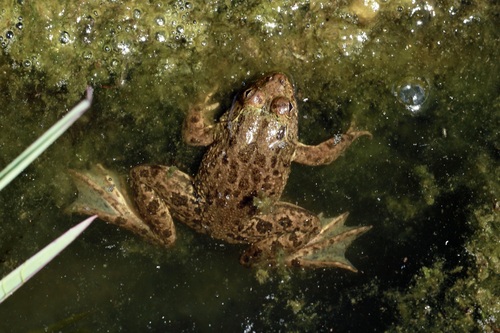
Insects

Plants
What threatens Kaziranga National Park, and what helps
Villages border the park on three sides, which lets poachers and herders slip in. UNESCO names rhino poaching, riverbank erosion, invasive species, tourism, heavy traffic on the highway along the southern edge and livestock grazing as key threats, and floods push animals out of the park where they can be hunted.
The park has India's highest legal protection under the Wildlife (Protection) Act of 1972, and although poaching has been a serious problem, rhino numbers are steady or rising.
Explore and share
Questions people ask
What animals live in Kaziranga National Park?
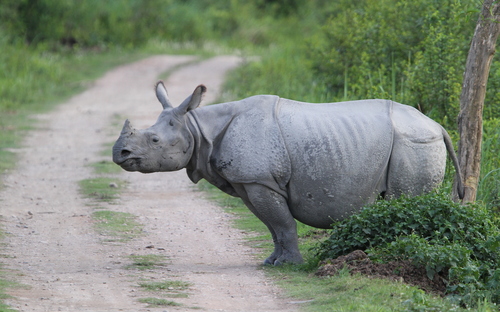
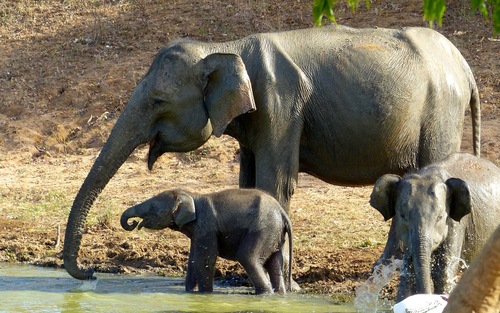
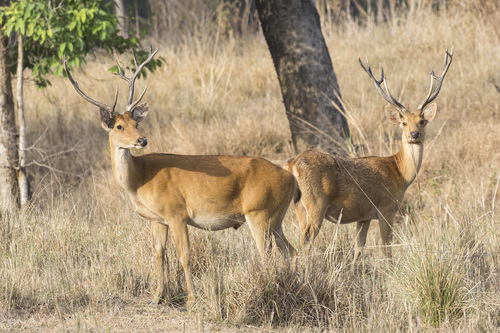
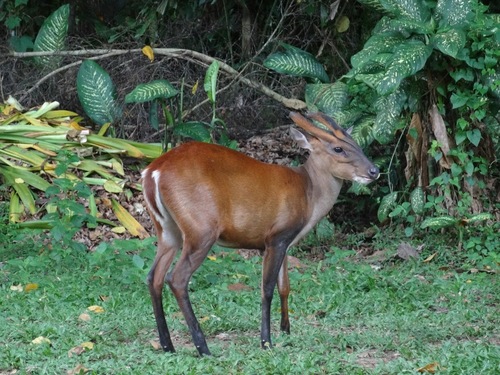
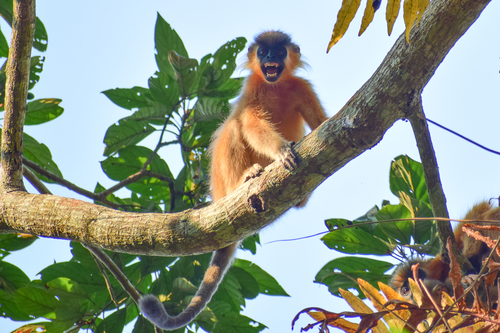
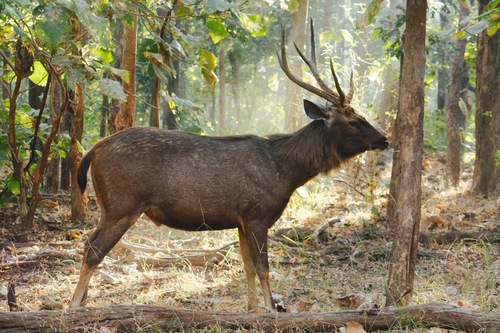
Among the animals people record most often in Kaziranga National Park: indian rhinoceros, hog deer, asian elephant, barasingha, rhesus monkey, red muntjac, capped langur and sambar. Based on GBIF records from Kaziranga National Park, 2016–2025.
What is the food chain in Kaziranga National Park?
Some of the feeding links studies have recorded among its species: the asiatic water snake eats the indian bullfrog, the indonesian bronze-back eats the boie's wart frog, the asian elephant eats the mango and the spotted dove eats the shameplant. Source: GloBI.
What threatens Kaziranga National Park?
Villages border the park on three sides, which lets poachers and herders slip in. UNESCO names rhino poaching, riverbank erosion, invasive species, tourism, heavy traffic on the highway along the southern edge and livestock grazing as key threats, and floods push animals out of the park where they can be hunted.
How can Kaziranga National Park be protected?
The park has India's highest legal protection under the Wildlife (Protection) Act of 1972, and although poaching has been a serious problem, rhino numbers are steady or rising.
Sources and photo credits
- GBIF · human observations in Kaziranga National Park, 2016–2025
- GloBI · recorded feeding links between species
- UNESCO World Heritage Centre · Kaziranga National Park
- A one-horned rhino feeding in tall grassland in Kaziranga National Park, Assam: Joli, CC BY-SA 4.0
- Indian rhinoceros: Christoph Moning, CC BY 4.0
- Hog deer: Vincegohan, CC BY-SA 4.0
- Asian elephant: Eamon Corbett, CC BY 4.0
- Barasingha: Ramesh Shenai, CC BY 4.0
- Rhesus monkey: Donald Hobern, CC BY 4.0
- Red muntjac: Mark Bolnik, CC BY 4.0
- Capped langur: Alen Alex Pathisseril, CC BY 4.0
- Sambar: Rashityagi, CC BY-SA 4.0
- Spotted dove: jirau, CC BY-SA 4.0
- Red-vented bulbul: Lip Kee Yap, CC BY-SA 4.0
- Jungle myna: white_cheeked_barbet, CC BY 4.0
- White-throated kingfisher: Шальнов Кирилл, CC BY 4.0
- Asian openbill: Rejoice Gassah, CC BY 4.0
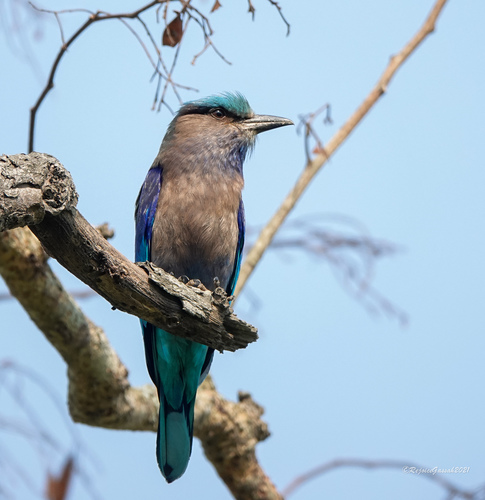
- Indochinese roller: Rejoice Gassah, CC BY 4.0
- Rose-ringed parakeet: Cristian Hurtado Cusnir, CC BY 4.0
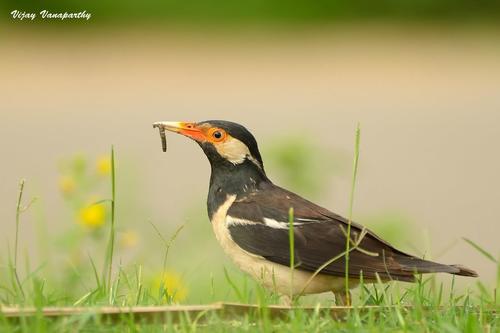
- Indian pied myna: Vijay Vanaparthy, CC BY 4.0
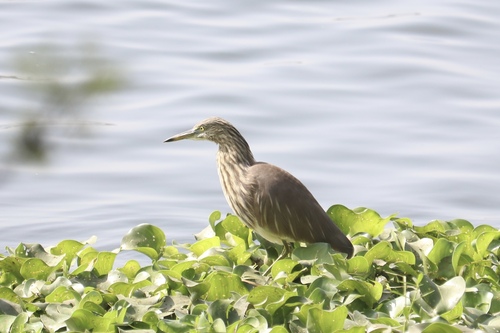
- Indian pond heron: sam-rajnikant, CC BY 4.0
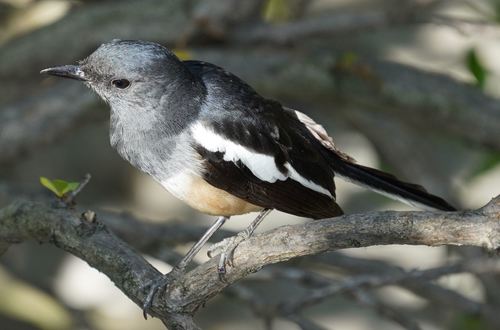
- Oriental magpie-robin: carbenoid, CC BY 4.0
- Indonesian bronze-back: Ian Dugdale, CC BY 4.0
- Asiatic water snake: Sunny Joseph, CC BY 4.0
- Buff striped keelback: Chayant Gonsalves, CC BY 4.0
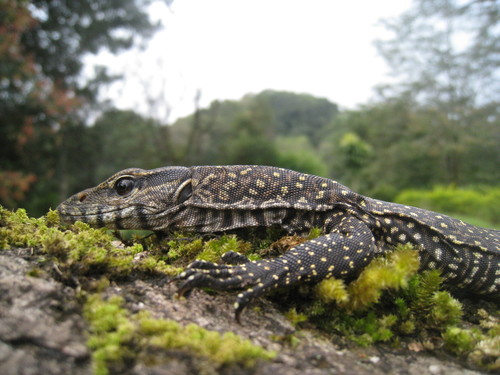
- Bengal monitor: Ashwin Viswanathan, CC BY 4.0
- Red-necked keelback: eyrezer, CC BY 4.0
- Copperhead rat snake: Ankur Nandi, CC BY 4.0
- Indian bullfrog: Kseniia Marianna Prondzynska, CC BY 4.0
- Boie's wart frog: 林正文, CC BY 4.0
- Skipper frog: Dr. Alexey Yakovlev, CC BY 4.0
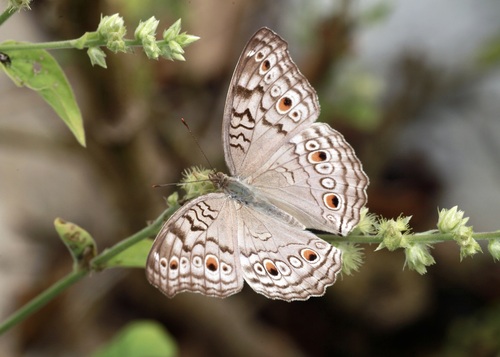
- Grey pansy: Dr. Alexey Yakovlev, CC BY 4.0
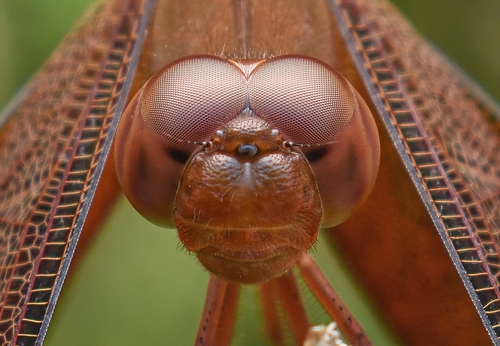
- Fulvous forest skimmer: Tejas M, CC BY 4.0
- Common mormon: Dr. Raju Kasambe, CC BY-SA 4.0
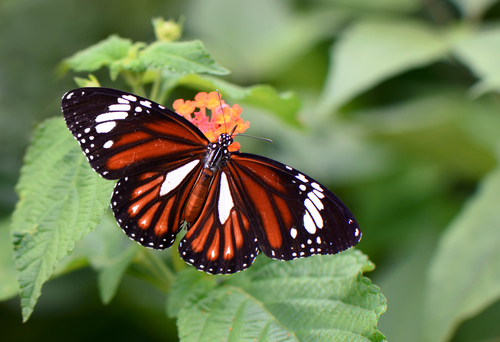
- Common tiger butterfly: FGK, CC BY-SA 4.0
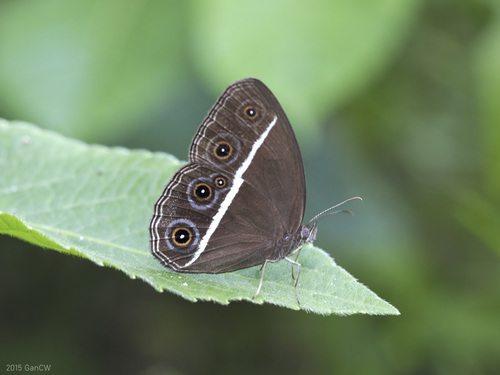
- Dusky bush-brown: Cheongweei Gan, CC BY 4.0
- Asian weaver ant: Geoff Shuetrim, CC BY 4.0
- Floating water-hyacinth: no rights reserved, uploaded by 葉子, CC0
- Parrot flower: Rejoice Gassah, CC BY 4.0
- Shameplant: no rights reserved, uploaded by 葉子, CC0
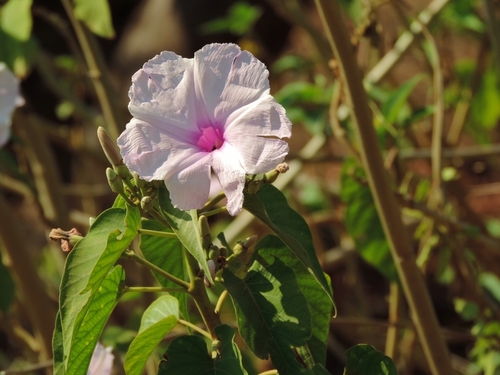
- Gloria de la manana: i_c_riddell, CC BY 4.0
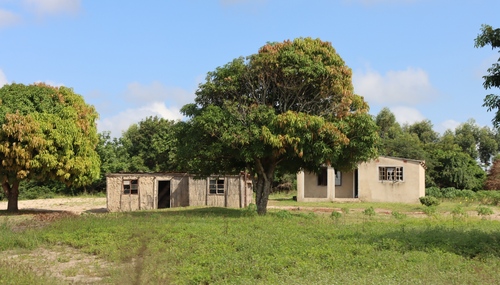
- Mango: Tony Rebelo, CC BY-SA 4.0

Species lists come from records people have shared in a few sample areas, not a full inventory of Kaziranga National Park, and well-watched groups such as birds are recorded far more than insects or fungi. The food web shows only links that studies have recorded between the species on this page.
Checked 2026-11-22.