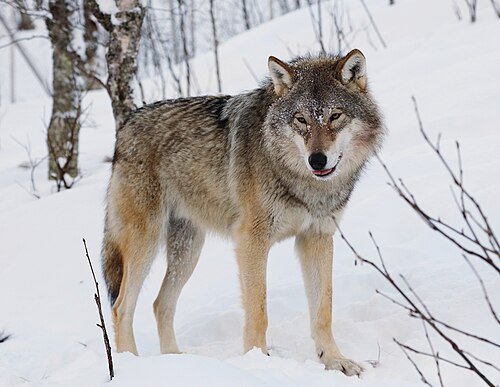
 Gray wolfCanis lupus
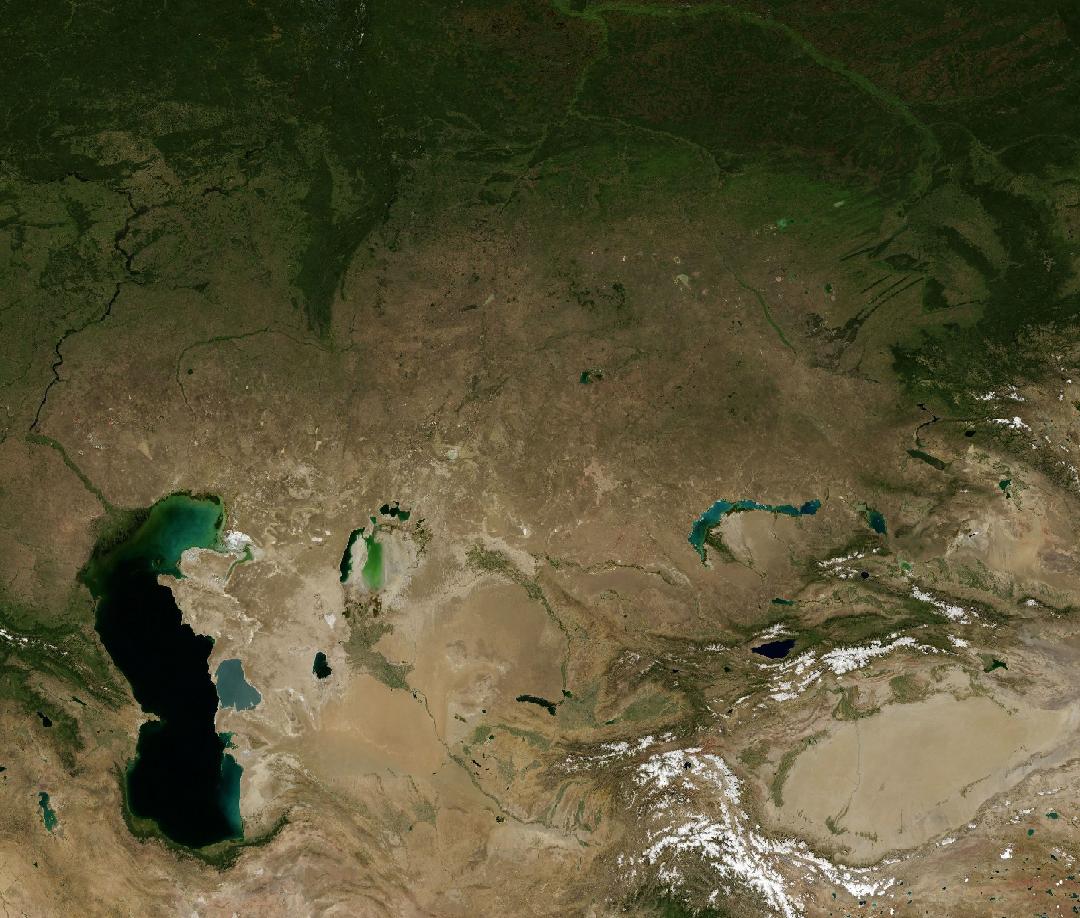
Kazakhstan
The largest landlocked country in the world, in Central Asia.
Image: NASA Blue Marble. Borders: Natural Earth.
Kazakhstan is the largest landlocked country on Earth. Most of it is open steppe and semi-desert, stretching from the Caspian Sea in the west to the Altai and Tian Shan mountains in the east, where glaciers feed rivers that flow out into the plains.
Its steppe is home to the saiga antelope, whose numbers have recovered from a few tens of thousands to more than a million. Lakes and wetlands such as Tengiz are breeding grounds for flamingos and many migrating birds.
By area it is the 9th largest of the 194 countries on Atlas.
Kazakhstan
- Capital
- Astana
- Population
- 20.1 million
- Area
- 2,724,910 km²
- Continent
- Europe, Asia
- Highest point
- Khan Tengri, 7,010 m
- Languages
- Kazakh, Russian
- Currency
- Kazakhstani tenge
- Time zone
- 2 time zones
Figures from Wikidata; population 2024.
Kazakhstan in pictures




Which animals live in Kazakhstan?
Among the animals recorded in Kazakhstan are the gray wolf, the common kingfisher, the western honey bee, the peregrine falcon and the red fox. These are wildlife records shared through GBIF, not a full list of the animals that live here.
Gray wolfCanis lupus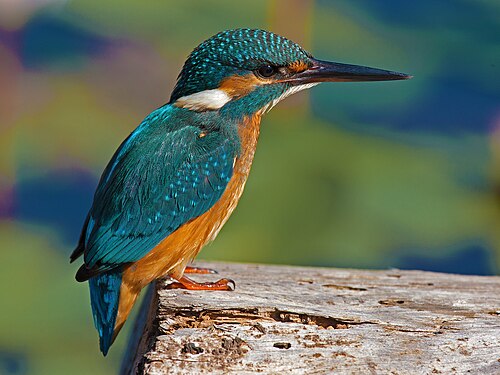 Common kingfisherAlcedo atthis
 Western honey beeApis mellifera
 Peregrine falconFalco peregrinus
 Red foxVulpes vulpes
Where can you see them?
- Altyn-Emel National ParkEstablished 1996 · 307,653 km²
- Charyn National ParkEstablished 2004 · 127,050 km²
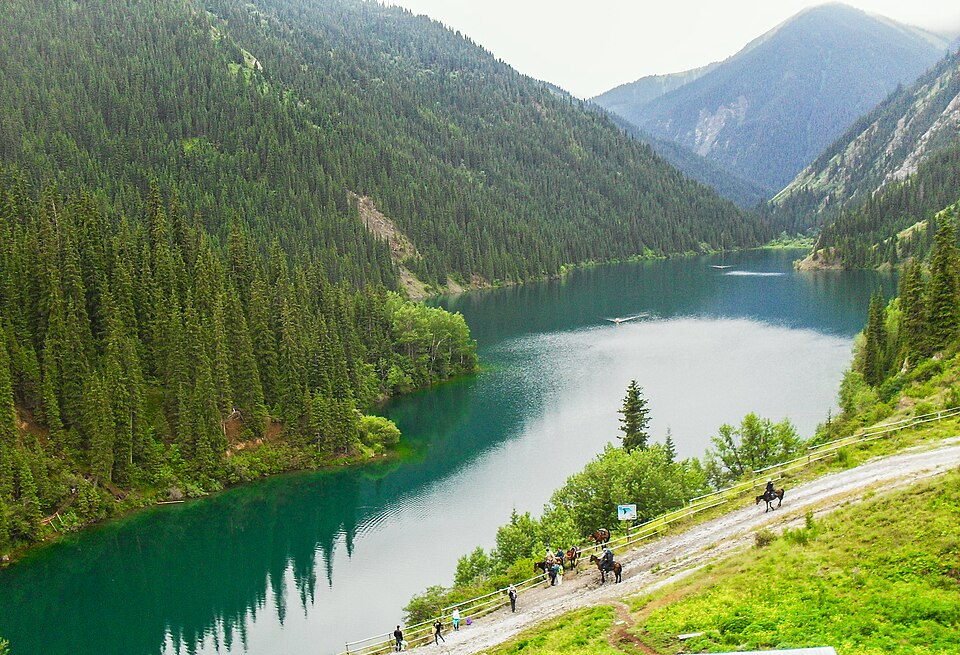
- Kölsay Lakes National ParkEstablished 2007 · 161,045 km²
- Burabay National ParkEstablished 2000 · 129,485 km²
- Ile-Alatau National ParkEstablished 1996 · 186,400 km²
- Karkaraly National ParkEstablished 1998 · 112,120 km²
What is putting pressure on nature here?
Much of the steppe was ploughed in the twentieth century, and the northern Aral Sea shrank as rivers were used for farming. Mining and oil extraction affect large areas, and disease outbreaks and poaching have hit the saiga in the past.
Who is working on it
Altyn Dala Conservation Initiative
Long-running restoration and conservation of steppe, semi-desert, desert and wetland ecosystems within the historic range of the saiga antelope.
Read about the project in ImpactProfiled from public sources. Not a 4Planet partnership.
Learn more about Kazakhstan
Explore next
What puts Kazakhstan under pressure, what helps, and who works on it.
Kazakhstan on the living planet
Keep exploring from Kazakhstan
Cities in Kazakhstan
Species pages with records from Kazakhstan
Eurasian magpieGreat titWhite wagtailHooded crowCommon mynaBlack kiteBlack-headed gullMallardEurasian tree sparrowWestern yellow wagtailCommon blackbirdNorthern lapwing
Countries nearby
Sources and photo credits
- Wikidata · Kazakhstan (Q232), facts and national parks
- Convention on Biological Diversity · Kazakhstan country profile
- GBIF · human observations in Kazakhstan, used to choose the species
- 4Planet Impact · Altyn Dala Conservation Initiative
- Natural Earth · country borders, public domain
- NASA GIBS · Blue Marble imagery, public domain
- Altyn-Emel National Park, Kazakhstan: Nikolai Bulykin, CC BY-SA 4.0
- Charyn National Park, Kazakhstan: MariSimonova, CC BY-SA 4.0
- Kölsay Lakes National Park, Kazakhstan: Нұрлан Рахымжанов at Kazakh Wikipedia, CC0
- Burabay National Park, Kazakhstan: Dots foto, CC BY-SA 4.0
- Ile-Alatau National Park, Kazakhstan: Dina Julayeva, CC BY-SA 4.0
- Gray wolf: User:Mas3cf, CC BY-SA 4.0
- Common kingfisher: Artemy Voikhansky, CC BY-SA 4.0
- Western honey bee: Vasily Reinkymov, CC0
- Peregrine falcon: Georges Lignier (georges.lignier@wanadoo.fr), CC BY-SA 3.0
- Red fox: ClaudiaTen, CC BY-SA 4.0


Borders and the capital show where Kazakhstan is. Wildlife records show where people have seen animals, not where they all live today.
Checked 2026-11-19.