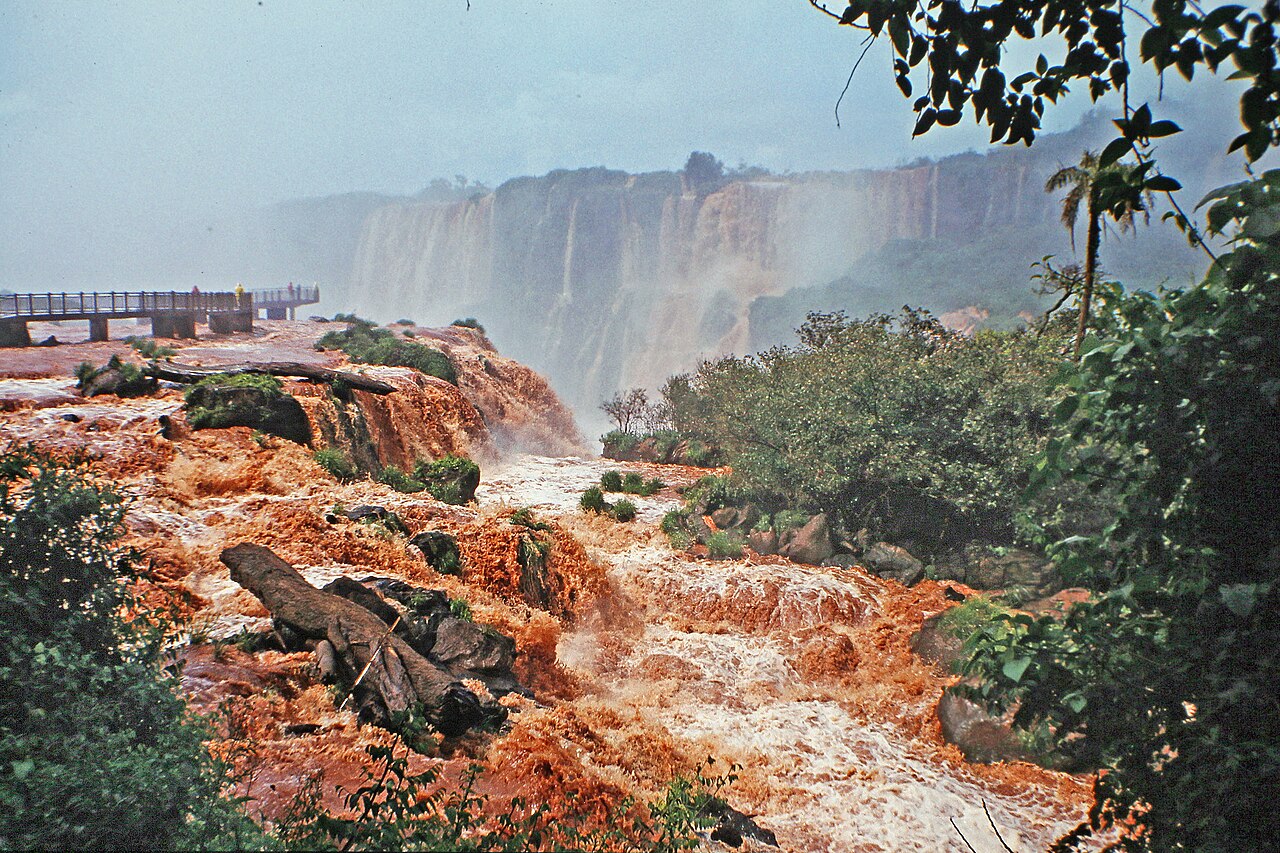
Iguazú Falls
Border of Argentina and Brazil
Iguazú is one of the largest waterfall systems on Earth, with around 275 falls along almost three kilometres of the Iguazú River. Around it lies some of the last Atlantic Forest, home to toucans, coatis, jaguars and countless butterflies.
People have shared 763,854 records of animals and plants from Iguazú and Iguaçu National Parks with GBIF in ten years. This page shows the 31 species recorded most often there, and 18 links between them that studies have recorded: who eats whom.
- Kind
- Ecosystem
- Where
- Border of Argentina and Brazil
- Species shown
- 31, the most recorded
- Food web
- 18 recorded links between them
- Records
- 763,854 in 2016–2025
- Sample areas
- Iguazú and Iguaçu National Parks
Who eats whom in Iguazú
Food flows upwards: plants and small animals at the bottom, hunters at the top. Tap a species to see its links, then take it out of the web to see who would lose food.
Tap a species.
All 18 recorded links
- Eared dove eats Ambay pumpwood
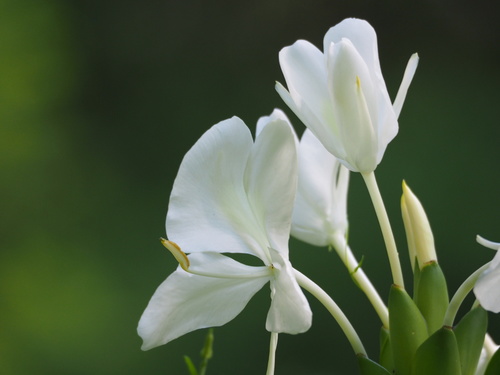
- Great kiskadee eats White garland-lily
- Great kiskadee eats Ambay pumpwood
- Great kiskadee eats Cosmopolitan house gecko
- Great kiskadee eats Eared dove
- Bananaquit eats White garland-lily
- Bananaquit eats Ambay pumpwood
- Sayaca tanager eats White garland-lily
- Sayaca tanager eats Ambay pumpwood
- Pale-breasted thrush eats White garland-lily
- Pale-breasted thrush eats Ambay pumpwood
- Pale-breasted thrush eats Cosmopolitan house gecko
- South American coati eats Ambay pumpwood
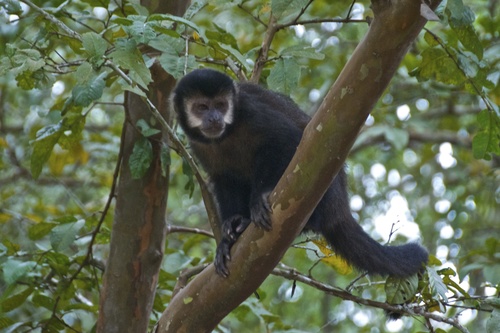
- South American coati eats Black capuchin
- Black capuchin eats Ambay pumpwood
- White-eared opossum eats Ambay pumpwood
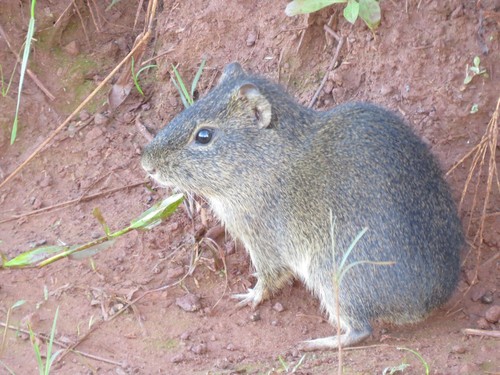
- Argentine black and white tegu eats Brazilian guinea pig
- Brazilian lancehead eats White-eared opossum
Links that studies have recorded between the species on this page (GloBI). Real food webs hold far more species and links, and animals switch food when one runs short.
Who lives in Iguazú
The species people record most often in Iguazú and Iguaçu National Parks, 2016–2025.
Birds

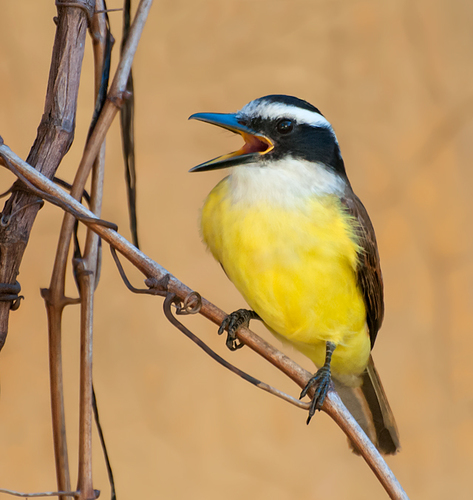
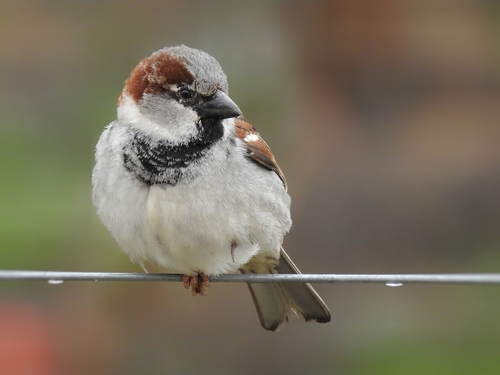

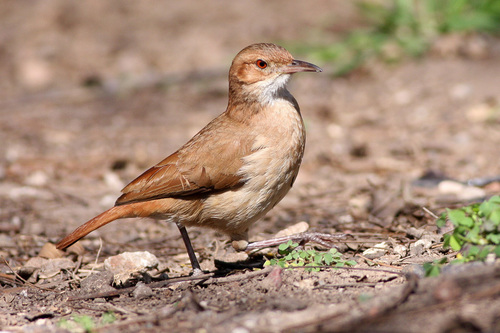


Mammals


Insects
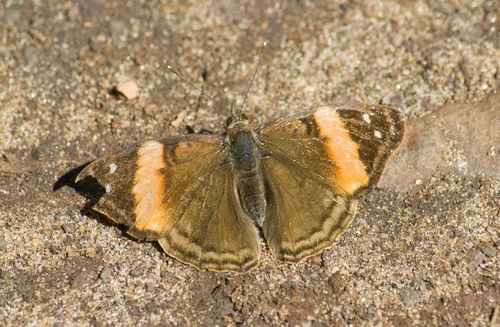
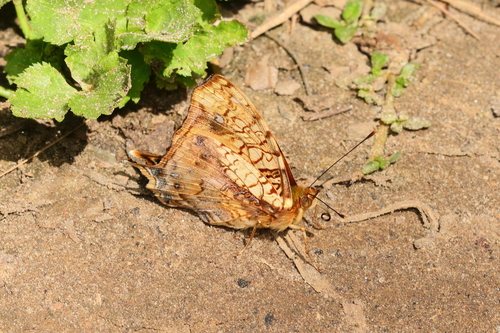
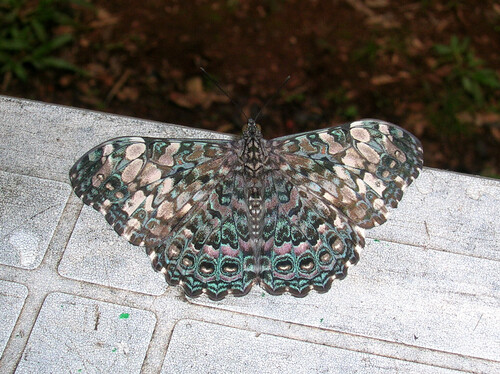


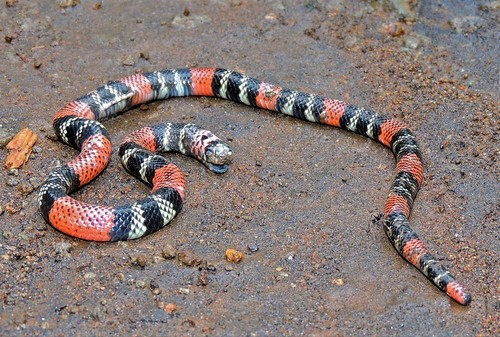
Reptiles
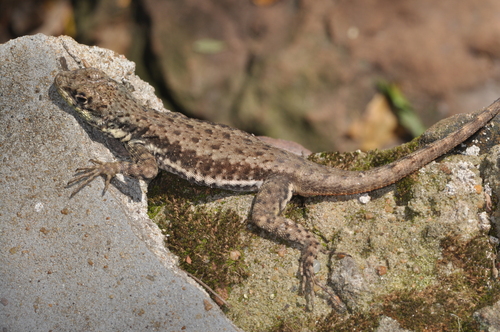
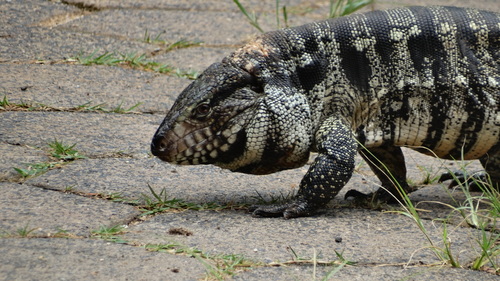
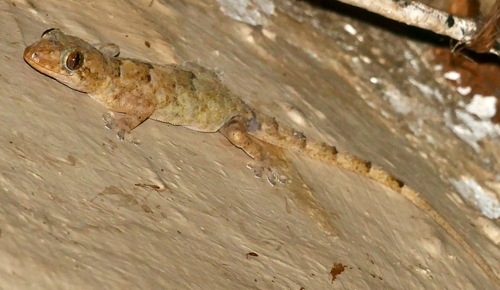
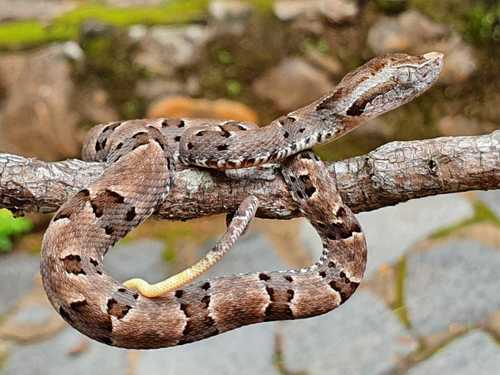

Plants




What threatens Iguazú, and what helps
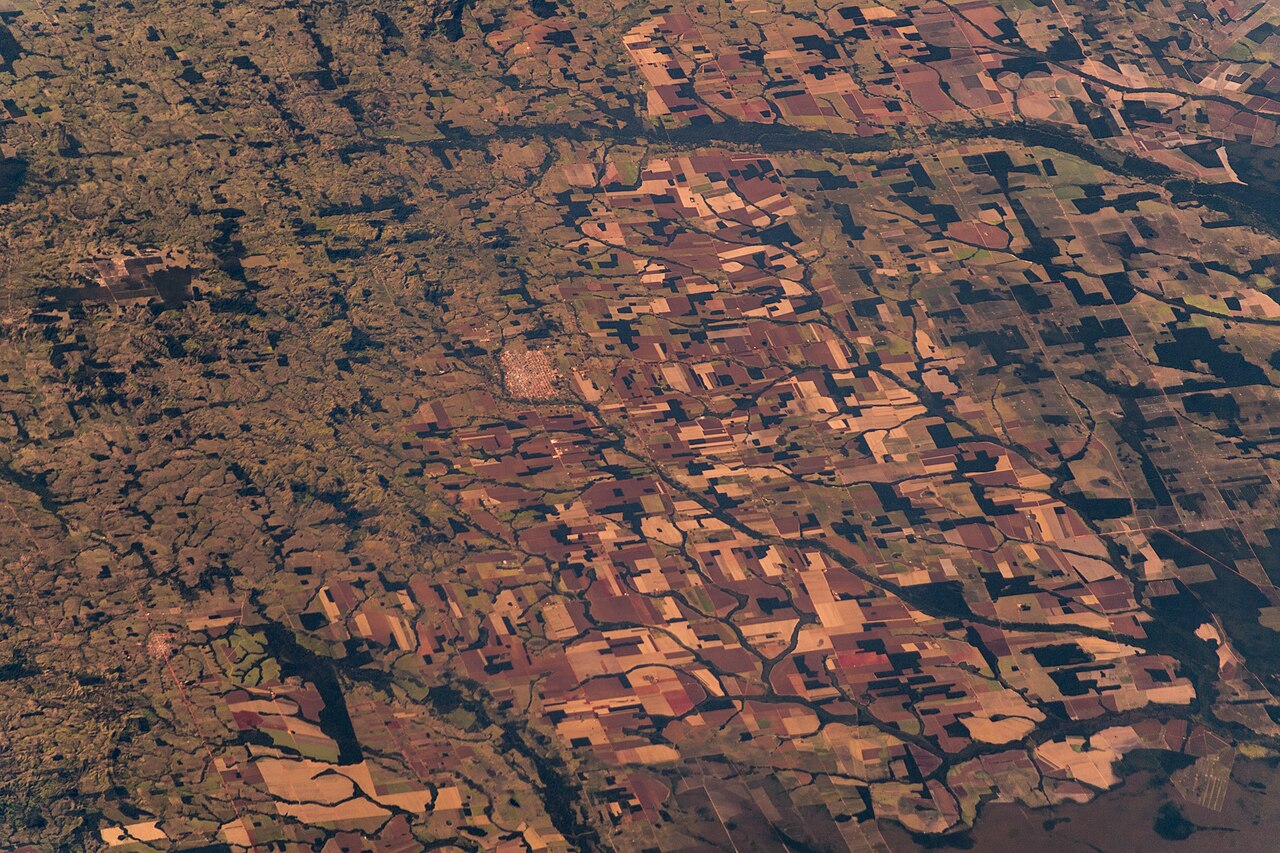
The Atlantic Forest once covered much of eastern Brazil; only a small part of it is left, much of it in fragments. Dams upstream change the river's flow, and roads cut through the forest.
National parks on both sides of the border protect the falls and the forest together, and forest corridors link them with other reserves so jaguars and other animals can move between them.
Explore and share
Explore next
What puts Iguazú under pressure, what helps, and who works on it.

Questions people ask
What animals live in Iguazú?
Among the animals people record most often in Iguazú: eared dove, great kiskadee, house sparrow, bananaquit, rufous hornero, sayaca tanager, pale-breasted thrush and southern house wren. Based on GBIF records from Iguazú and Iguaçu National Parks, 2016–2025.
What is the food chain in Iguazú?
Some of the feeding links studies have recorded among its species: the sayaca tanager eats the ambay pumpwood, the south american coati eats the ambay pumpwood, the black capuchin eats the ambay pumpwood and the white-eared opossum eats the ambay pumpwood. Source: GloBI.
What threatens Iguazú?
The Atlantic Forest once covered much of eastern Brazil; only a small part of it is left, much of it in fragments. Dams upstream change the river's flow, and roads cut through the forest.
How can Iguazú be protected?
National parks on both sides of the border protect the falls and the forest together, and forest corridors link them with other reserves so jaguars and other animals can move between them.
Sources and photo credits
- GBIF · human observations in Iguazú and Iguaçu National Parks, 2016–2025
- GloBI · recorded feeding links between species
- UNESCO · Iguazu National Park
- Parques Nacionales · Iguazú
- The Iguazú Falls seen from the Brazilian side: W. Bulach, CC BY-SA 4.0
- Eared dove: no hay derechos reservados, CC0
- Great kiskadee: Dario Sanches, CC BY-SA 4.0
- House sparrow: Esteban Poveda, CC BY 4.0
- Bananaquit: Dario Sanches, CC BY-SA 4.0
- Rufous hornero: Ron Knight, CC BY 4.0
- Sayaca tanager: Dario Sanches, CC BY-SA 4.0
- Pale-breasted thrush: Christoph Moning, CC BY 4.0
- Southern house wren: Nicolás Villaseca Merino, CC BY-SA 4.0
- South American coati: no rights reserved, uploaded by Diego Carús, CC0
- Black capuchin: Peter Cook, CC BY-SA 4.0
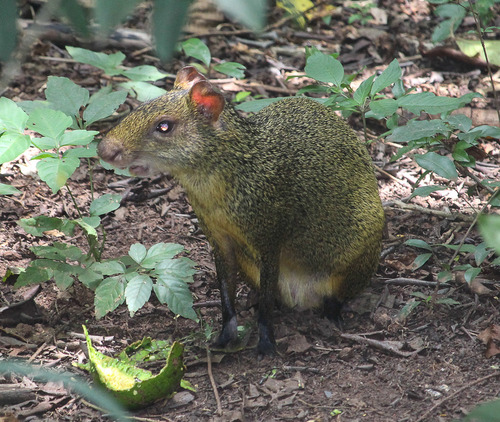
- Azara's agouti: João Vitor Oliveira de Souza, CC BY 4.0
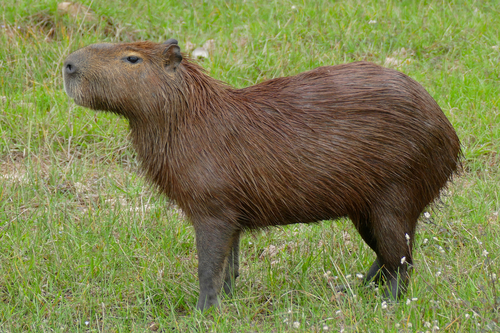
- Capybara: Bernard DUPONT, CC BY-SA 4.0
- White-eared opossum: Tim Hirsch, CC BY 4.0
- Brazilian guinea pig: no rights reserved, uploaded by Fernando Sessegolo, CC0
- Agathina emperor: Nicolas Olejnik, CC BY 4.0
- Orange mapwing: Carlos Alexandre Mattos Raposo, CC BY 4.0
- Epinome cracker: Cecilia Fer Díaz, CC BY 4.0
- Godart's numberwing: Helio Lourencini, CC BY 4.0
- Red rim: João Vitor Oliveira de Souza, CC BY 4.0
- Blue-frosted banner: Rodrigo Paiva Lázaro, CC BY 4.0
- Western collared spiny lizard: aacocucci, CC BY 4.0
- Argentine black and white tegu: Bruno Henrique Aranda, CC BY 4.0
- Cosmopolitan house gecko: Bernard DUPONT, CC BY-SA 4.0
- Brazilian lancehead: Jean Martins, CC BY 4.0
- Chicken snake: Jorge Armín Escalante-Pasos, CC BY 4.0
- Double-banded coral-snake: no rights reserved, uploaded by Hugo Hulsberg, CC0
- Larkdaisy: Toby Y, CC BY 4.0
- Ambay pumpwood: Conrado Pável de Oliveira, CC BY 4.0
- White garland-lily: no rights reserved, uploaded by 葉子, CC0
- Inchplant: Ricard Busquets Reverte, CC BY 4.0
- Woolly bear begonia: no rights reserved, uploaded by Hugo Hulsberg, CC0

Species lists come from records people have shared in a few sample areas, not a full inventory of Iguazú, and well-watched groups such as birds are recorded far more than insects or fungi. The food web shows only links that studies have recorded between the species on this page.
Checked 2026-11-20.