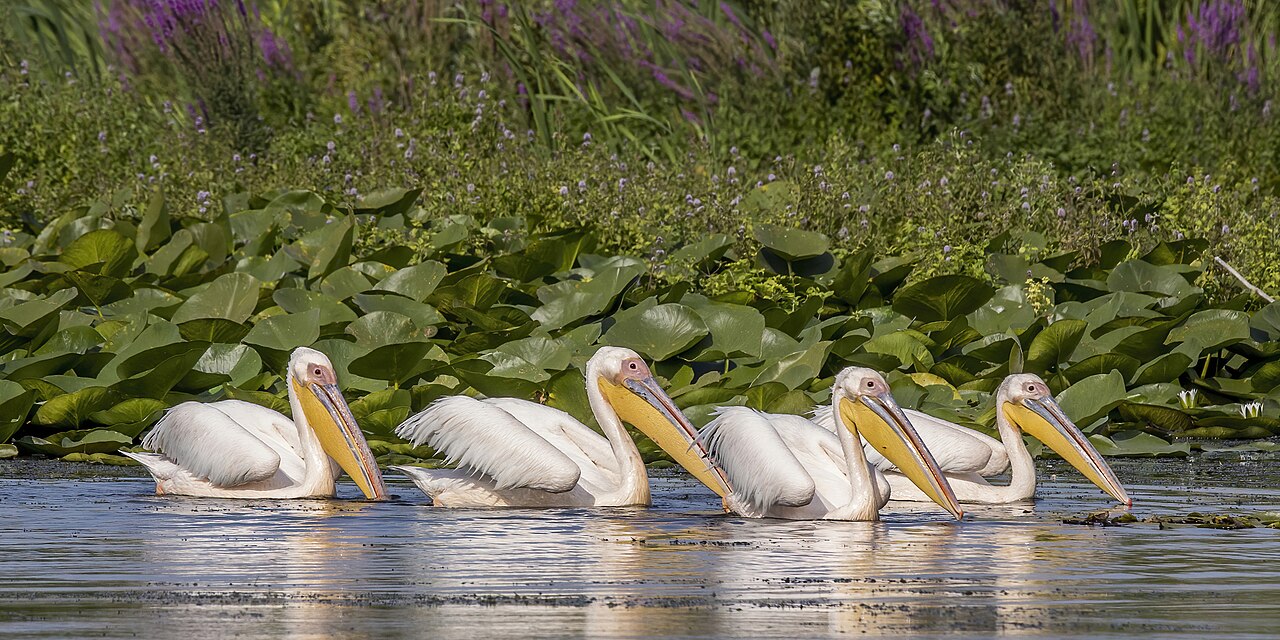
Danube Delta
Romania and Ukraine, where the Danube meets the Black Sea
Where the Danube flows into the Black Sea it forms the largest and best preserved of Europe's deltas: the biggest continuous marshland in Europe, with the largest area of reed beds in the world. More than 300 species of birds and 45 species of freshwater fish live in its lakes and marshes.
People have shared 199,659 records of animals and plants from the Romanian Danube Delta with GBIF in ten years. This page shows the 46 species recorded most often there, and 151 links between them that studies have recorded: who eats whom.
- Kind
- Ecosystem
- Where
- Romania and Ukraine, where the Danube meets the Black Sea
- Species shown
- 46, the most recorded
- Food web
- 151 recorded links between them
- Records
- 199,659 in 2016–2025
- Sample areas
- the Romanian Danube Delta
Who eats whom in the Danube Delta
Food flows upwards: plants and small animals at the bottom, hunters at the top. Tap a species to see its links, then take it out of the web to see who would lose food.
Tap a species.
All 151 recorded links
- Great white pelican eats Striped mullet
- Hooded crow eats Marsh frog
- Hooded crow eats Black-headed gull
- Pygmy cormorant eats Marsh frog
- Pygmy cormorant eats Northern pike
- Squacco heron eats Common tree frog
- Squacco heron eats Marsh frog
- Squacco heron eats Grass snake
- Squacco heron eats Sand lizard
- Squacco heron eats Danube crested newt
- Squacco heron eats Dice snake
- Squacco heron eats Fire-bellied toad
- Great cormorant eats Northern pike
- Great cormorant eats Prussian carp
- Great cormorant eats Bleak
- Great cormorant eats Striped mullet
- Black-headed gull eats Northern pike
- Western marsh harrier eats Golden jackal
- Western marsh harrier eats Black-headed gull
- Western marsh harrier eats Marsh frog
- Western marsh harrier eats Dice snake
- Western marsh harrier eats Grass snake
- Western marsh harrier eats Sand lizard
- Grey heron eats Northern pike
- Grey heron eats Grass snake
- Grey heron eats Green toad
- Grey heron eats Dice snake
- Grey heron eats Sand lizard
- Grey heron eats European ground squirrel
- Grey heron eats Danube crested newt
- Grey heron eats Common tree frog
- Grey heron eats Fire-bellied toad
- Grey heron eats Marsh frog
- Grey heron eats Bleak
- Grey heron eats Striped mullet
- Grey heron eats Prussian carp
- White-tailed eagle eats Northern pike
- White-tailed eagle eats Marsh frog
- White-tailed eagle eats Squacco heron
- White-tailed eagle eats Grey heron
- White-tailed eagle eats Meadow viper
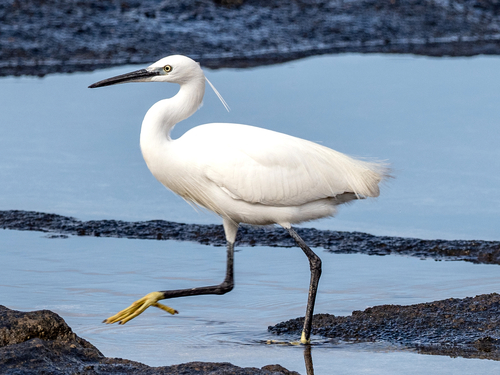
- White-tailed eagle eats Little egret
- White-tailed eagle eats Great cormorant
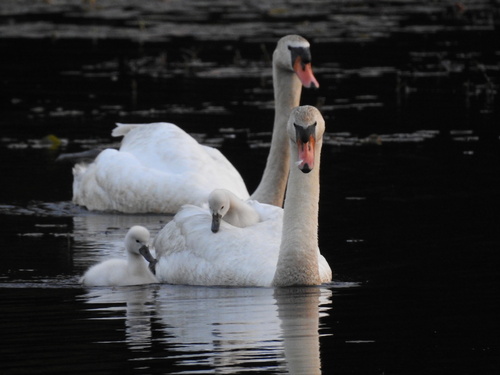
- White-tailed eagle eats Mute swan
- Mute swan eats White water-lily
- Mute swan eats Tree of heaven
- Mute swan eats Common tree frog
- Mute swan eats Marsh frog
- Mute swan eats Fire-bellied toad
- Mute swan eats Green toad
- European roller eats Dice snake
- European roller eats Large whip snake
- European roller eats Balkan wall lizard
- European roller eats Sand lizard
- European roller eats Grass snake
- European roller eats Marsh frog
- Little egret eats Dice snake
- Little egret eats European ground squirrel
- Little egret eats Danube crested newt
- Little egret eats Marsh frog
- Little egret eats Fire-bellied toad
- Little egret eats Sand lizard
- Little egret eats Common tree frog
- Little egret eats Grass snake
- Little egret eats Northern pike
- Little egret eats Striped mullet
- Little egret eats Bleak
- Northern pike eats Bleak
- Northern pike eats Blue-tailed damselfly
- Northern pike eats Small red-eyed damselfly
- Northern pike eats Banded demoiselle
- Northern pike eats Prussian carp
- Prussian carp eats Small red-eyed damselfly
- Prussian carp eats Blue-tailed damselfly
- Prussian carp eats Banded demoiselle
- Bleak eats Dice snake
- Golden jackal eats European ground squirrel
- Golden jackal eats Great cormorant
- Golden jackal eats Balkan wall lizard
- Golden jackal eats Northern white-breasted hedgehog
- Golden jackal eats Grass snake
- Golden jackal eats Meadow viper
- Golden jackal eats Common tree frog
- Golden jackal eats Western marsh harrier
- Golden jackal eats Large whip snake
- Golden jackal eats Fire-bellied toad
- Golden jackal eats Marsh frog
- Golden jackal eats Mute swan
- Golden jackal eats European otter
- Golden jackal eats Dice snake
- Golden jackal eats Sand lizard
- Golden jackal eats Little egret
- Golden jackal eats Green toad
- Golden jackal eats Great white pelican
- Golden jackal eats Muskrat
- European ground squirrel eats Northern white-breasted hedgehog
- European otter eats Green toad
- European otter eats Dice snake
- European otter eats Grass snake
- European otter eats Great cormorant
- European otter eats Marsh frog
- European otter eats Bleak
- European otter eats Striped mullet
- European otter eats Northern pike
- Raccoon dog eats Marsh frog
- Raccoon dog eats Sand lizard
- Raccoon dog eats Green toad
- Raccoon dog eats Muskrat
- Raccoon dog eats Grass snake
- Muskrat eats White water-lily
- Northern white-breasted hedgehog eats Meadow viper
- Northern white-breasted hedgehog eats Common tree frog
- Northern white-breasted hedgehog eats Large whip snake
- Northern white-breasted hedgehog eats Grass snake
- Northern white-breasted hedgehog eats Dice snake
- Northern white-breasted hedgehog eats Sand lizard
- Northern white-breasted hedgehog eats Green toad
- Northern white-breasted hedgehog eats Marsh frog
- Northern white-breasted hedgehog eats Fire-bellied toad
- Northern white-breasted hedgehog eats Balkan wall lizard
- Grass snake eats Caucasian treefrog
- Grass snake eats Prussian carp
- Grass snake eats Fire-bellied toad
- Grass snake eats Green toad
- Grass snake eats Common tree frog
- Grass snake eats Marsh frog
- Grass snake eats Danube crested newt
- Grass snake eats European ground squirrel
- Grass snake eats Sand lizard
- Dice snake eats Bleak
- Dice snake eats Prussian carp
- Dice snake eats Green toad
- Dice snake eats Danube crested newt
- Dice snake eats Fire-bellied toad
- Dice snake eats Marsh frog
- Dice snake eats Common tree frog
- Dice snake eats Northern pike
- Sand lizard eats Balkan wall lizard
- Meadow viper eats European ground squirrel
- Meadow viper eats Sand lizard
- Meadow viper eats Balkan wall lizard
- Large whip snake eats Sand lizard
- Large whip snake eats Dice snake
- Large whip snake eats Meadow viper
- Large whip snake eats Balkan wall lizard
- Large whip snake eats European ground squirrel
- Large whip snake eats Grass snake
- Marsh frog eats Danube crested newt
- Marsh frog eats Common tree frog
- Marsh frog eats Green toad
- Marsh frog eats Fire-bellied toad
Links that studies have recorded between the species on this page (GloBI). Real food webs hold far more species and links, and animals switch food when one runs short.
Who lives in the Danube Delta
The species people record most often in the Romanian Danube Delta, 2016–2025.
Birds







Fish


Mammals
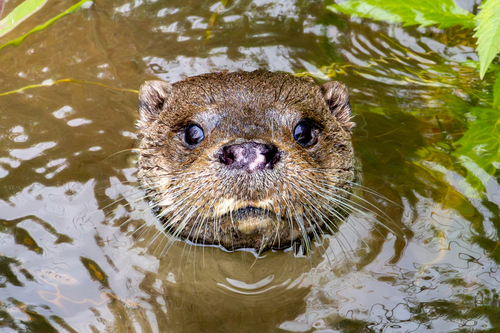


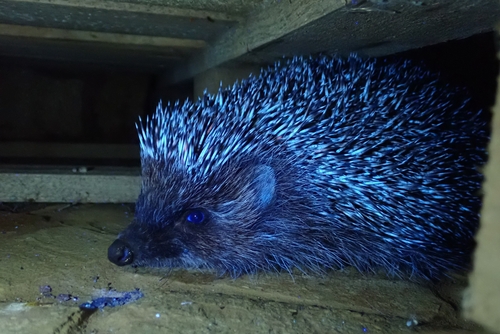
Reptiles
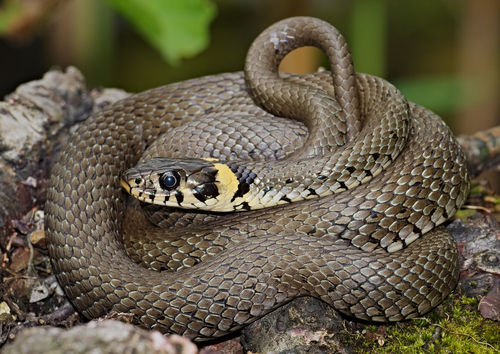


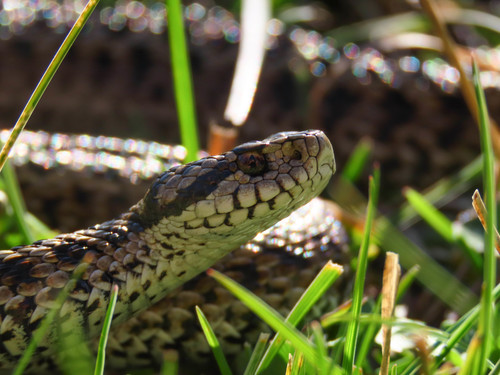


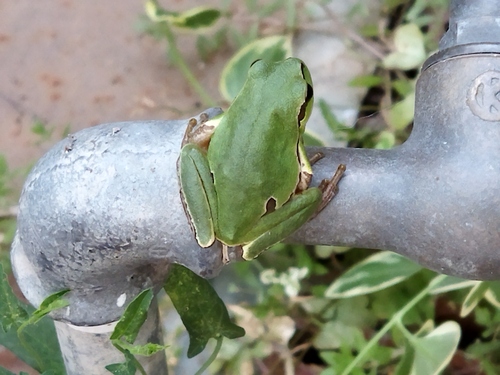
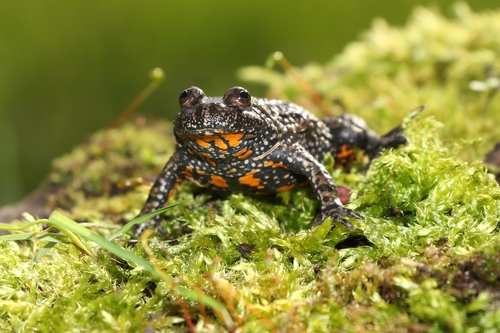
Amphibians



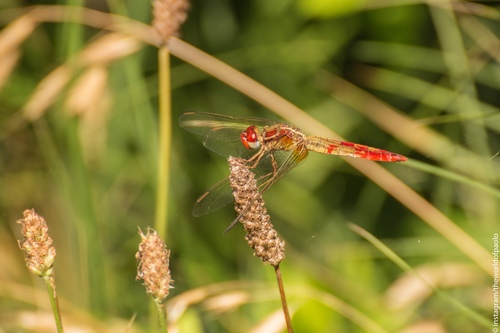
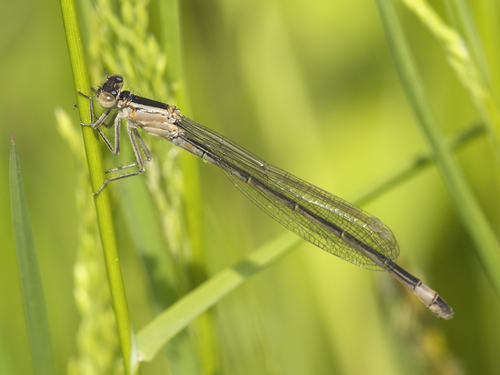
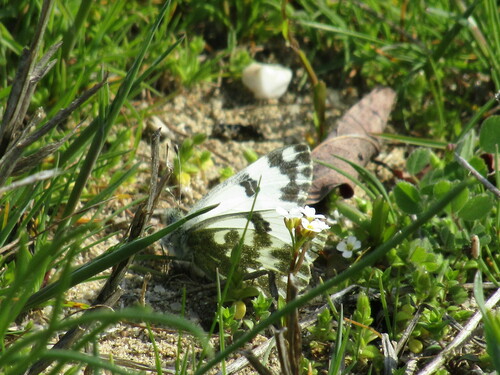
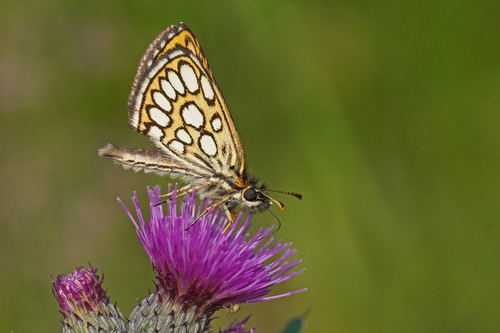
Insects


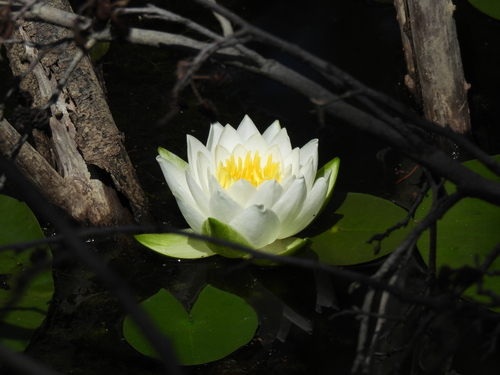
Plants


What threatens the Danube Delta, and what helps
UNESCO notes that the delta's underlying water and ecological system is still intact, but strongly degraded.
Romania and Ukraine look after it together as the Danube Delta Transboundary Biosphere Reserve, and the Romanian part is a World Heritage site.
Explore and share
Questions people ask
What animals live in the Danube Delta?
Among the animals people record most often in the Danube Delta: great white pelican, hooded crow, pygmy cormorant, squacco heron, great cormorant, black-headed gull, western marsh harrier and grey heron. Based on GBIF records from the Romanian Danube Delta, 2016–2025.
What is the food chain in the Danube Delta?
Some of the feeding links studies have recorded among its species: the grass snake eats the marsh frog, the white-tailed eagle eats the mute swan, the great cormorant eats the northern pike and the grey heron eats the northern pike. Source: GloBI.
What threatens the Danube Delta?
UNESCO notes that the delta's underlying water and ecological system is still intact, but strongly degraded.
How can the Danube Delta be protected?
Romania and Ukraine look after it together as the Danube Delta Transboundary Biosphere Reserve, and the Romanian part is a World Heritage site.
Sources and photo credits
- GBIF · human observations in the Romanian Danube Delta, 2016–2025
- GloBI · recorded feeding links between species
- UNESCO World Heritage Centre · Danube Delta
- Great white pelicans swimming among water lilies in the Danube Delta: Charles J. Sharp, CC BY-SA 4.0
- Great white pelican: Kostas Zontanos, CC BY 4.0
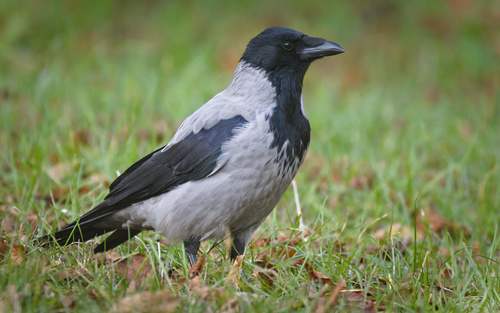
- Hooded crow: hedera.baltica, CC BY-SA 4.0
- Pygmy cormorant: Kostas Zontanos, CC BY 4.0
- Squacco heron: Charles J Sharp, CC BY-SA 4.0
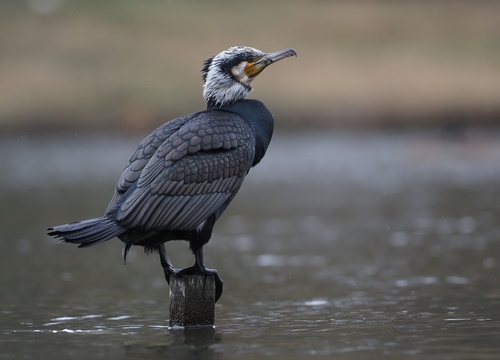
- Great cormorant: Frank Vassen, CC BY 4.0
- Black-headed gull: Christoph Moning, CC BY 4.0
- Western marsh harrier: Artem Kuznetsov, CC BY 4.0
- Grey heron: Frank Sengpiel, CC BY 4.0
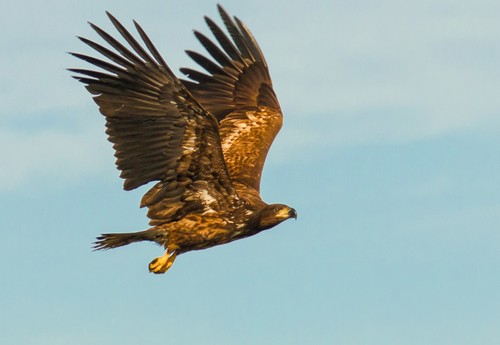
- White-tailed eagle: Алина Урусова, CC BY 4.0
- Mute swan: Laura Mae, CC BY 4.0
- European roller: Bernard DUPONT, CC BY-SA 4.0
- Little egret: Bengt Nyman, CC BY 4.0
- Northern pike: Dirk Godlinski, CC BY-SA 4.0
- Prussian carp: Gilles San Martin, CC BY-SA 4.0
- Striped mullet: no rights reserved, uploaded by Henggang Cui, CC0
- Bleak: Andreas Hartl, CC BY 4.0
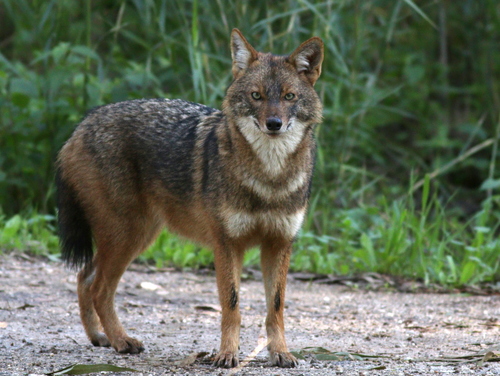
- Golden jackal: Jan Ebr & Ivana Ebrová, CC BY 4.0
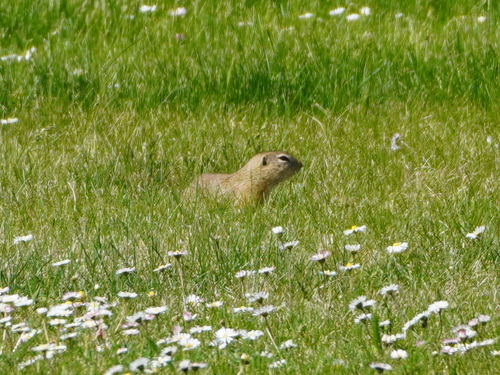
- European ground squirrel: Patrick Hacker, CC BY 4.0
- European otter: Diego González Dopico, CC BY 4.0
- Raccoon dog: Jukka A. Lång, CC BY 4.0
- Muskrat: Owen Strickland, CC BY 4.0
- Northern white-breasted hedgehog: Radu Teodoreanu, CC BY 4.0
- Grass snake: Andreas Eichler, CC BY-SA 4.0
- Dice snake: carnifex, CC BY 4.0
- Sand lizard: Lennart Hudel, CC BY 4.0
- Meadow viper: Emanuele Santarelli, CC BY-SA 4.0
- Balkan wall lizard: Roman, CC BY 4.0
- Large whip snake: Bart, CC BY 4.0
- Caucasian treefrog: SteveM4560, CC BY 4.0
- Marsh frog: Petra & Wilfried, CC BY 4.0
- Fire-bellied toad: no rights reserved, uploaded by Liubov Ilminska, CC0
- Green toad: Christoph Moning, CC BY 4.0
- Danube crested newt: Russell Scott, CC BY-SA 4.0
- Common tree frog: Matteo Bellucci, certains droits réservés (CC BY), publiées par Matteo Bellucci, CC BY 4.0
- Scarlet dragonfly: Paolo Zucca, CC BY 4.0
- Blue-tailed damselfly: Jörg Hempel, CC BY-SA 4.0
- Bath white: SteveM4560, CC BY 4.0
- Small red-eyed damselfly: Tina Ellegaard Poulsen, CC BY 4.0
- Large chequered skipper: Julia Moning, CC BY 4.0
- Banded demoiselle: Lip Kee Yap, CC BY-SA 4.0
- White water-lily: Lukas Zangl, CC BY 4.0
- Californian burr, burweed, cocklebur: Philipp, CC BY 4.0
- False indigo: Douglas Goldman, CC BY-SA 4.0
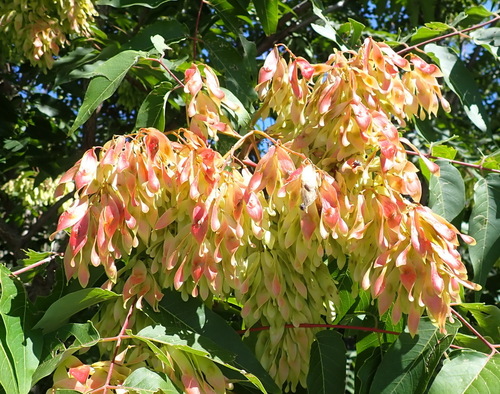
- Tree of heaven: Nicola van Berkel, CC BY-SA 4.0
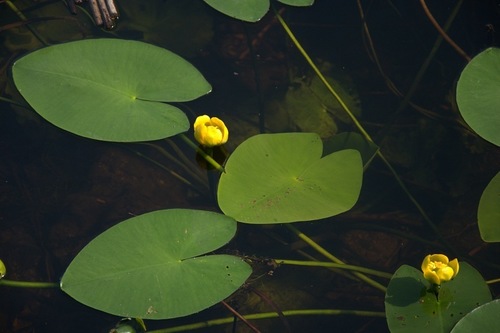
- Yellow water-lily: no rights reserved, uploaded by Татьяна Прозорова, CC0
- Canadian fleabane: Michael J. Papay, CC BY 4.0

Species lists come from records people have shared in a few sample areas, not a full inventory of the Danube Delta, and well-watched groups such as birds are recorded far more than insects or fungi. The food web shows only links that studies have recorded between the species on this page.
Checked 2026-11-22.